7 minutes ago
Big challenges, Biden re-ages with Iran
Periskopi(5 years ago)
(5 years ago)President Joe Biden has announced a re-agement with Tehran and a return to Iran's nuclear agreement from which the administration of former President Trump withdrew in 2018. This is criticized by Israel, which says it will thus pave Iran's way towards a nuclear arsenal. An armed pro-Iran militia claimed responsibility for [...]
President Joe Biden has announced a re-agement with Tehran and a return to Iran's nuclear agreement from which the administration of former President Trump withdrew in 2018. This is criticized by Israel, which says it will thus pave Iran's way towards a nuclear arsenal.
A pro-Iran armed militia claimed responsibility for this week's missile attacks in the Kurdish region of Iraq. The attack highlights the challenges for President Biden's administration, while announcing it would again become part of negotiations on Iran's 2015 nuclear agreement, also known as JCPOA.
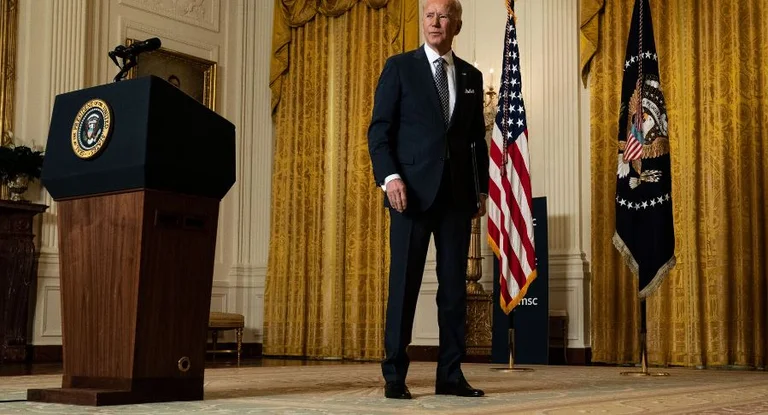
“We are prepared to engage again in the negotiations of P5 + 1 (Kina, France, Germany, Russia, the United Kingdom and the United States) countries on Iran's nuclear programme. We should also review Iran's destabilising activities throughout the Middle East”, President Joe Biden said.
Addressing the Virtual Security Conference in Munich on Friday, President Biden pledged close co-operation with Europe and other partners for Iran a movement supported by some analysts.
The way to address the concerns of the United States regarding Iran's activity in the region and to address the issue of Iran's nuclear programme over a long term goes through the restoration of the nuclear agreement and the reconstruction of trust in the United States in negotiations”, Kelsey Davenport says, from the Arms Control Association.
In a statement, Israeli Prime Minister Benjamin Netanyah said the return to the nuclear agreement would pave the way for Iran to a nuclear arsenal.
Iran has begun enriching uranium by 20%, above the 5% limit of the deal, but less than 90% of the level needed for nuclear weapons.
Tehran has signalled readiness to return to negotiations, but opposes any change in the negotiated agreement under the administration of former President Obama. Recent legislation by Iran's parliament could also force Tehran to strengthen its nuclear programme unless US sanctions ease until 21 February.
The “meetings will be arranged; Americans will find a way back to the agreement; Iranians will receive sanctions relief, but not everything they wanted. The point here is that everyone tries to maintain integrity and not be humiliated, nobody wants to be wrong first. But everyone wants to turn into a kind of diplomatic runway, starting with what can be managed and then continuing with further objectives if there is sufficient confidence in the process”, says Alex Vatanka, of the Iran programme at the Middle East Institute.
President Beden's administration also took steps in the United Nations to restore its Iran policy to the stage that was before the administration of former President Trump was withdrawn from the agreement in 2018.
But returning to diplomacy will not be easy. There are more questions than answers.
Should we go straight back to the agreement even though it will soon begin to expire? Do we need a somewhat tougher deal? Does President Beden really want to return Obama's policy to this late date when there is practically no Republican in Washington to support him?
Another key challenge concerns the ongoing regional interventions of Tehran, including in Yemen, where they are waging a war through third sides against Saudi Arabia. Earlier this month, President Beden's administration announced it is ending support for Saudi-led military offensive, in the context of the return of America to diplomacy.