4 hours ago
Borrell: Europe, Russia are leaving, no constructive dialogue
Periskopi(5 years ago)
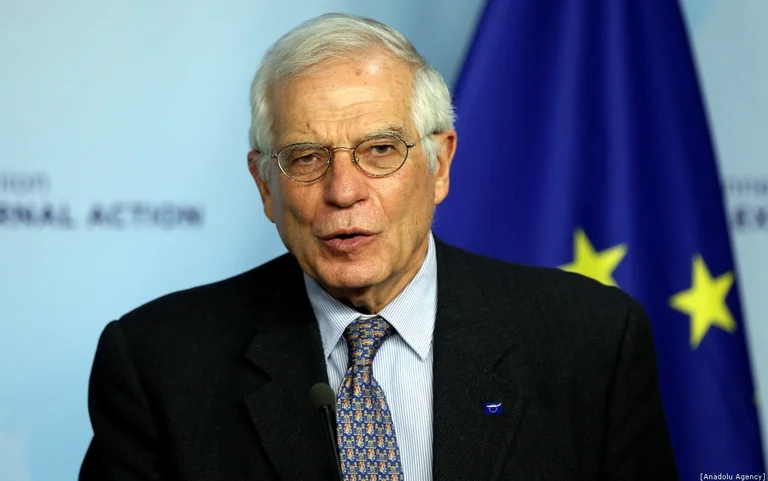
(5 years ago)European Union foreign policy chief Josep Borrell said Russia does not want to use “the case” to have a constructive dialogue with the EU, about what “the consequences should be drawn”. Borell made these comments after visiting Moscow on February 4th-6, a trip he praised as complicated and said [...]
European Union foreign policy chief Josep Borrell said Russia does not want to use “the case” to have a constructive dialogue with the EU, about what “the consequences should be drawn”.
Borell made these comments after visiting Moscow on February 4th-6th, a trip he praised as complicated and said he discussed the tense situation in EU-Russia relations”, adding that relations deteriorated further with the arrest and conviction of Alexey Navajo, as well as the arrests of thousands of demonstrators supporting him.
This mission's “goal was to express directly the EU's powerful condemnation of these events and address, through principled diplomacy, the process of a rapid deterioration of our relationship with Russia, and to help prepare future European Council discussions on EU-Russia”, he said, referring to the EU summit scheduled for March.
Stressing an aggressive media conference and the expulsion of three EU diplomats during his visit to Russia, Borell said these were indications that Russia does not want to get involved in a more constructive dialogue with the EU.
He also said the situation was not surprising, however, added it is unfortunate even from the “a perspective of the Russian strategy”.
“As the EU, we will have to draw the consequences, carefully reflect on the direction we want to give our relations with Russia and continue in a firmly united way”, he stressed.
Claiming that the core topics of his meeting with Russian top diplomat Sergey Lavrov were human rights, fundamental freedoms and especially the Navajo issue, Borell said:
“Sometimes the discussion with my Russian counterpart reached high levels of tension, as I called for the immediate and unconditional release of Mr. Navalny's, as well as a complete and impartial investigation into the attempt to kill him”, Borell stressed.
Claiming he learned of the expulsion of EU diplomats through social media at the end of his meeting with Lavrov, Borell said he reminded his Russian counterpart of his country's obligations in the field of human rights under international commitments.
Borell said the EU and Russia are at odds on many issues, including Belarus, Ukraine, Georgia, Syria and Libya.
He said the development of Russian society and the country's geostrategic elections were disturbing.
My “meeting with Minister Lavrov and messages sent by Russian authorities during this visit confirmed that Europe and Russia are leaving. It seems that Russia is gradually breaking away from Europe and is seeing democratic values as a existential threat”, Borell said.
We're at a crossroads. The strategic elections we make now will determine the international dynamics of power in the 21st century, and especially, if we are to move towards more co-operative or polarised models, based on closed societies or in cheaper” society, he said.
Borell stressed that EU-Russia relations will be discussed at a meeting of EU foreign ministers on 22 February and said member states will decide the next steps, which could include sanctions.
If we want a more secure world for tomorrow, we need to act decisively today and be willing to take some risks,” he said.