 2 hours ago
Abbott for the future government, in relation to Serbia: Let the sides be ready for compromise
Periskopi(5 years ago)
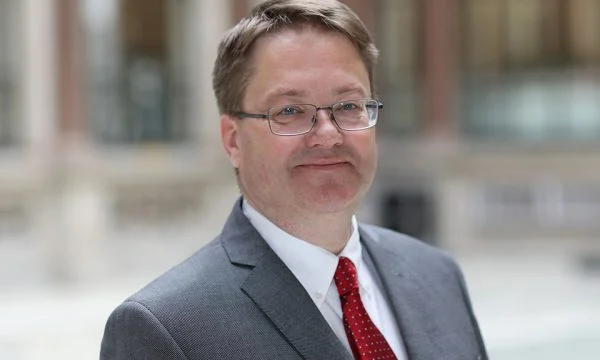
(5 years ago)United Kingdom Ambassador to Kosovo Nicholas Abbott says Kosovo's future government should prioritize dialogue with Serbia. The British diplomat in an interview has indicated that in a process of negotiations such as the one between Kosovo and Serbia, the two sides should be ready for compromise. Abbott further said [...]
Abbott also said that after the elections Kosovo needs a stable government to face the challenges to come.
As for the letter President Beden has sent to President Vuciq, where he has asked that the agreement with Kosovo be concluded with reciprocal recognition, Ambassador Abbott said Great Britain will work with the new US administration and other QUINTovina states to support Kosovo in reaching a comprehensive normalisation agreement with Serbia.
Express: It's been a year and a half since you became an ambassador to the United Kingdom in Kosovo. How has this period been for you in Kosovo? What are the main challenges and advances you have seen during this period?
Ambassador Abbott: When I arrived in Kosovo, the October 2019 elections were close to holding. Now we're still waiting for the election Sunday. Therefore, political uncertainty over the past eighteen months has clearly made part of the embassy's work more difficult. But this has not prevented progress in United Kingdom co-operation Kosovo in a wide range of areas that we can be proud of, from working around rule of law through functional Review to our Recruitation Project in order to ensure the appointment of the most qualified candidates in public positions.
Do you think that after the February 14th elections, Kosovo's new government will have greater stability in the country in terms of numbers and do you believe it will manage to elect a new president?
Ambassador Abbott: At this stage, there are many speculations about the outcome of the elections and all the different scenarios that can happen. Of course, Kosovo needs a stable government to overcome the economic and social impact of the Comid-19 pandemic, and this should be the main focus of all politicians when the government's formation process begins.
What do you expect from the election process in Kosovo, to be held on February 14th?
Ambassador Abbott: Kosovo has come to testify in managing reliable elections, and I expect that Sunday we will see a very well-managed and transparent process. We know that the process is not perfect and the lack of progress for addressing recommendations made by the EU Election Mission Report for 2019 is unfortunate. It needs better provisions for challenging results and better monitoring campaign financing. We've been following the process around this year, and we'll continue to do so. I am pleased that we have been able to support the United Kingdom-led Mission of Experts to analyse and observe the process in comparison with the EU Experts Mission and local civil society organisations.
Should the new government continue dialogue with Serbia in Brussels, mediated by the EU?
Ambassador Abbott: The EU-led dialogue between Kosovo and Serbia should be the top priority for any future government. In recent years, the process has improved the lives of citizens in both countries, for example, in freedom of movement between Kosovo and Serbia. The United Kingdom fully supports the process and is ready and able to support each government to reach comprehensive normalisation agreements with Serbia.
Polls say VV leader Albin Kurti is the favourite to win this election, with a percentage of 51 per cent [the question is laid down when the first polls are published]. Kurti has consistently rejected the founding of any association of Serb-run municipalities. Do you think Kurti will respect the agreement signed in Brussels for establishing the Association of Serb-run municipalities if he leads the new government?
Ambassador Abbott: Each government will have to address this issue, based on the agreements that exist. It is a key issue, and it should be openly approached as part of building a national consensus for normalisation with Serbia.
US President Joe Biden has sent a letter to Serbian President Alexander Vuciq, with which he has called for an agreement to be reached with Kosovo with a focus on mutual recognition. Do you think this approach of the new US administration for mutual recognition between Kosovo and Serbia will be successful?
Ambassador Abbott: The US administration's continued devotion to the process is, of course, welcome. We will work with them and with other Quint states to support Kosovo in reaching a comprehensive normalisation agreement.
Although the United Kingdom is officially outside the EU, do you think it should engage in Western Balkan issues, especially in normalising relations between Kosovo and Serbia?
Ambassador Abbott: Of course you should. The United Kingdom remains part of Europe and the stability and welfare of the Western Balkans are still firmly in the national interest of the United Kingdom. The normalisation of relations between Kosovo and Serbia is an essential part of this process, as are other elements of our bilateral co-operation: training for the KSF, metricratic recruiting for state institutions and Chevening Stocks to enable Kosovars to higher levels in the United Kingdom.
European officials, more precisely the MEPs have declared that Kosovo should be ready for compromise in terms of the agreement with Serbia, because there can be no agreement without compromise. Do you believe there is no agreement with Serbia without compromise?
Ambassador Abbott: In any negotiations, whether between two states or two, there should be readiness on both sides for compromise. Without compromise, successful negotiations are hardly sustainable. It is the duty of every Kosovo government to prepare itself as fully as possible and to have public support in order to ensure successful negotiations.











