9 minutes ago
About 20 patients receive blood plasma, infected people say they're waiting for effects
Periskopi(5 years ago)
(5 years ago)Kosovo has yet to provide any doses of the vaccine against the coronary, but already patients lying at the Infective Clinic have begun to receive as support therapy, treatment with conventional plasma. About 20 patients have received this blood component, but infected people say it is still too early to talk about the effects of this treatment. And from [...]
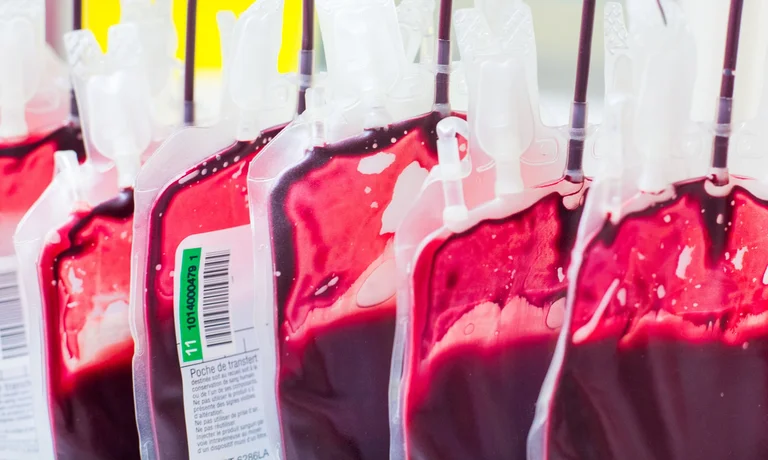
Kosovo has yet to provide any doses of the vaccine against the coronary, but already patients lying at the Infective Clinic have begun to receive as support therapy, treatment with conventional plasma.
About 20 patients have received this blood component, but infected people say it is still too early to talk about the effects of this treatment. While, from the Kosovo National Centre for Blood Transfusion (QKKTGJ), they say they do not have enough blood plasma reserves.
Infectious Clinic Infectian Izet Sadiku says that in recent weeks the application of convalescent plasma in this clinic has begun, but he says it is still too early to talk about the effects of this kind of treatment on coronary patients.
He says that by now about 20 patients have received these blood doses.
The application of conventional plasma to us has probably started in the last two weeks, while in other countries we know it's started a lot of weather, the effects are too early to talk because it's a very small number of patients and no recommendations can be made. It is considered that in other countries, conventional plasma can help the patient. For this reason, we started by protocol drafted by the Health Ministry, the application of conventional plasma has begun. We can talk about the results in a later period when we have the largest number of cases that have received this treatment... it must be 15 to 20 patients who have received this dose... . One to two doses can be given to patients who have COVID-19”, Sadiku stressed.
As for the accumulated amount of convalescent plasma, Beauty Zhubi, director of the Kosovo National Centre for Blood Transfusion (QKKTGJ), says that so far there are about 300 donors of conventional plasma, but only 35 of these doses have met the conditions for use.
Zhubi appealed to citizens who have passed COVID to donate blood, as the actual reserves of conventional plasma are not enough.
“We have collected a significant amount of convalescent plasma, that is, there are sometimes about 300 but not all of them meet the conditions for use because they must have access to SARS-COV2 antibodies, and those that meet the conditions are 35 doses so far that have met the conditions for using conventional plasma... The characteristic of convalescent plasma that differs from normal plasma is that only the presence of antibody antibodies - SARS-COV2, while the rest remain the same, are preserved or raised at temperatures of up to -40 degrees Celsius and stored as such as up to a year. Otherwise the current reserve of convalescent plasma is not enough, so I think an appeal should be made to citizens, donate plasma saves lives“, Joubi noted.
The director of the QKKTG for KosovaPress has also shown some of the parameters to meet blood donors, as well as the way to preserve conventional plasma.
The blood transfusion has always been available and is now ready to do the collection of Plasis doses from patients who have passed and have recovered with COVID-19. Of course, for such a procedure, there must be additional conditions to achieve the reserves of such a product. We have two conditions that have to meet the donor that come to donate the convalescent plasma first must he meet the general criteria of a standard blood donor, and then also meet specific requirements in this case the transition of COVIDD-19 disease, the passage of the disease that is documented with any document through the test PCR, serological that confirms the presence of antibodies in donor plasma”, Joubi stressed.
Kosovo in January has approved the Guide for Treatment With the Convalescent Plazma of patients with Covid-19 as support therapy.