2 hours ago
Over 1,300 new cancer cases in 2020
Periskopi(5 years ago)
(5 years ago)In 2020, 1336 new cancer cases have been recorded in Kosovo, and compared to 2019, 15 percent fewer cases have been identified. So it was made known during an event today organised by the Oncology Clinic and the Association of Oncologists of Kosovo on the case of World Cancer Day. The doctor [...]
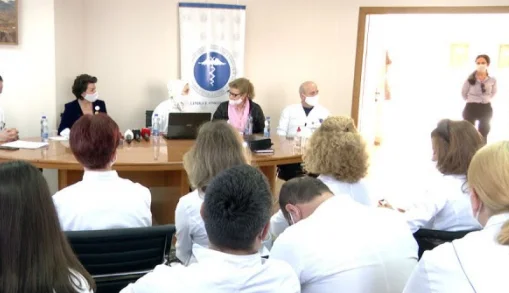
In 2020, 1336 new cancer cases have been recorded in Kosovo, and compared to 2019, 15 percent fewer cases have been identified. So it was made known during an event today organised by the Oncology Clinic and the Association of Oncologists of Kosovo on the case of World Cancer Day.
The doctor at the Oncology Clinic, Vildane Goga, said that the pandemic and old equipment were some of the difficulties they faced last year. She said that over 18,000 and 400 services and 200 thousand 12 services have been offered in the radio therapy department.
The most frequent cases in Oncology Clinic are those of the breast. Oncologist Goga said that by 2020 there is a slight decline in the delivery of chemotherapy services, while 30 percent fewer services have been offered in radio therapy.
An average of daily visits to the Oncology Clinic is up to 230 patients per day in both departments, chemotherapy and radio therapy. The new cases marked in 2020 were 1336. These are cases issued by the Oncology Clinic, not including cases that are available. KSHPK, where are cases handled abroad and those at private clinics. First pathology is that of the breast. We have 332 cases of breast cancer or 25 percent of total cases, unrogenital lesions with 24 percent of cases, lesion gastroid-urgenetic along with women's gynecology or reproductive organs, then gastro-instinal leaf pathology with 23 percent of cases or 313 number of patients”, Goga said.
Former President Atifete Jahjaga on World Cancer Day said this day is aimed at alerting citizens to the danger and consequences of this disease. She said that early cancer discovery saves lives.
Not just us, but the whole world this day marks it as an international day of war against cancer and we have to use it to raise civic awareness of the danger and consequences of this unfortunate disease, to increase awareness of its causes and symptoms. Knowing that there are many different types of cancer, we know that if this disease is discovered early, it can be fought and overcome. Early discovery can be made with continued checks and systematic bases. We know that Kosovo still does not have the good conditions, it still does not have the proper infrastructure and what we need so that you as medical staff can exercise the task as needed and must”, Jahjaga said.
The criticism against health policies was director of the non-government organisation “jeta Vita”, Nazi Latifi, who said that conditions for patients are limited at the clinic of Oncology, and often lack of drugs, while it has called the government's budget for health too low.
“Conditions are very limited, often lacking drugs to wait for a bed, for a country because over 200 patients are treated overnight and opportunities are limited because the institute was built many years ago and this number of patients was not presumed. I see improvements here every day, but it's not enough. It's not the staff or the doctors' fault, but it's the health policy. For 20 years in Kosovo, health policies and the budget devoted to oncology to patients is terrible. First, the selection of ministers is conducted according to party accounts, the second budget should be increased annually, but it falls more every year. When more equipment and more patients are needed, the opposite occurs. It means, they are more willing to give asphalt (front) than to people's health, education and education of”, Latifi said.
The chairman of the Association of Oncologists of Kosovo, Arben Bislimi, said that pandemic with COVIDD-19 has made it difficult to manage cancer patients.
Until the figures say that about 1 million people a year die from this disease, being the second most deadly disease, but a third of the cancer can be prevented through early detection, avoiding risk factors, and through evental causers, then we always have one more reason to act. The pandemic situation has made cancer management difficult in our country“, Bislimi said.
According to the World Health Organization (OBSH), millions of people each year die from cancer, most in low and medium income countries. /B. Ibishi/