 3 hours ago
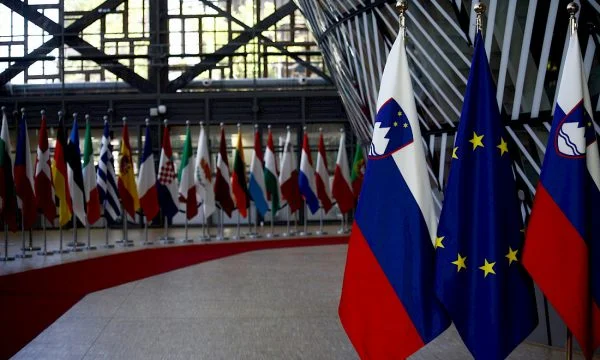
Visa liberalisation: Slovenian EU presidency managed to make no step for Kosovo
Periskopi(4 years ago)
(4 years ago)There are still few days until Slovenia's six-month presidency closes to the Council of the European Union, while the EU's direction for the next six months will be handed over to France. But practically the part of the Slovenian Presidency's work is already over, as last week the Council's final meeting was held, of [...]
There are still few days until Slovenia's six-month presidency closes to the Council of the European Union, while the EU's direction for the next six months will be handed over to France.
But practically the part of the Slovenian Presidency's work has already ended, as recent weeks the Council's recent meeting, before which this year was held. Under EU leadership from Slovenia, some hit, but also failures in terms of the European bloc's enlargement process and reports with Western Balkan states are cited.
At the beginning of its presidency, Slovenia had set the EU enlargement process and the Western Balkan region as priorities.
Diplomats in Brussels say that in spite of the many challenges the Slovenian Presidency passed, it achieved a partial <x0->success success” as regards the goals set for the enlargement process.
As a success, it is cited to hold the Brdo summit between the EU and the states of the Western Balkans. At the Brdo summit, which was held in October, the European bloc reiterated its commitment to the enlargement process.
Keeping the intergovernmental conference between the EU and Serbia is also cited as success. Negotiations on a bloc of chapters were opened at this conference. This was the first time in more than two years that Serbia opened new chapters in the process of membership negotiations.
Meanwhile, at the recent meeting of the Council of General Affairs, which was held on December 14th, member states recently reached reconciliation on the adoption of conclusions for the enlargement and Stabilisation and Association process. This is calculated as a Slovenian Presidency success, as the draft conclusion was blocked, but EU ministers eventually reached compromise.
However, another Slovenian Presidency goal has not been realised. During Slovenia's leadership, no opening of membership talks with Albania and North Macedonia was achieved.
Tirana and Skopje have been waiting for years to start talks, and according to the European Commission's assessment, the two states have met all conditions. But, Bulgaria, an EU member state, has blocked this process due to disagreements it has with northern Macedonia in history and language. Because some states are refusing to separate Albania from the package with Northern Macedonia, even the launch of negotiations with Tirana is blocked.
The Slovenian presidency during the Council for General Affairs meeting, through the proposed conclusions, attempted to start negotiations with Tirana and Skopje during its leadership with the EU. But, in the end, in the document the “negotiation sentence before the end of this year” was replaced by the sentence that negotiations “start as soon as possible”.
Currently, work on unblocking the process of starting negotiations with Albania and northern Macedonia remains France.
Slovenia also failed to make any steps towards visa liberalisation for Kosovo. Although the official Lubjana had a good will for this process, she had appreciated that the Council did not have the will to pass such a decision, so this theme was not set in order by day.
The Slovenian presidency considers both success and achieving compliance among the European bloc's member states that Croatia has met all conditions to become part of the Schengen zone. Although Slovenia and Croatia have unresolved issues among themselves, Ljubljana wants Zagreb to become part of Schengen, which would also imply removing border controls at the borders of these two EU states.
Despite the EU's having permanent structures, such as Foreign Action Service (EEAS), the incumbent leader's role remains important as mediator among member states.
It is estimated that based on existing circumstances, Slovenia during the EU chairmanship has managed to balance properly, privately given that at the beginning of its presidency, ideas had come up about changing borders in Western Balkan countries as one of the ideas for resolving open issues. Such ideas had been the prime minister of Slovenia, Janez Jansha, and according to diplomats in Brussels, such a fact had an impact on the work of the Slovenian Presidency, as some actions of this presidency were viewed with suspicion.











