an hour ago
Vaccination certificates could deepen Kosovars' isolation
Periskopi(4 years ago)
(4 years ago)Citizens of Kosovo, from January of next year, may not be allowed to travel to European Union countries, as the bloc does not yet recognise the certificates of vaccine against corruption issued in Kosovo. Furthermore, the EU, on January 10th, aims to ban all those who are not vaccinated with the dosage [...]
Furthermore, the EU, on January 10th, aims to ban all those who are not vaccinated with the third dose of vaccine. Currently, to enter one of the bloc's countries, negative test is enough Coronervirus PCR.
The final foreign travel decision, the EU is expected to make at the end of December.
Kosovo, along with Bosnia and Herzegovina, remains the only two Western Balkan countries to whom the EU does not recognise the vaccine certificates.
This, despite the fact that only Pfizer vaccines are given in Kosovo. B ONTech and AstraZeneca both approved by the European Bars Agency and the World Health Organization.
The Kosovo Ministry of Health says the problem with certificates is technical nature.
We are in the phase when the QR offline code should be read out [without being connected to the internet]. It's read only online. The issue is about the technical aspect”, said Dafina Geja, deputy health minister.
So-called code When the QR is scanned, it provides information on the type of vaccine taken, the number of doses, and the site of vaccine.
Geja says they are working intensively to solve the problem before January 10th, when the ban on EU travel without three doses of vaccines could enter into force.
“I believe that by then even this certificate will be completed and Kosovo citizens will be able to travel without obstacles abroad”, says Geja.
Behxhet Shala, head of the Council for Protection of Human Rights and Freedoms in Pristina, says it is unfair that Kosovo citizens, who have responded positively to the call for inoculation and have been vaccinated with EU-accepted vaccines, are isolated on technical issues.
This is a serious violation of human rights, because, in some way, despite what meets the conditions, you have a vaccine, you have a visa, you are not allowed to move. It's an extreme violation of human rights”, Shala says.
According to the World Health Organization, limiting movement on the basis of evidence of inoculation is unfair.
Skender Syla, representative of O BSH in Bulgaria, says that when such decisions are made, even the unfair distribution of vaccines around the world should be taken into account.
“O The BSH does not support the use of vaccination testimony as the only precondition for international travel, given the vastly uneven spread of vaccines among rich and less-income countries”, says Syla.
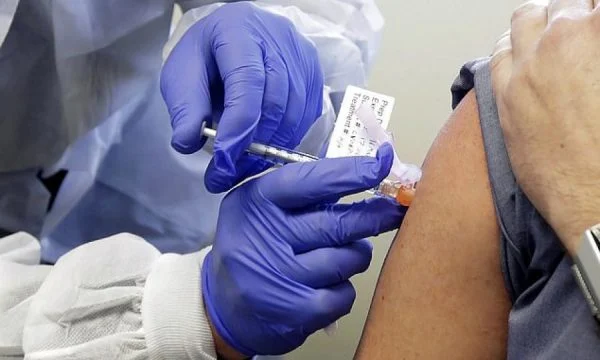
Kosovo has launched the anti-corporated vaccine campaign in late March.
The first vaccines have been provided through donations, while in May it has signed its first contract with Pfizer companies/ B NTech for securing over a million vaccines.
So far, about 43 per cent of Kosovo's citizens have been vaccinated with two doses. The third and reinforced dose of vaccine has also been administered on December 9th. / REL