 an hour ago
Putin, Kosovo, Bosnia Game Like Time Bombs in Balkans
Periskopi(4 years ago)
(4 years ago)This year marked the 30th anniversary of the beginning of Yugoslav wars, Europe's bloodiest conflict since World War II. Although Balkan states chose democratic governance and the path towards integration with NATO and the European Union immediately after the wars, continued neglect by the West has remained the same over the years [...]
This year marked the 30th anniversary of the beginning of Yugoslav wars, Europe's bloodiest conflict since World War II. Although Balkan states chose democratic governance and the path towards integration with NATO and the European Union immediately after the wars, continued neglect by the West has remained the same in recent years.
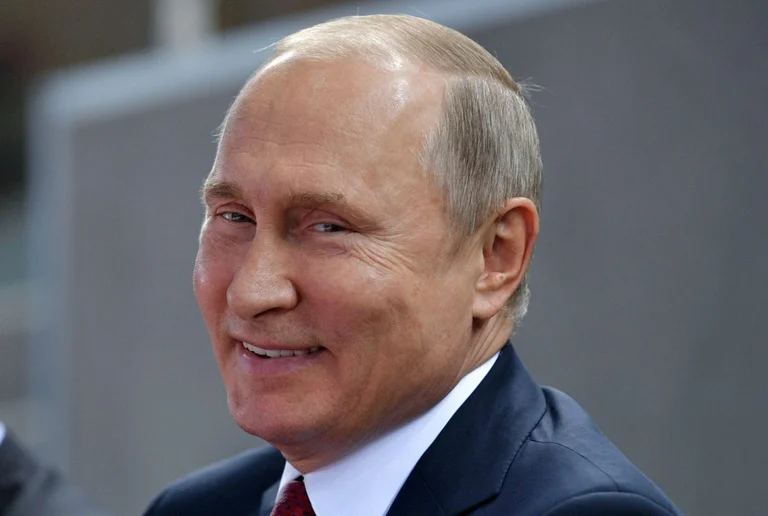
Russian President Vladimir Putin is now exploiting his opportunity and using former Yugoslav states as the next battlefield to weaken NATO and the European Union.
Putin's efforts to push the Balkans into the abyss are part of its mission to restore Russia as a mediator of global power. Like the Kremlin strategy in the Caucasus, Russia's goal in the Balkans is to increase tensions so that it can be positioned as the only regional mediator and guarantor of security.
It aims simultaneously to show that neither NATO, the EU nor their members are reliable partners for any of the Balkan countries. While Moscow also continues to deploy military troops near the border with Ukraine, its campaign of influence in the Balkans serves as another theatre to challenge the West. For many in the West, Putin's strategy is confusing. These analysts see the Balkans as a geopolitical backlog; they do not understand Russia's gain by interfering in the region, abcnews reports. al
The Balkans have never given up so easily. Russia views the region as Europe's most manageable country: its increasing influence could allow it to deploy strategic military assets close to a large American base and promises to provide it access to the Adriatic Sea. Putin's greatest goal is to restore the balance of power in Europe to Moscow's advantage, and the Balkans are part of this strategy. Moscow has launched information operations to fuel ethnic tensions and encourage protests, cement arms agreements, and exploit long religious and cultural ties between the Russian Orthodox Church and the Serbian Orthodox Church to its advantage in the region.
Russia's efforts have also been assisted by the EU's poor reaction. Despite many years and billions of euros spent on preparing the Balkans for EU integration, the effort has been put on hold. The EU has not expanded since Croatia's introduction in 2013, and despite promises of membership for “the outside of the Western Balkans” Albania, Bosnia, Kosovo, Montenegro, Northern Macedonia and Serbia for various reasons, talks have been put on hold. Frustrated by various challenges such as Brexit, the COVID-19, the rise of extreme rightist groups and the crisis of migrants in Europe, EU enlargement is pending. This failure has made the Balkans a visible target for Putin.
During the recent crisis in the Balkans in the 1990s, Russia had no power to intervene militarily. Instead, Russia was restricted to a peacekeeping mission following Kosovo's 1999 war, from which it decided to withdraw in 2003. Even then, the Russian government described NATO enlargement in Eastern Europe as a threat to national security. Now, with Russia's relatively stronger economy and army, the Kremlin has an opportunity to curb NATO progress by targeting former Yugoslav states.
Western Europe was creating “on” the last time the war broke out in the Balkans, but this time I can't ignore the situation happening. Increased corruption in Balkan countries has created divisions that Moscow has exploited to meet its goals. As the former Yugoslav states passed from socialism to free market economies after the 1990s, cleptocracy and illegal privatisation took root.
Putin is using corruption for economic, ethnic and religious divisions in Balkan societies by forcing leaders in the region. Serbia acts as a key player in the Kremlin's Balkan bid. Both the government and the church are loyal to Moscow, which has been based for centuries on common religious and cultural ties, as well as the mutual isolation of Serbia and Russia by contemporary Western powers.
The Serbian government called for the creation of a Serbian <x0-bot”-a Balkan parallel with Putin's “Russian world”, designed to unite all Serbs under a common cultural framework. Serbian President Aleksandar Vuciq has the most immediate strategic interests in Russia's intervention, while chaos in the region will allow him to be deployed as a force for stability ahead of his 2022 re-election campaign, abcnews reports. al
To ensure that the elections are in their favour, Serbia and Russia pledged to work together to stop mass protests and the “coloured revolution” coming from the West. Russia has responded to Serbian loyalty through generous support for the Serbian Army. Since 2018, Serbia's defence budget has almost doubled, and it is at the top of all Balkan states in terms of defence expenditures. Despite threats of American sanctions against Serbia, Moscow sent an S-400 missile system to Serbia in 2019 for a military exercise.
Serbia is also awaiting a Russian-led humanitarian “ ” centre, which serves as an intelligence collection institution located near NATO's main base in Kosovo. Moscow has openly threatened Balkan countries that have tried to strengthen their security ties with the West. He tried to derail a 2018 referendum on NATO membership in Northern Macedonia, and its ambassador declared the country a “legitimate target” if tensions between NATO and Russia increased (the country became a member country in 2020).
In the neighbouring country in Montenegro, Moscow backed a coup in 2016, just before its successful bid to join NATO. Russia understands that religion in the Balkans has always been important in promoting conflicts. In Montenegro, the Kremlin promotes pro-Russian policies through the Serbian Orthodox Church, which has denigrated the concept of distinctive Montenegrin and Serbian national identities and intervened in politics in the name of Moscow. Working through the church, Russia organised mass protests last year and replaced a non-co-operative government with pro-Russian leadership.
Kosovo, Bosnia and Herzegovina are like clock bombs now in the Balkans
Although Kosovo's population is more than 90 percent Albanian, Serbs see the country as part of it. Just as a civil war erupted from tensions between different religious and ethnic groups in the early 1990s, the Kremlin is now using the Orthodox Church to destabilise the country and the wider region. Russia's Orthodox Church has escalated repeated disputes over religious sites, finally expressing concern for the “the benefits of Christian shrines in Kosovo” following the fuelling of tensions between Kosovo and Serbia.
Moscow has also made it clear that diplomatic recognition by the United Nations of Kosovo's independence from Serbia will be impossible without Russia's approval. Putin often mentions Kosovo to justify the annexation of Crime from Russia, arguing that recognition of the country's secession from Serbia by Western countries created a precedent that legitimises unilateral declarations of independence of other territories.
Brussels has failed to make progress towards recognising Kosovo from Serbia, as did Washington's “Agreement” of 2020 by US President Donald Trump failed to produce results on the core issues of the dispute.
KFOR, the NATO peacekeeping force deployed in Kosovo, has likewise struggled to preserve stability. In September, protests broke out on the disputed Kosovo-Serbia border to preventing Serb license vehicles to Kosovo. This resulted in blockades and performances by Serbian air forces and the deployment of Kosovo police forces. Russia, on the other hand, attended the event by mocking KFOR and asking the EU for inadequate mediation of continued tensions between the two states.
In Bosnia and Herzegovina, the Dayton peace agreement that ended the war in 1995 is in crisis. The country continues to be led by divisions between its Bosniak, Serb and Croat communities, and Russia has exploited these divisions to its advantage. In March, Russia threatened to retaliate if Bosnia were part of NATO. Meanwhile, the Serb member of Bosnia's tripartite presidency, Milorad Dodik, threatened that Republika Srpska, one of the two entities that make up the country, would secede from Bosnia. In December, the Republika Srpska National Assembly voted in favour of the start of a procedure for Bosnian Serbs to withdraw from state-level institutions, including the Bosnian Army, security services, the tax system and the judiciary.
In addition to Republika Srpska, the Kremlin has supported Bosnian Croat nationalists to promote the creation of another entity within Bosnia and Herzegovina. The top international representative in Bosnia, Christian Schmidt, expressed concern in November when he said that “priorities for further division and conflict are very real”. The time has come for Western powers to wake up from the threat that Russia's intervention in the Balkans represents their interests. And they have some options available to them.
NATO should focus on the region and give priority to de-progressing tensions. It must support the Balkans, as it did in Montenegro in 2019, to combat Russian deinformation campaigns and other information operations. NATO members should also organise a “coalization of volunteers” to oppose Russian intervention in Bosnia, placing peacekeeping missions in strategic areas, such as the northeastern Brcko district, to prevent out of control of endangered areas, reports abcnews. al
This force could complement the EU-led peacekeeping force (EUFOR), which is tasked with preserving peace and security in Bosnia but whose mandate should be extended to the UN Security Council, where Russia and China have veto rights. US President Joe Biden also signed an executive order to sanction those who threaten the stability of the Western Balkans in June; The EU must join these efforts.
We cannot expect all NATO members to support the Balkans, as Hungary and several other European NATO countries serve as representatives of Russia in the organisation. On the other hand, the United Kingdom seems to have recognized the severity of the crisis. It has promised that it will maintain “stability in the Western Balkans” and has warned Russia not to make a strategic “ ” in the region. London must work to turn these words into actions by leading the coalition to end Russian intervention in the region.
Above all, NATO must accelerate the membership of Bosnia and Kosovo in NATO.
Such a move would raise Kremlin costs for its Balkan operations. Russia has staunchly rejected NATO enlargement, and as the crisis continues in Ukraine, it has called for a legally binding guarantee that NATO will discontinue military activity in Eastern Europe.
Integration of Bosnia and Kosovo would be a message that the Balkans will not be alone in facing Moscow and that Putin will not determine NATO's future.
As happened at the beginning of the Yugoslav wars, or the eve of World War I, it may be difficult to convince the world of the importance of the Balkans. In the 1990s, European countries failed to respond urgently to the crisis, and the United States was forced to intervene.
However, it is the United States that is unlikely to intervene this time around. So the burden will remain on the EU.
Title: Periscope











