3 minutes ago
Kurti: Serbia is behaving in Western Balkans like Russia with its neighbours
Periskopi(5 years ago)
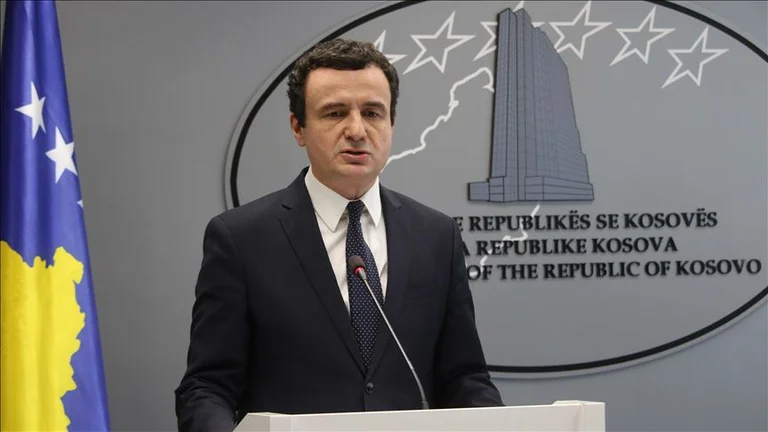
(5 years ago)Kosovo Prime Minister Albin Kurti has acknowledged that the state that the government has no greater problem than the report with Serbia. Our biggest problem is Serbia, which can neither think nor accept Kosovo as an equal state and neighbour”, Kurti said in an interview [...]
Our biggest problem is Serbia, which can neither think nor accept Kosovo as an equal state and neighbour”, Kurti said in an interview for the Montenegrin newspaper “Pobjeda”.
He has accused Serbia of hostile behaviour against other states emerging from the former Yugoslavia, while comparing it to Russia.
Serbia is behaving in the Western Balkans as Russia with its neighbours: the entity of Republika Srpska in Bosnia tries to turn it into Belarus, and Montenegro into Ukraine.
In essence, Serbia does not recognise the citizenship of countries that are not members of the European Union -- Bosnia and Herzegovina, Montenegro, Kosovo -- and even Northern Macedonia. Rather; these states consider them temporary, and with all their capacities, they commit to destroy their citizenship”, Kurti said.
He also clarified that there would be no establishment of the Association of Serbian municipalities, since according to him, it is contrary to Article 23 of the Kosovo Constitution.
We have a creature like this in Bosnia and Herzegovina -- called Republika Srpska -- built in Dayton and serves Belgrade, not Serbs. So Belgrade wants the same creature in Kosovo”.
Meanwhile, it has reiterated the stance against the “Balkan Open” project.
The Open Balkans are more like a Balkans that is open to influences from the East, separately from the Russian Federation and China, open to autism, corruption, war crimes... Everything against the European values of democracy and the rule of law”.
Kurti has not answered the question of whether he has the impression that Albania's Prime Minister Edi Rama is better understood than he is with Serbia's president, Alliance Vucinqi, but has cited the recent collection of Kosovo and Albanian governments, and the signing of 13 new agreements between them.