43 minutes ago
What impact does the decline of the Turkish lira have?
Periskopi(5 years ago)
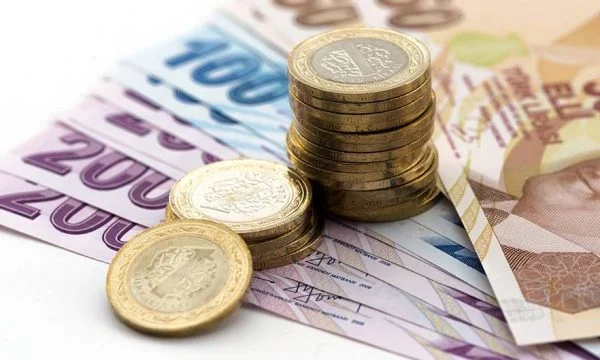
(5 years ago)Turkey's currency, lira, has fallen to the lowest values in history in recent months compared to the US dollar and the euro. Associated Press This after Turkish President Recep Tayip Erdogan insists on politics highly criticised for lowering interest rates, though prices for consumers have risen. As a result, [...]
Associated Press
This is after Turkish President Recep Tayip Erdogan insists on the policy highly criticised for lowering interest rates, though prices for consumers have risen.
As a result, families are having difficulty buying food and other goods, and Turkish lira has lost about 40 percent of its value since the beginning of the year, becoming one of the lowest performance currency.
In this text you can learn details from the Turkish currency crisis and the influence it has on the state that is facing tremendous inflation.
What's going on?
Turkey's Central Bank has reduced the cost of borrowing money by 4 percent since September, according to President Erdogan's will, even though inflation rose by about 20 percent.
Erdogan, who has been in power for about 19 years, and has become more authoritarian over the years, claims high interest rates cause inflation, which goes contrary to what economists in general say: that increased interest rates will lower prices.
The lowering of rates has raised concerns about the Central Bank's independence, until the unusual monetary policies of the state have intimidated foreign investors, who are removing Turkish assets.
On the other hand, Turkish citizens are rushing to exchange their savings in foreign and gold currency to protect them from rising inflation.
The “people bring their savings and they always want to buy dollars. When it's over, where's this going? They're panicking. People are always panicking and using the money stored under the bed”, said Hulya Orak, a worker in a currency exchange centre.
As a result, Turkish lira that has barely recovered from the 2018 crisis has weakened in record value compared to the dollar and the euro.
This currency fell to a record low compared to American currency on November 23rd, as Erdogan insisted there will be no turning back from his unusual policies.
On Tuesday (November 30th), the lira fell to 14th in comparison to a dollar, after Erdogan reaffirmed that lowering interest rates would continue.
Lira recovered slightly on Wednesday, December 1st, after the Central Bank announced it is investing in the foreign exchange exchange market to stem the freedom instability.
How have people been affected?
When inflation has reached more than 21 percent, according to official figures, on Friday (December 3rd) the prices of basic goods increased, and many people in this country with a population of over 83 million are having difficulty producing.
The Independent Group for the Study of Inflation, composed of academics and former government officials, placed inflation at 58 percent.
The Turkish opposition has long been loud and skeptical on official inflation figures and has questioned the independence of Turkey's Statistical Institute.
The depreciated lira has increased prices, causing imports, derivatives and everyday goods to be more expensive in Turkey -- the state that depends on the import of raw materials.
Meanwhile, the price of rents has increased, and prices for buying houses are rising.
Each morning, long rows form before sterns that sell bread cheaper than food shops and ovens.
We're reducing consumption to everything. I bought ten loaves earlier, now I buy five. We've already given up buying meat”, Sinasi Yukselen said while waiting in line.
At a shopping mall that sells goods for release in Ankara, Emine Cengizr said she wants to buy a winter coat for her teenage daughter, but left empty hands.
If I buy my coat, we will have nothing to eat for the entire week”, she said.
Selva Demiralp, professor of economics at Istanbul University, said she is also concerned about an eventual brain drain.
When the pay gap between what you can earn in Turkey and abroad is so big, it will be very difficult to keep people educated at home. And this is a major threat to the future of this country”, she said.
What is Erdogan's economic policy?
Turkish President Erdogan has demanded that there be low cost of borrowing money in order to stimulate the economy, boost economic growth and export, and create jobs. He has vowed to stop the cycle of a “hot money” short-term, lured by high interest rates.
Economists said that increasing borrowing costs reduce inflation that has marked growth worldwide, as the economy is recovering from the coronary pandemic, but is specifically acute in Turkey due to the unusual policies of this government.
A devout Muslim whose religion views the guilty as a sin, Erdogan has said that interest rates “are the mother and father of all evil”.
He has fired three Central Bank governors who resisted lower interest rates.
Erdogan on 2 December appointed a new finance minister, considered to support lowering interest rates, leading to a decline in the freedom.
“With a new economic model, we are dismissing the money withdrawal policy with high interest rates. We are supporting production and export with low interest”, Erdogan said this week.
The Turkish leader has blamed the decline of the lira, foreign forces determined to destroy the Turkish economy, and has said his government is fighting <x0th of an economic struggle for independence”.
Demiralp, economist, said the government is doing the opposite of what needs to be done to lower prices.
The Central Bank claims that by lowering interest rates, they will stop the inflation pressure. Markets don't believe this” story, she said.
“Turkey has focused on economic growth instead of lowering inflation. But, I believe that growth is also in question at this point because we will see more tribulations that will result from panic and uncertainty as well as the high cost of crisis”, Demiralp added.
What is the political impact on Erdogan?
His early years in power were marked with a strong economy that helped him win several elections.
Recently, increased prices for consumers have decreased its popularity, where polls are showing concern over its economic policies even among its supporters.
Last week, police banned a small demonstration that erupted in Istanbul and several other Turkish cities from groups protesting the high cost of living. Tens of people were detained.
An alliance of opposition parties has formed a bloc against Erdogan's party and have already begun to rise in popularity, according to polls.
Opposition coalition members are demanding early elections and are accusing Erdogan of treason due to mismanagement of the economy.
Erdogan has refused to call early elections, insisting that the elections will be held in 2023, as scheduled.
He said this week that the Turkish government is working on the programme that would create 50,000 new jobs and is expected to raise the minimum wage.
“We are preparing to take steps one by one to support citizens whose purchasing power has dropped”, Erdogan said. / REL