 an hour ago
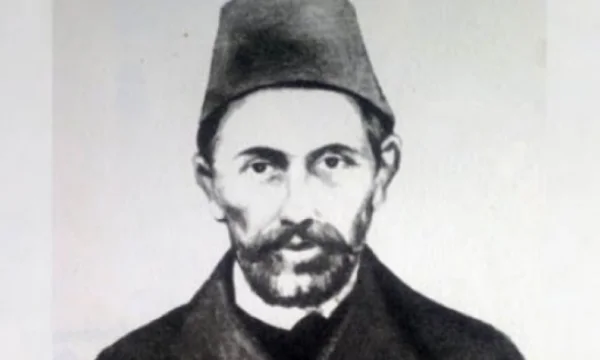
Haxhi Zeka's Birth Anniversary
Periskopi(4 years ago)
(4 years ago)Haxhi Zeqe Byber was born on December 20, 1832, in Shoshan, in the Gjakova Mountain. His family moved to Pec, they were landowners. He has been among the organisers of the Prizren League and supporters of its autonomous arm, the director of the Pec branch in Link, where he was distinguished as military leader [...]
Haxhi Zeqe Byber was born on December 20, 1832, in Shoshan, in the Gjakova Mountain. His family moved to Pec, they were landowners. He has been among the organisers of the Prizren League and supporters of its autonomous arm, the director of the Pec branch in the League, where he was distinguished as a military leader with contributions to the Protection of Plava and Guita. Years later he tried to renew the same spirit of movement through the League of Pec.
Zeka was among the organisers of the Albanian League of Prizren and one of the most determined fighters for the autonomy of Albanian villas and the protection of their territorial integrity.
On June 10, 1878, she was elected as a member of her Central Committee. He participated as military commander at the helm of the League forces in the Gjakova action in September 1878 against Mehmet Ali Pasha.
Along with other political and military leaders of the League fought at the end of 1879 and early 1880 for the protection of Plava and Guzia against Montenegro's forces. He had called forth the power of Peja, and there was marked by him Chele Shaban. Hadziu kept the army for the rest of the winter. In the spring of 1881, he participated in battles against the army commanded by Dervis Pasha.
Along with Sulejman Voksin and Kadri Bajrin, Haxhi Zeka in 1884-1885 led the anti-political uprisings of Kosovo Albanians, aiming to restore the League and come to life with its autonomyist ideas. In 1893 Haxhi Zeka with Bajram Currin organised the uprising involving Peja, Gjakova and other parts of Kosovo against the economic and political injustices of the empire.
After authorities laid down the uprising with military units, Haxhi Zeka demanded that he surrender only to Sultan. In December 1893 he was sent to Istanbul, where he was welcomed by the Sultan. There he spent two years in exile “volunteer” and returned on October 15, 1895, hosted by his countrymen in Skopje and Pec. According to some sources, Haxhi Zeka and his successor went to serve in the Greek-Serbian war.
In 1897 a uprising started in Kosovo. In co-operation with the Istanbul Albanian Committee, led by Sami Frasher and other natives inside and outside the homeland, Haxhi Zeka hosted the Pec Assembly, where 450-500 people gathered, the Pec League was established and elected chairman of its Committee, and represented the autonomy programme of the Istanbul Committee. Many Albanian cities expressed solidarity with this organisation.
In April 1899, he organised the first battle committees prepared to confront Bulgarian revolutionary groups. These committees were then prepared for uprisings against the empire but were laid down by the High Gate.
He came to hold meetings in the northern part of Kosovo's villa, aimed at uniting Albanians against Ottomans and neighbours. In February 1901, in the quality of the League chairman, he organised a rally at Sultan Murat's Tyrbet in Fushe Kosovo, where he expressed concern for Albanian areas, becoming increasingly the main enemy of Serbian ambitions.
Serbian authorities sent their consul to Pristina, Sima Abramovic, Haxhi's personal enemy, the Mehmed Zaim bloodbas. He urged his son, captain of the nips Adam Zaym, to kill Hagi Zakaria.
That was on February 21, 1902, at the market in Pec. Haxhiu was buried in the cemetery of Sultan Mehmed Fatih mosque in Pec.
His murder led to the face of Albanian uprisings that had erupted in Kosovo's villa. The hander was killed in 1912 by Serbian authorities after seeking the promised reward before the assassination. / KP











