44 minutes ago
What's the new version of Coved snooping scientists found in South Africa?
Periskopi(5 years ago)
(5 years ago)Authorities in some parts of the world have reacted with alarm to the new version of the coronary identified in South Africa, as the European Union, Great Britain and India are among the countries that have revealed travel restrictions as scientists try to understand whether the mutation is resistant to vaccines. When [...]
When and where has this version been identified?
Scientists have identified a small number of cases with the B.1.1.529 version on November 23rd in some samples taken on November 14th-16th.
On November 24th, South African scientists have informed the government that they are concerned about what they have seen and have asked the World Health Organization to form a technical group to assess the virus's evolution.
This country has identified about 100 cases with this option, mainly in the province of Gauteng.
Has something else been identified?
South African scientists have said that early signs from laboratorys indicate that the virus has spread rapidly to Gautengo and may have been present in eight other provinces.
The daily infection rate has almost doubled on November 25th, reaching 2,465.
The Institute for Influencing Diseases in South Africa has not attributed the growth to this version, although local scientists suspect that this is the reason.
Botswana has identified four cases -- all foreigners who have arrived there on diplomatic missions -- and have now left the state.
One case has been reported in Hong Kong, another in South Africa, and other cases in Israel that have returned to Malawi.
On Tests PCR, this option is easily identified by that Delta, which has so far been a dominant variant in the world.
Why are scientists concerned?
All viruses including the coronavirus change after a while. Most changes have little or no impact on their properties.
However, some changes may affect how easily a virus spreads, how severe it is, and how much vaccines affect it.
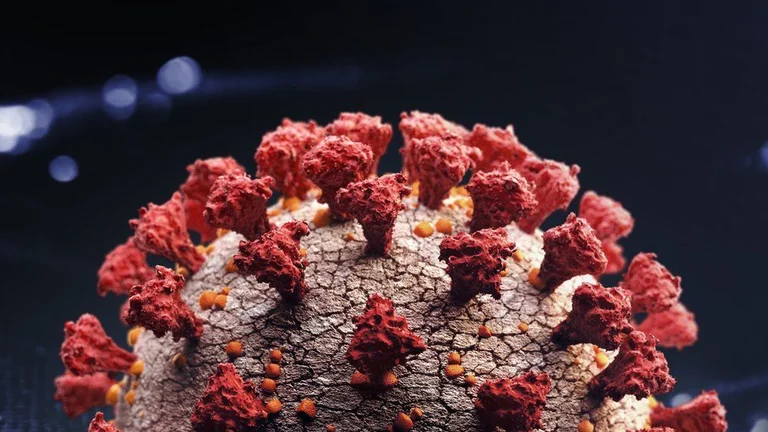
However, the new version has been said to contain more than 30 mutations in the protein that viruses use to enter human cells, health officials in the United Kingdom have said.
The number of mutations is twice as high as Delta's, which makes this virus much different from the original virus, which was originally reported on in Wuhan, China, and for which vaccines were created.
South African scientists have said that mutations are bound by resistance to neutralising antibodies and greater spread, but others have said that they have no obvious effects, so there is still no final word.
U.K. Health Security Agency Adviser Susan Hopkins has told us about your radio.British pollers, BBC, that some mutations have not been seen before, so they have no idea what their effect may be.
Hence, this is considered the most complex version ever seen.
In other tests it is expected to be understood whether it is transmitted faster, is more infectious or if it is resistant to vaccines.
Maria van Carkhoves of the World Health Organization has said that working to understand more about this option will take weeks.
At the same time, vaccines continue to be the key weapon to combat this virus.
Officials in South Africa have said that the infected have not reported unusual symptoms, and as with other versions, some have been without symptoms.
What did O say? BSH?
The United Nations Health Agency will decide whether to declare this virus of interest or concern.
It is possible that this version will then receive a Greek name, such as other variants.
So far O The BSH has identified four variants of coronary, Alpha, Beta, Gama and Delta.
Two other options of interest are Lambda, identified in Peru in December 2020 and Mu, identified in Colombia in January this year.