 43 minutes ago
Protests continue in Belgrade against wall dedicated to Mladic
Periskopi(5 years ago)
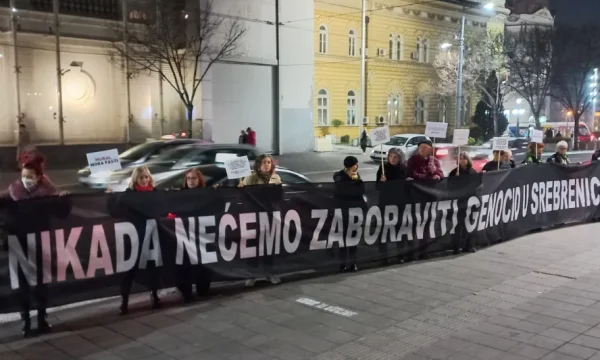
(5 years ago)Several nongovernmental organisations, human rights activists and citizens protested Saturday, November 13th in Belgrade, demanding the removal of a wall dedicated to convicted war criminal Ratko Mladic, who has been placed on a facade in the centre of the Serbian capital. Protest “Murali must collapse”, which was held several hundred meters [...]
The protest “Murali must collapse”, which was held several hundred meters away from the mural dedicated to Mladic, is one of many gatherings that citizens and NGOs have organised, as police prevented activists who wanted to paint on the wall on the International Day Against Fasc on November 9th.
Protest organisers said it is time for Serbia's state to stop denying the genocide in Srebrenica, for which Ratko Mladic, as Republika Srpska Army general, was sentenced to life in The Hague. Protesters also demanded that Serbia change its position on war crimes, “was erected monuments to victims, not criminals”.
Although it was warned that participants in the protest, after the speeches, would be directed to the Vegosevo Street, where Ratko Mladic's mural, has been given up for security reasons.
There are lots of cops, there are many right-wingers. We are good people, and we don't want any incident to happen”, human rights activist Aida Coroviq told those in attendance.
On November 9th, Corovic was arrested for laying eggs on the wall of Ratko Mladic, convicted of war crimes and genocide in Bosnia and Herzegovina by The Hague tribunal.
During the protest, as Radio Free Europe journalists reported, police through a cordon separated rightlists from protesters.
Right-wing supporters cheered messages of support for Mladic and offended protesters who are demanding the removal of the wall. Meanwhile, the prooters on the other side have called the right <x0 Alphaists”.
Murali with Mladic's portrait for four months is standing on the facade of a building located at the intersection of the Vesgosevo and Alexa Nenadovici streets.
An unknown author painted the mural at the end of July this year, a month after the tribunal in The Hague confirmed the life sentence on Ratko Mladic on 8 June. The police's explanation for the ban on the November 9th rally, in which it was meant to paint the mural, was that there was the danger of mutual physical conflict (the supporters and opponents of the warned rally) and the deterioration of public order and calm.
On November 10th, Serbia's president, Aleksandar Vuciq, answering journalists' questions, said police have protected citizens from bilateral conflicts. The ruling coalition in Serbia, led by Vuciki's Serbian Progressive Party (SNS), refuses to admit that genocide occurred in Srebrenica in July 1995. Senior state officials say a terrible “crime” occurred in Srebrenica.











