an hour ago
Al Jazeera: Bosnians concerned that pushing for Serbian Army could trigger recent war violence
Periskopi(5 years ago)
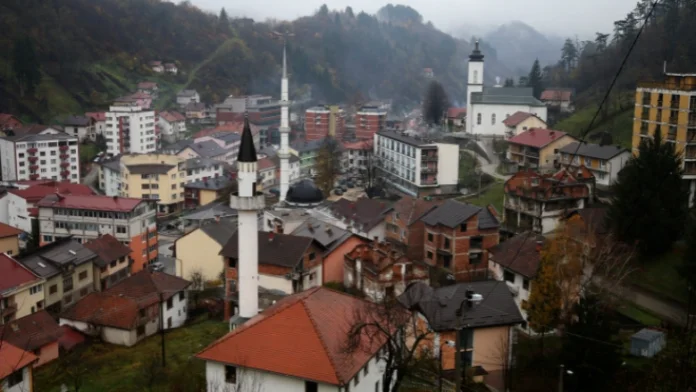
(5 years ago)Ahmed Hrustanovic, an imam and teacher in the town of Srebrenica in Bosnia and Herzegovina, fears for himself and his family as the country faces the worst political and security crisis since the war in the 1990s. According to Al Jazeera, it conveys Telegraph, in July 1995, that Serb forces had killed [...]
According to Al Jazeera, it sends out Telegrafi, in July 1995, Serbian forces had killed the father of 35-year-old two grandparents, four uncles and other relatives during the Srebrenica genocide, which has been declared the UN's safe “area”.
From 1992 to 1995, Bosnia was attacked by Serb and Croatian forces, aimed at dividing the country into a Greater Serbia and a Greater Croatia. About 100,000 people were killed, and nearly two million more fled.
The conflict ended in December 1995, with the signing of the US-brokered Dayton Peace Agreement, which established Bosnia and Herzegovina as a state composed of two entities: A Federation entity with Bosnian-Croatian dominance and a Serb-run entity Republika Srpska.
Milorad Dodik, a Serb member of Bosnia and Herzegovina's tripartite presidency, which rotates every eight months between a Bosniak member, a Serb and a Croat, has threatened for 15 years for Republika Srpska to secede.
But in the past month, he has taken significant steps towards such a move, announcing that Republika Srpska will withdraw from the main state institutions to achieve full autonomy within the country, contrary to the 1995 peace accords, writes Al Jazeera, records Telegrafi.
The crisis began in July when Valentin Inzko, then the high representative overseeing the implementation of the peace agreement, prevented the denial of genocide and ruled war crimes, as well as the degregulation of war criminals.
Serbian representatives responded by boycotting central state institutions.
Republika Srpska, along with the allies of China and Russia, does not recognise the Office of the High Representative and has long called for its closure.
Last week, Dodik announced that Republika Srpska would move towards forming its Bosnian Serb army after withdrawing from the joint Bosnian armed forces. The announcement has alarmed many Bosniaks like Hrustanovic, who fear a return to the violence of the 1990s.
I can't say that I'm not afraid and can't believe that after so many years and after we've survived the genocide, we're still afraid of ourselves, our family, and our own”, Hrustanovic told Al Jazeera.
The “people [in Srebrenica] are afraid. Today, I met one of the Mothers of Srebrenica (a group of activists representing relatives of genocide victims), and she asked me: Son, what's going on? Will we have to run again?”, he added.
It was the Bosnian Serb Army, along with the Serbian police, intelligence and security that carried out systematic violence against non-Serbs in the previous war.
The International Court of Justice in 2007 declared the Bosnian Serb Army responsible for the genocide in Srebrenica, located in the Republika Srpska entity near the border with Serbia.
Hrustanovic returned to Srebrenica in 2014, two years after he and his family buried his father's incomplete skeleton remains and his two uncles.
A father of four, Hrustanovic, said he hoped his family would not go away but did not rule it out.
The political situation has never been this bad [from the war], to the point where they are openly heading towards forming the Republika Srpska Army that committed genocide”, Hrustanovic said. “What a loss of humanity is to let someone form an army that committed a genocide”.