 2 hours ago
EU criticises Serbia for denying Srebrenica genocide
Periskopi(5 years ago)
(5 years ago)In recent days, there have been reactions from European Union institutions regarding the debate in Serbia on responsibility for war crimes and genocide in Srebrenica. Some reactions have been direct and have been linked to the activity of Serbia's Police to prevent the removal of a mural dedicated to Bosnia Serb military leader and [...]
In recent days, there have been reactions from European Union institutions regarding the debate in Serbia on responsibility for war crimes and genocide in Srebrenica.
Some reactions have been direct and have been linked to the activity of Serbia's Police to prevent the removal of a mural dedicated to Bosnia and Herzegovina Serb military leader Ratko Mladic, convicted of genocide and war crimes in Bosnia. But some reactions have been more general, without referring to certain cases.
A group of European Parliament deputies through a letter to leaders in Serbia said that “a state aspiring to EU membership cannot engage police to preserve a wall of a war criminal”.
“Wall protection is also an example of what the Government of Serbia and President (Serbian, Aleksandar) think about reconciliation, rule of law, democracy and regional co-operation. Once again, the authorities of Serbia and political officials have proved that they do not respect international justice and its decisions, as well as the victims of wars in the former Yugoslavia”, said in a letter signed by several MEPs, including Tonino Picula from Croatia and Violet von Crmon from Germany.
Calls for reconciliation and overcoming inheritance from the past and content from the legalisation of war criminals, the European Commission has also made.
Ana Pisonero, spokesperson for the European Commission for Neighborhood, Enlargement and International Partnership, has said that “The EU has a clear and firm stand for the need to effectively exceed the legacy from the past, content from any degloreing war criminals and denying war crimes, and strengthening reconciliation”.
Any state aspiring to membership in the EU is expected to implement and promote basic EU values, such as rule of law, democracy and justice. As we have said in the latest package of enlargement, Serbia must continue to deepen reforms even in freedom of expression and in proceeding war crimes cases. This is essential for the decision to move on the road to the EU”, said Pisonero.
It has said the EU rejects and condemns any denial, relativism or misinterpretation of the genocide in Srebrenica.
The implementation of international tribunal decisions and promotion of a suitable environment for reconciliation and overcoming the past from war are key to all countries in the region, to advance in the EU integration process”, Pisonero has said.
In Serbia, from the highest state level, they continue to deny genocide in Srebrenica, though in some cases they cite it as a terrible “crime”, but refusing to use the term genocide.
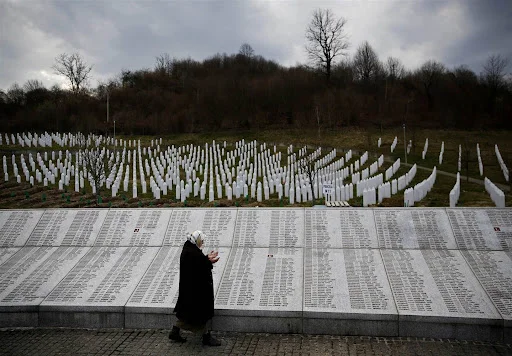
During the war in Bosnia, Serb forces killed over 8,000 Muslim men and boys in Srebrenica. The murders were recognised as genocide by the International Court of Justice in The Hague.
Meanwhile, former top international representative in Bosnia Valentin Inzko has made a decision that denying genocide will be condemned. This decision has sparked new tensions in Bosnia and Herzegovina.
Even in Montenegro, when the resolution for condemning the genocide in Srebrenica was passed in parliament, political tensions arose, withties from the force being dismissed by a minister who said he did not recognise the genocide in Srebrenica.











