 an hour ago
Debat for Trade barriers with Serbia
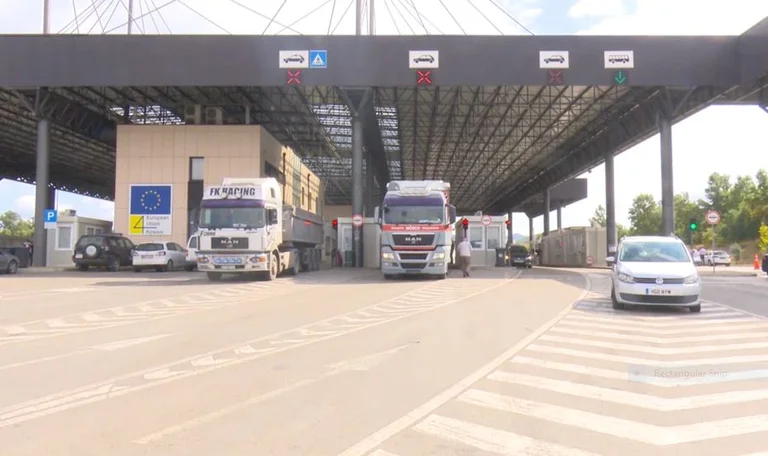
Periskopi(5 years ago)
(5 years ago)Government authorities in Kosovo said on Monday they are making the necessary preparations for establishing institutional opportunities that enable the full and functional implementation of trade reciprocity measures with Serbia. These comments were made during a debate organised by the Kosovo Democratic Institute, regarding “trade barriers between Kosovo and Serbia”. [...]
These comments were made during a debate organised by the Kosovo Democratic Institute, regarding “trade barriers between Kosovo and Serbia”.
Industry Minister Roseta Hajdari said Serbia does not recognise the origin of Kosovo products, preventing exports.
“So Serbia does not recognise any certificate from Kosovo and does not request any certificate because it does not want to recognise Kosovo's citizenship and it also does not request a victory certificate”, she said.
Minister Hajdari said that institutions are currently co-ordinating actions to respond to Serbia's approach.
“We are committed to implementing reciprocity, but always this requires success on the ground and logistical preparation on the ground, and it is also in close co-ordination with Prime Minister Kurti, who also has the political aspect that examines how best to be addressed, so in intergovernmental co-ordination and institutions we should be very well prepared not to implement any reciprocity measures on the ground<1>, she said.
Parliamentary Commission for Economy Chairman Ferat Shala criticised the government for failing to act.
“E have expected a more powerful outcome in response to reciprocity, maybe we have a gay but so the opinion is prepared that we will have a strong and transparent reciprocity in relation to the problems we have with Serbia and your rhetoric, now I see that you are insisting on certain monetary, secondary decisions of separated products, but you want to find a second way to escape the big reciprocity decision<1>, he said.
Berat Rukiqi from Kosovo's Economic Oda said creative measures must be found with Serbia to solve trade problems before acting on reciprocity measures.
“Non-tariffs from nature are secretive and states apply them somewhere systematically and somewhat random, and if others apply to us, we need to find creative ways with no need to make decisions, somewhere delayed they will more products, somewhere they don't leave the Sanitarian and phytosanitary inspectors”, he said.
Business associations in Kosovo said most barriers and challenges to trade exchanges with Serbia have political overtones.
The Kosovo government has sent a letter to leaders of European states to inform them of the violations Serbia is committing in trade relations with Kosovo and the reasons why reciprocity measures are being considered if Serbia does not remove barriers to Kosovo goods.
Prime Minister Albin Kurti, in his first term in 2020, imposed reciprocity measures on Serbia's goods as replacing the 100 per cent tariffs that were imposed in the fall of 2018. His move blocked the efforts to renew talks with Serbia by fuelling the international community's response, but also former partner Mr. Kurti's in the ruling coalition -- the Democratic League of Kosovo -- which also became the cause of the collapse of Mr. Kurti's first government in March last year.











