5 minutes ago
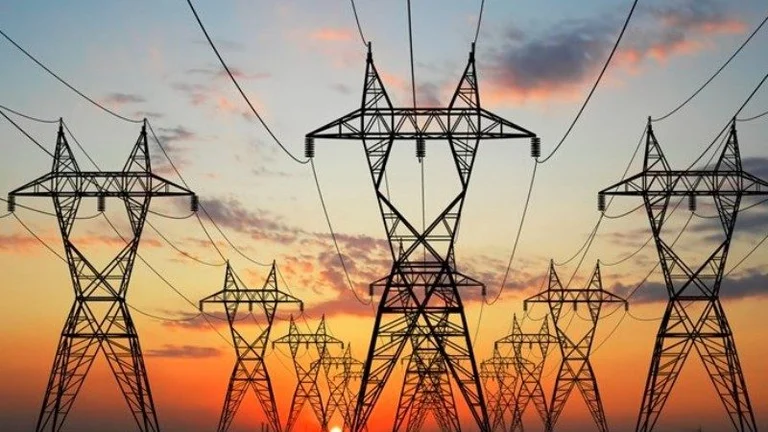
COMM STT exposes Serbian officials: Kosovo continues to supply north with electricity
Periskopi(5 years ago)
(5 years ago)The Kosovo System, Transition and Electricity Market operator (KOSTT) has denied Serbian officials' claims that Serb majority municipalities in the north, such as northern Mitrovica, Zvecani, Leposaviqi and Zubin Potoku, have been supplied directly with electricity from Serbia by the end of 2020. He made that claim Wednesday [...]
The Kosovo System, Transition and Electricity Market operator (KOSTT) has denied Serbian officials' claims that Serb majority municipalities in the north, such as northern Mitrovica, Zvecani, Leposaviqi and Zubin Potoku, have been supplied directly with electricity from Serbia by the end of 2020.
That claim was made on Wednesday (November 24th by Deputy Prime Minister and Minister for Mining and Energy in Serbia Government Zorana Mihajlovic, after COST announced on November 23rd the Parliamentary Commission for Economy, Industry, Intervention and Trade, that on November 16th it has cut off payment for energy spent in northern municipalities.
COMM STT is a public company with 100 percent of state shares. The shareholder's rights are exercised through the Kosovo Assembly.
Mihajlovic claims that the supply of these municipalities has been made directly from Serbia until December 2020. At this time Kosovo's energy system has been independent, leaving the SMM Block (Serbia, Northern Macedonia, Montenegro) and becoming part of the Kosovo-Albania Energy Systems Regulatory Block.
The 17m euro “Borgi that KO reported STT by December 2020 is a lie, because by December the north's supply has gone directly from Serbia”, Mihailovic added.
COST board chairman Jeton Mehmeti, on November 23rd, reported to the Parliamentary Commission for Economy said that for the payment of electricity to municipalities in the north, from 2017 to now the total amount is 27m 806 thousand euros and that over 17 million have been paid by KOSST.
However, COSTT officials, in a response to Radio Free Europe, have confirmed that the supply of all Kosovo citizens, including municipalities in northern Kosovo, has been consistently done by operators licensed by the Energy Regulatory Office(ZRRE).
Until December 14, 2020, when COST has operated under the SMM Block, the daily reports of electricity nominations from commercial parties and suppliers in COST and reported by the SMB Block (Serbia, Northern Macedonia, Montenegro), testify that Kosovo's north was not supplied by Serbia”, says COST.
North Debt With Millions
Power supply for the northern part is an unresolved problem since 1999.
Since this time, citizens of northern Mitrovica, Zubin Potok, Zvecan and Leposaviqi have not paid for the electricity they have spent.
About 12m euros a year are calculated the joint energy bill spent in four municipalities in northern Kosovo.
One time, the means to cover the energy spent in the north, COSTT secured it through electricity tariffs. The current spent on that section, from 1999 to 2017, has been billed for 3.5 percent more expensive citizen bills in other parts of Kosovo. The joint bill accounted for up to 12m euros annually.
But after many complaints, the Court of Appeals decided to suspend the practice at the end of 2017.
Covering losses from the electricity supply to the northern part was given as responsibility COSTS.
COMM STT had said earlier this year that from 2017 until the end of last year, 40m euros are estimated the value of energy spent in that part of Kosovo.
The government failed to find solutions
Early in May of this year, Kosovo's Assembly had approved the Commission's recommendations for Economy, Industry, Undertaking and Market, in terms of COST's request, for providing financial means for covering electricity losses in the four northern municipalities.
Through these recommendations, the Government of Kosovo was obliged to find sustainable solutions for the inspection of electricity to the north within six months. But the government failed.
Currently, the situation remains the same, but Kosovo Prime Minister Albin Kurti, at the Kosovo Parliament session, said they are constantly working to find a sustainable solution.
“On this issue we are co-operating with relevant parties such as the Energy Regulatory Office, the European Union as the fasiliator of this process, and with other partners”, Kurti said.
However, questioned by MPs, Prime Minister Kurti did not give any details or deadlines about when the first bills for electricity spent on consumers in the north could go.
This process, Kurti said, has been very difficult even the agreements reached in Brussels by past governments.
The solution is being sought in Brussels
The issue of running electricity for the municipality of northern Mitrovica, Leposaviqi, Zvecan and Zubin Potok has remained as a political problem between Kosovo and Serbia since the end of the war of 1998-99.
In 2013, under Brussels dialogue, the Energy Agreement was reached between Kosovo and Serbia, which included recording and licensing a Serbian company that will supply electricity to northern northern Mitrovica municipalities Zubin Potok, Zvecan and Leposaviq.
A company named “Electricity D.O.O.” registered in 2018 at the Business Record Agency.
But, the General Regulatory Office has confirmed to Radio Free Europe that it has not yet been equipped with licenses.
And we can't give any more clarification on this because, as we've already said, the company app Electricer D.O. OHA is still in the process of reviewing by the ZERE Board, and when the Board considers it ready for decision-making, it will be put to the agenda”, the ZERE response reported.
Kosovo negotiating team chief Besnik Bislimi indicated that after the last meeting in Brussels, they have handed over to the EU a proposal of concrete measures to be taken by the EU to regulate the issue of electricity default in the north.
Through a request, Radio Free Europe has asked Deputy Prime Minister Bislimi's office to know what the proposals have included and whether the company's license “electricity D.O.O.x1> is included, as the 2013 Energy Agreement envisions. But, until the publication of this article, Deputy Prime Minister Bislimi's office has not returned answers.
The “we delivered Mr. Lajcak (Miroslav Lajcak) a proposal of concrete measures that we also imply actions that we should take by the European Union itself” has declared Deputy Prime Minister Besnik Bislimi for Telegrafi.
For steps being taken by the Government of Kosovo in establishing the city's billing system in northern municipalities, they have not even returned to the Ministry of Economy.