an hour ago
More than 6m euros divided for Serb mainstream in the north
Periskopi(5 years ago)
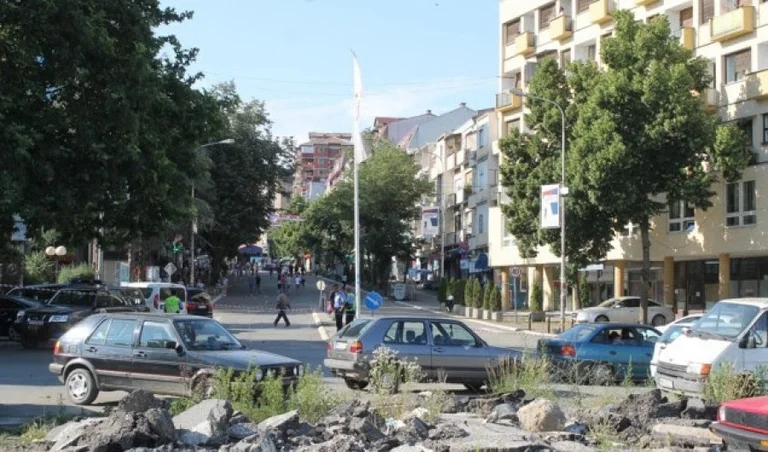
(5 years ago)Kosovo's System, Transition and Electricity Market Operator COSTT, has earmarked another 6.7m euros that it was envisioned in May this year for the payment of electricity for the four northern municipalities, thus extending the payment period by the end of this year. Thus, the initial cost of 11 [...]
Kosovo's System, Transition and Electricity Market Operator COSTT, has earmarked another 6.7m euros that it was envisioned in May this year for the payment of electricity for the four northern municipalities, thus extending the payment period by the end of this year. Thus, the initial cost of 11m euros has already increased to 17.7m euros.
On May 6th of this year, with 61 votes “for”, without the presence of opposition deputies, Kosovo's Assembly had approved the Commission for Economy's recommendations regarding NP COST's request to secure 11m euros for covering losses in the northern part of Kosovo. Among the recommendations was that the Government of Kosovo was obliged to find solutions within the six-month term to extend the billing system to northern municipalities.
Six months later, Kosova Prees has turned to the Ministry of Economy to see if there is any solution to this issue, but despite a week's wait, there is no answer, while Kono The STT confirmed that Kosovo Preress has already earmarked another 6.7m euros to cover losses from the current spent in the north, as well as the period of payment coverage has extended beyond six months, until the end of the year.
“Following recommendations approved by the Kosovo Assembly in the month of May 2021 through which KO STT has been authorised for exploiting its own budget for covering losses from used electricity but not paid in the northern part of Kosovo, COSTT has allocated the budget to an overall value of 17.7m euros for covering losses for the north until December 31st 2021<18x1>, says in a written response to KosovaPress, Zana Bajrami-Rama, communications manager at COST.
For these additional tools and not fulfilling the government's promise to address this issue with concrete plans, opposition and civil society have criticised.
Former Finance Minister Hykmete Bajrami tells Kosovo that it is regrets to increase the 11m-euro cost to 17.7m euros, as she points out, from a ruling party like Vetevendosje, which when in opposition was critical of the issue.
For the first time, we are being informed that COSTT has allocated 17.7m euros in losses in the north, not 11 million. We know these are the Commission's recommendations for Economy, and these recommendations are also being considered by the Constitutional Court... As a parliamentary group, we have not voted these recommendations, yes, it is true that one of the recommendations has been in the six months' time, the government will come up with plans to address this issue. It is good to point out that it was the Vetvendosje Movement in the time it was in the opposition that has been too loud to pay electricity spending in four northern municipalities. I am extremely sorry if the cost of 11m euros has now totaled 17.7 million. These COSTT tools are Kosovo budget tools... I am sorry that we have not seen any concrete steps to address this issue, which is extremely harmful and costly”, Bajrami points out.
Commission Chairman for Economy Ferat Shala stressing that recommendations for paying electricity to the north are under scrutiny by the Constitutional Court, says the deadline is running out where the government's instance has not taken any action to extend authority in the northern part for collecting means for the spent electricity.
“Time is proving that I was right, because now 6 months against the parliamentary recommendations in relation to COST, we have no actual or judicial movement on the extent of authority in that part. On the contrary, we have a worsening security and political situation for the area in question, for the northern part of Kosovo... In this case, in the worst position is COSTT, ZERE, and other instances, because it is going through deadlines where government instances have not taken any action or political to stabilise and start implementing the law in extending authority to the energy part”, he says.
InDEP senior researcher Dardan Abazi considers that the government would have to come with a detailed plan in the period it has promised, however, that, according to him, solving the problem for six months is difficult and almost impossible.
We consider that the time of six months to resolve the problem was short, yet the government would still have to bring a detailed plan to the Kosovo Assembly on how to approach the northern issue, what is the long-term solution the government sees so that we don't keep paying money for that part of Kosovo. How it was paid by COSTT, how it was paid by the government, how our bills paid, we're still the customers we're paying for that part of the north. And in that sense I consider that, the reasoning given then, there has been only one excuse to continue this payment from the citizens of the rest of Kosovo”, says Abazi.
In May, when the Commission for Economy recommendations were voted, Economy Minister Artane Rizvanolli, at the Assembly session, had said that at the end of six months they would try to have a lasting long-term solution to the issue of the electricity payment in the north.
We believe that at the end of these six months we will have a long-term and sustainable solution which unfortunately we have not been able to have that in the past 20 years”, Rizvanolli had declared.
About a week later from the hearing, exactly on May 14th, the Democratic Party of Kosovo sent the Constitutional Court's decision to allocate 11m euros for the payment of electricity to Serb-run northern municipalities. / KP