3 minutes ago
34 Year of Lasgush Poradeci's Death
Periskopi(5 years ago)
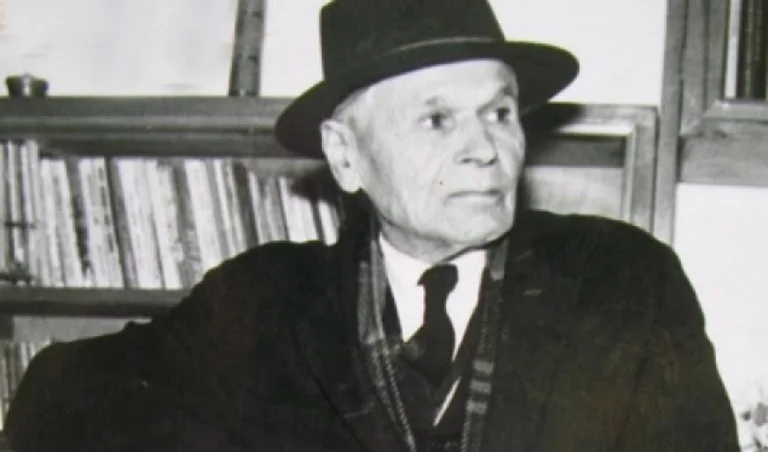
(5 years ago)Lazar Gusho, known as Lasgush Poradeci, was born in Pogradec on December 27th 1899 and died in Tirana on November 12, 1987. His creative activity highlighted him as a poet, writer and translator. The literary nickname known by him comes from the wrinkle of his name, Lazarus Sotir Gusho ( La- S-Gush) [...]
The literary nickname known by him comes from the wrinkle of his name, Lazarus Sotir Gusho ( La- S-Gush) and as a last name, has used a country edition, Poradeci.
Lasgush Poradeci was born into a family of domestic traditions. At the age of 10, my parents sent him to continue their studies in Manastir and later in Athens, where the license ended.
In 1921 he went to Romania to attend high studies. Without a scholarship and no help, he was forced to work and study at the same time. In Bucharest, he joined the Albanian Colony Homeland Movement, befriended the Asdren of other Albanian natives, and was also elected secretary general of the Colony. In the summer of 1924 The government of Fan Noley awarded him the scholarship and thus concluded his high studies in Graz (Austri) at the Romano-German Faculty of Philology.
Unlike the Renaissance poets, who, despite their originality, had common features, prominent poets from the period of Independence Noli, Fisha, Poradeci, Migeni, are completely different from each other from their background, from their disposition, and from their interests and goals.
Lasgush Poradeci lived on the Renaissance during the outbreak of major freedom uprisings. In the work of this great freedom of literature, the homeland's concern of protecting the nation and the Renaissance tradition lived, as did the desire for triumph of democratic views, concern over a general cultural and spiritual emancipation of Albanian society.
It is one of our greatest freedoms, which was distinguished for the sensitivity and poetic sweetness with which he sang to Albania and love.
In 1933, its first volume was published “The image of the stars”, and in 1937 the second volume “ory of heart” was published.
After World War II, Lasgush Poradeci continued his creative activity, but there was also translation. He wrote, among other things, poems “Socrat's theological version”, “Mbi ta”, “Kamadeva”, ballads for the Muarrem of Resh Colaku. Also, he translated some of the masterpieces of world literature such as “Eugen Ongygin” of Pushkini, lyrics of Lermotov, of the Block, Poems of Hynes, of Mickievic's Majakovski, the lyrics of Goes and Hynes, poetry of Lanau, Breht; Hugo, Myse, Byron; Shelley, Burns, Eminescu's, etc.
On November 12, 1987, Lasgush Poradeci died, leaving behind a beautiful creativity that had won the reader's heart and had attracted the attention of some prominent scholars of our culture, such as Eqrem Cabe, Skender Luras, Mitrush Kuteli, Sabri Hamiti, Ismail Kadare, and so on.