 an hour ago
“Paga enough for a month”, rising prices unaffordable to citizens
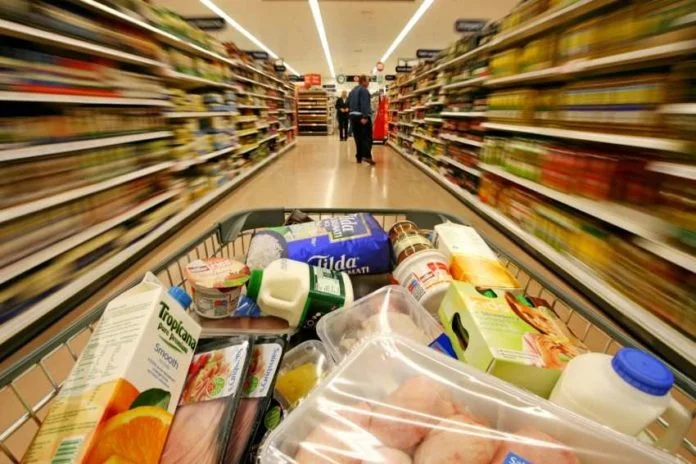
Periskopi(5 years ago)
(5 years ago)The monthly salary he receives, Nedmend Ibrahim, a citizen of Pristina, is not enough to provide food. Out of his salary every month, he allocated 250 euros for the consumer basket. But early in October, this value has been insufficient to cover the needs of his six - member family. [...]
Out of his salary every month, he allocated 250 euros for the consumer basket.
But early in October, this value has been insufficient to cover the needs of his six - member family.
“are extremely expensive (products) because we don't have standards to pay a litre of oil two euros, or pay a 50-cent bread. I work anyway, there's a lot of people who don't work. The salary is not enough for a month”, he told Radio Free Europe.
Essential articles prices in September, according to data from the Kosovo Statistics Agency, have been expensive to five percent. The dedication has continued during October.
The price increase has started since April 1.2 percent, reaching 4.9 percent last month.
The highest prices of up to 30 percent are noted in oils and fats, while 20 percent are observed in trees and vegetables.
Prices are even more affordable for pensioners, such as Nazmi Osmani, from the village of Besi in Pristina.
His five-member family depends largely on his 180-euro pension. To alleviate the family's financial situation, Osman relates that each year he plants trees and vegetables in the garden. This year, however, the products needed to plant vegetables have also been expensive.
The prices have increased greatly in agriculture. The 50kg artificial dung has been 7 euros, has already doubled to 14 euros. Even the price of seed has doubled. I've had more soil than that, but I haven't had the chance because of prices. And the food I got last month in this month I didn't get a chance to get”, he says.
According to official data, a litre of food oil last year has cost 1.06 euros, while currently in the market is sold 1.54 euros, bread from 30 cents has been spent at 40 cents, respectively, 30 eggs were expensive from 1.95 euros to about 3 euros. One cubic metre of wood has already cost over 37 euros, over 40 euros. Price hikes are also in oil derivatives. A litre of gasoline last year was 0.092 cents, while currently 1.19 euros, while dysel from 0.11 cents to 1.16 euros.
Kurti: Government Can't Blame for Price Growth
Kosovo Prime Minister Albin Kurti said that rising prices on the market has occurred as a result of several factors. In a Facebook post, Kurti cited the disruption of the supply chain due to pandemic and global energy price growth as some of the reasons for inflation.
He added that the Kosovo government next few days comes up with a package of measures to help citizens.
BSPK: Price raising burdens citizens' social situation
The Union of Independent Trade Unions of Kosovo (BSPK) has said that price hikes weigh even more heavily on the social situation of workers and citizens in the country, as there is no salary increase until the minimum wage continues to remain the same.
The value of minimum wage in Kosovo has remained unchanged since 2011, which is from 130 to 170 euros, depending on the worker's age. B The SPK called on the government to consider increasing the minimum wage in the country.
In addition to the minimum wage, public and private sector salaries during the past year have marked declines. And during this year, there was no movement.
In 2020, the average gross salary was 466 euros, as it currently is, until 477 euros in 2019. The average gross salary in the private sector in 2020 was 380 euros, until by 2019 it was 411 euros.
This data is the Statistics Ent.
Calls for salary increases have also made the United Union for Education, Science and Culture.
Most of the articles that have scored awards, according to economic experts, are products imported from countries in the region and Europe, as Kosovo is dependent on import.
Prices in Europe have increased due to small gas reserves and high carbon prices in the European Union.











