 an hour ago
Kosovo, Serbia as safe havens for people prosecuted
Periskopi(5 years ago)
(5 years ago)In Kosovo and Serbia, there are a lot of people who have fled to avoid prosecutions or convictions for criminal acts that they committed in their respective countries, say Ehat Miftaraj, executive director of the Kosovo Institute for Justice and Bojana Pavllovik from the Network for Crime and Corruption Research in Serbia. [...]
Such a fact has confirmed the Ministry of Justice of the Government of Kosovo, but it has no evidence of those in Kosovo who have avoided prosecution or punishment in the states where they committed criminal acts.
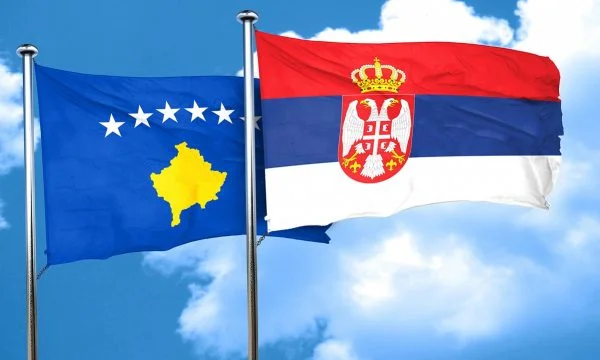
Kosovo and Serbia do not recognise each other and, as a result, mutual judicial co-operation is also lacking, and the persons prosecuted, or suffering punishment for criminal acts in Kosovo, are sheltered in Serbia and vice versa.
MD: People hiding in Kosovo and Kosovo
The Ministry of Justice of the Government of Kosovo, in a written response to Radio Europe's free question, whether there are persons prosecuted by other countries in Kosovo and who have been hiding or sheltered in Kosovo to flee the law in their respective countries, has said that “ka is highly such”.
There are many, even for serious criminal acts, but their exact number, the Ministry of Justice, does not. However, the Police Directorate General has statistics and information on the matter as well as their” identity, said the Justice Ministry's response.
Also, this minister has confirmed that there are also many Kosovo people who have avoided prosecution and punishment for criminal acts in the country and who have been sheltered in various states of the world.
There are such cases, but the Ministry of Justice of the Republic of Kosovo does not know their whereabouts, since if there is safe information about where they are located, the same is transmitted to the prosecutor or judge of the case and reports him about the way they proceed. However, for the discovery of the country where they stay, it is competent Kosovo Police, as this is operational issue”, the Ministry of Justice has said.
Miftarian: Kosovo citizens hide in Serbia, in other countries
Ehat Miftaraj, executive director of the Kosovo Institute for Justice, in a conversation for Radio Free Europe, says that citizens of foreign states, who do not have diplomatic relations with Kosovo, or who do not hesitate to have international judicial co-operation with Kosovo, use this fact to exploit Kosovo, as a haven to escape or to avoid judicial procedures, whether to suffer punishment in the state they are sentenced to.
In this context, according to him, Kosovo and Serbia have no diplomatic relations and, as he says, Serbia has been constantly reluctant to raise the level of judicial co-operation between the two states to realise and execute requirements involving judicial co-operation in criminal matters, either to extradite wanted persons in Kosovo, which are hiding in Serbia. That, according to him, is the case.
We have cases where Kosovo citizens are hiding in Serbia, but they also exploit states with which Kosovo has no co-operation, and not rarely, we can say that Spain itself is used or used, where we have at least one citizen of the Republic of Kosovo who has committed murder in Kosovo and the same has fled to Spain and that one has not recognised or executed the request for provisional arrest or even extradition. This has been the case with Diana Kastrati's husband (Adnan Jashari), who originally fled to Spain and she has not offered co-operation with authorities in Kosovo”, Miftaraj said.
He has added that European countries reluctant to have international judicial co-operation are primarily, Serbia, Spain, Cyprus, Romania, Slokavia, though, the latter has broken the barriers and in one case has asked Kosovo authorities to extradite a wanted person from this country for drug trafficking and who had been sheltered in Kosovo. In these countries, according to him, there are certain persons who are hiding from the Kosovo prosecution authorities' prosecution.
Pavlloviq: Persecuted Afarists Take refuge in Serbia
Reporter of the Network for Crime Research and Corruption (KRIK), Bojana Pavlloviq, in a conversation with Radio Free Europe estimates that Kosovo and Serbia are “safe countries” for people prosecuted, or have already been convicted of any criminal acts.
“We witnessed that many people were arrested in Kosovo for criminal acts that have been searched for in Serbia and vice versa”, Pavllovic said, adding that the CRIK has dealt with the cases of Zvonko Veselinovich and Milan Radojsic, the “who are already well-known businesspeople, who are working with the state, while numerous criminal procedures have been filed against them.
Milan Radoicicic is a businessman from northern Kosovo and deputy head of the Serbian List, which Kosovo authorities linked to the murder of Serbian politician Olliver Ivanovic in January 2018. The warrant was issued against him in 2019, but he was in Serbia and could not be prosecuted.
Meanwhile, the warrant for Milan Radocicin was withdrawn without any clarification in March 2021.
To Milan Radojici, in 2011, there was also charges in Serbia, due to the embezzlement of 32 Hippo Alpé trucks Adria Lizing. This charge included businessman from northern Kosovo Zvonko Veselinovic, but both have been acquitted of charges with an all-powerful decision in 2016.
Zvonko Veselinovic, in Kosovo, also links with the murders of Olliver Ivanovic.
“Consensus and the protection for people specified”
Bojana Pavllovi from the KRIK considers that Kosovo judiciary bodies “do not have enough will for the two (Millan Radojchiqi and Zvonko Veselinovici) to arrest and continue criminal proceedings against them.
What I know is that Milan Radoicicic, in recent months, was located in Kosovo, but considered to him that the warrant has been withdrawn, his status in the Oliver Ivanovic class is completely uncertain and uncertain. On the other hand, against Zvonko Veseljinovic continues criminal proceedings, while he has gone there (to Kosovo) several times and nothing has happened”, Pavllovic said.
It estimates that in addition to the fact that Kosovo and Serbia do not co-operate, “exists consensus and protection for certain people”.
There is also the example of Radomir Lyban, who in Kosovo is since 2011, when competent authorities in Serbia sought him because he had been sentenced to six years in prison in that country for accepting and bribery, misusing his official position and forging documents.
Since 2018, Ljubljana has also been a judge at the Kosovo Constitutional Court. He was one of the highest score candidates and had the support of the Serbian List.
For Bojana Pavllovic of the KRIK, it is the incredible “” that Laban was elected judge of the Constitutional Court of Kosovo, while in Serbia he is convicted. She stresses that, in fact, his close contacts led to his choice in that position.
This is not surprising, but it is incredible how before the citizens of Serbia and Kosovo, our competents are successfully reasoning on the actions of this”, Pavllovic stressed.
Justice ministry “cannot speak of concrete cases”
Free Europe Radio has asked the Kosovo Ministry of Justice whether there has been any direct or otherwise request on Serbia's part of Kosovo for the handover of Radomir Labani to Serbian authorities.
According to this ministry, “in the past had Serbian citizens (who did not have the citizenship of Kosovo), who were arrested in Kosovo, under the international search warrant issued by Interpol Serbia, for grave criminal acts”, but the same were expelled from Kosovo territory, “since competent bodies have found that the same have remained in the Republic of Kosovo in opposition to the law, so there is no need to submit to extradition request”.
“
She has added that Kosovo has international agreements for extradition with the Republic of Albania and the United States of America.
So, in no other state than two covered citizens of Kosovo (even if there is citizenship of Kosovo and another state), they cannot be extradited against their will”, the justice ministry's response to Radio Free Europe reported.
Todosijevic prison sentence postponed, because he's “out of the country”
On Wednesday, October 6th, the Constitutional Court in Pristina has confirmed to Radio Free Europe that lawyer Nebojsa Vlajik's request has been accepted to extend the prison sentence for Ivan Todosijevich, deputy of the Kosovo Assembly from the Serbian List, with the reasoning “because it is located abroad”.
The Serbian list is the leading party of Kosovo Serbs, which was formed in 2013, with the support of official Belgrade, meanwhile that Todosijevic, in addition to being an MP in the Kosovo Assembly, he also performed the post of Zvecan's interim municipal body in northern Kosovo, which functions under Serbia's system and is considered a parallel structure by Kosovo authorities.
When was Todosijevic supposed to start suffering prison?
On 24 August, Todosijevic was sentenced to two years in prison because of his statement, through which he denied the massacre against Albanians in Recak in 1999, which Serbian forces committed. Todosijevich had to be announced on October 6th to serve his sentence.
But, his lawyer Nebojsa Vlajiq now claims that Todosijevic has not received an invitation to serve this sentence, even though the director of the Office for Kosovo in Serbia's government, Petar Petkovic, at an extraordinary press conference, on September 24th, confirmed otherwise.
The event for Ivan Todosijevic to be announced was sent on 6 October, ten days before holding local elections in Pristina. Do you see what Albin Kurti (Kosovo Prime Minister) is trying to do for a handful of votes, promoting crisis in northern Kosovo, is trying to arrest Ivan Todosijevich”, Petkov has said.
Where is Ivan Todosijevich?
Serbian authorities, led by President Allexander Vucic, consider Todosijevic “unjustly condemned because he has told the truth”.
On 25 August, Vuciqi, in a video recording published in the account of the “buduskousbije” (the future of Serbia), has estimated that Todojevic “has condemned Albanian judges, though under the Brussels Agreement, they have been obliged to judge two Serb judges and an Albanian”.
He had at the time called on Kosovo Serbs to be united for and around Todosijevic, “just as we in central Serbia will be close to him, his family and all Serb people in Kosovo”, the president of Serbia had ordered.
The lawyer has not wanted to answer Radio Free Europe's question about his client's whereabouts, that is, whether he is in Kosovo or Serbia.
I can't tell you this, don't ask me anything like that”, Vladic said.
From the Constitutional Court in Pristina, they have said they cannot speak about what the consequences will be to Todosijevic, if he is not reported at all of the suffering of punishment, because “in the concrete case could be rejected the procedure for executing criminal punishment”.
For exactly what is Todosijevich condemned?
Ivan Todosijevic was convicted because of the statement that <x0-scales for aggression against our country was the so-called humanitarian catastrophe in Kosovo, the fabricated Recak”.
In March 2019, in Zvecan, at the commemoration of the 20th anniversary of the bombing of the former Federal Republic of Yugoslavia, he said that “were these shipy terrorists (exormous to Albanians) those who invented all of this, who committed the biggest crimes in Kosovo, for which, to date, no one has claimed responsibility. They committed crimes prior to NATO aggression, they killed nurses and good Serb policemen at home. Their bloody festival continued during aggression and after the arrival of the so-called peacekeeping mission in Kosovo”.
NATO had launched the action of air strikes against the former Federal Republic of Yugoslavia, with the goal of preventing violence by the military, police and Serb paramilitary forces against Albanians in Kosovo. This was preceded by the massacre of 45 Albanians in the village of Recak of the Shtime municipality.
Even Kosovo connoisseurs hesitate for judicial co-operation
But to avoid the sufferings of courts pronounced in Kosovo, as Miftaraj says, there are cases that designated persons have left the country and have stayed in countries that recognise Kosovo's state but do not have bilateral international judicial co-operation. Such was the case, according to his statement, with the former head of the Kacanik municipality, Jabir Zharku, who in 2011 was sentenced to three years in prison for the criminal offence for illegal possession.
Jábir Zharku was another case because he used Swedish citizenship. Even in spite of the fact that Kosovo had made continued agreements to negotiate extradition agreements, not only for Mr. Zaku, but for a general extradition agreement, Sweden is one of the states that hesitate to extradite its citizens. So Zharku, in a way, has been hiding in Sweden for a long time until the prescription of the execution of the sentence has been made. He has avoided justice, and after prescribing the sentence he has come to Kosovo”, Miftaraj stressed.
The justice ministry has said that Kosovo has about 28 agreements in force for international judicial co-operation in criminal matters, “While there is no agreement in force, co-operation is made on the basis of the reciprocity principle”. This co-operation according to this ministry is excellent, even with states that have not recognised Kosovo.











