 7 hours ago
KMDLNj after Stanishi was sentenced to 20 years in prison for war crimes: Partial Justice
Periskopi(5 years ago)
(5 years ago)The Council for Protection of Human Rights and Freedoms through a communique for the media has said Goran Stanisic's conviction for the murder of 13 Albanian civilians is insufficient unless other cases and responsibilities for planning, failure to prevent and carry out these massacres are addressed. According to KMDLNY, the massacre in the village of Slovi, on 15 [...]
The Council for Protection of Human Rights and Freedoms through a communique for the media has said Goran Stanisic's conviction for the murder of 13 Albanian civilians is insufficient unless other cases and responsibilities for planning, failure to prevent and carry out these massacres are addressed.
According to KMDLNY, the massacre in the village of Slovi, on April 15th and 16th 1999, where 45 Albanian civilians were killed, 11 others were injured and expelled from all residents of the village, setting fire to 92 houses, burial and exhumation, as well as the disappearance of corpses, were among the most criminal acts that made the Serb armed forces in Kosovo.
“KMDLNI hopes and commits to ensure justice for all victims, despite ethnic affiliation, age, gender, racial, political beliefs and status in society, as well as criminal responsibility for all those who planned, ordered, prevented crime even though they were able to do so, without making any difference as if even in the case of victim justice. Victims' families, as well as opinions, have shown disappointment with the proclamation of punishment but The KMDLNj made it clear that there is currently no legal basis for higher sentence”, said by KMDLMJ.
Full announcement:
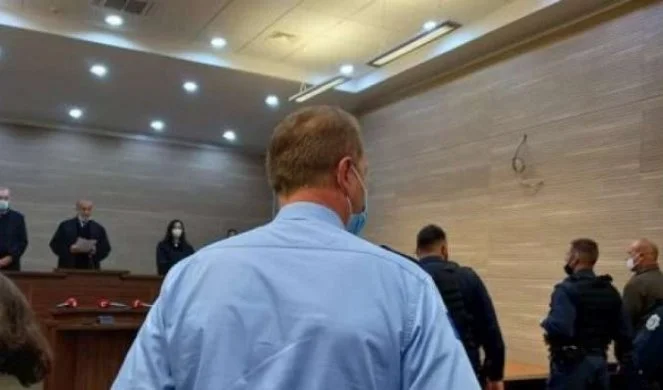
The Constitutional Court in Pristina, respectively, after proceeding with evidence against war crimes indictees against the civilian population Goran Stanisic, during the war mobilised as a reserve member of the Serbian militia, convicted him of a 20-year maximum sentence.
Now, convicted Stanisic was sentenced to the Penal Law of the former RSFJ, which in the concrete case was more favorable to him because the maximum sentence under this law is 20 years. Since the end of the war, residents of the village of Slovi and Trboko as well as other villages had issued statements of these crimes at the NKMDLNj office in Lipjan to the co-ordinator of this Office, Ismajl Gashi, identifying not only convict Goran Stanisic but other local Serbs who have led the massacre action against Albanian civilians, have persecuted all residents by robbing their homes and then setting fire on them. A number have witnessed before The Hague Tribunal as well as before UNMIK and EULEX investigators but that it has only now been convicted of Goran Stanisic, identified by residents who have survived the massacre, while the majority of local Serbs mobilised in the militia, paramilitary units and the Serbian Army have remained unpunished.
The massacrers and survivors of these massacres are the result of the concrete criminal involvement of local Serbs (only in Slovenian have lived 64 Serb families ) and Serbian security inspectors, along with Serbia's regular armed formations that have negotiated with local Albanian residents, a 10-member delegation and, then, without warning, have been attacked by killing murdered civilians and gathered at the designated location. The massacre in the village of Slovi, on April 15th and 16th 1999, where 45 Albanian civilians were killed, 11 others were injured and expelled from all residents of the village, setting fire to 92 houses, burial and exhumation, as well as the disappearance of corpses were one of the most criminal acts caused by Serb armed forces in Kosovo. Only the tenants of the village who left no door without knocking in search of justice for the victims and responsibility for those who committed these crimes enabled them to achieve partial justice for both victims and their family.
Goran Stanisic has been convicted of killing 13 Albanian civilians and proven by witnesses who identified him as responsible for these murders, but this is insufficient unless other cases and responsibilities for planning, failure to prevent and commit such massacres are brought before justice bodies and given due punishment.
Although the sentence against Goran Stanisic is at odds with the crimes proven by concrete responsibilities, it is important that, however, evidence is that those who committed crimes against civilians in wartime, will not be able to flee from justice and that the feeling of impunity for war crimes is not providing immunity for those who are proven to have responsibility for war crimes and crimes against humanity so long ago that these criminal acts are not old and that there can be no amnesty for them.
KMDLNI, under the mandate that has contributed to the concrete case, since the end of the war until the sentence against Goran Stanisic has been pronounced. KMDLNI hopes and commits to ensure justice for all victims, despite ethnic affiliation, age, gender, racial, political beliefs and status in society, as well as criminal responsibility for all those who planned, ordered, prevented crime even though they were able to do so, without making any difference as if even in the case of victim justice. Victims' families, as well as opinions, have shown disappointment with the proclamation of punishment but The KMDLNj made it clear that there is currently no legal basis for higher punishment!











