 3 hours ago
Joseph: Serbia rejects Western rule
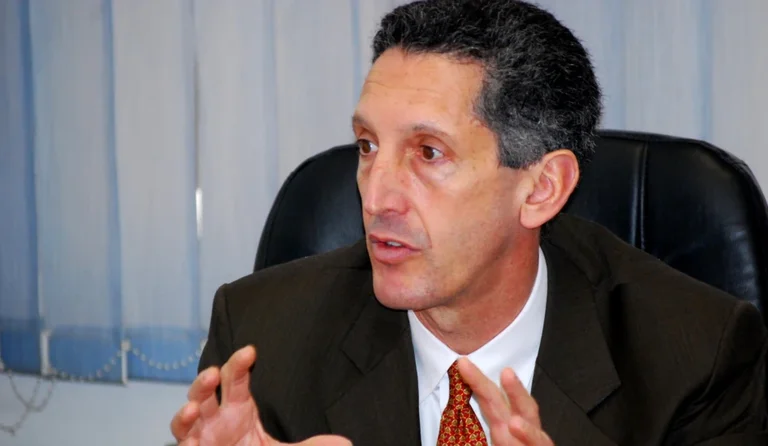
Periskopi(5 years ago)
(5 years ago)The cause of problems in the Western Balkans is that Serbia does not accept Western order, says Edward Joseph, legalist at Johns Hopkins University in Washington. He in an interview for the Balkan Radio Service Free Europe has stressed that Serbia's President, Aleksandar Vuciq, with his approach to the crisis in northern Kosovo, [...]
He in an interview for the Balkan Radio Service Free Europe has stressed that Serbia's President Aleksandar Vuciq, with his approach to the crisis in northern Kosovo, has shown that Serbia has accepted and follows the values and agenda of Russia and China.
Radio Free Europe: How did you comment on the agreement between Pristina and Belgrade for the provisional plates, which was reached after several-day tensions?
Edward Joseph: With this agreement, the two sides -- with the mediation of EU special envoy Miroslav Lajcak -- have found a way out of trouble, but a broader problem has been detected.
First, as far as I understand, the agreement envisions reciprocity between Serbia and Kosovo. Instead of only Kosovo changing the plates, now both sides will place sticky letters. This is reciprocity. Kosovo will remove special police units, but they are no longer needed, now that Serbs have accepted the new arrangements.
This is a faster solution, but the same final result as in 2011, when Kosovo has also sent special police units [in the north].
In both cases, this has led Serbia to accept new status quo on the border.
Second, [Serbia's president, Aleksandar] Vuciq has made one of his biggest mistakes, exaggerated the theatre use of tanks and bringing the Russian ambassador [to Rudnica military base in Serbia].
Throughout Europe, people can see photography even if they don't know much about the Balkans and a Russian ambassador to top Serbian military officers.
In this way, Vuciq has indicated that, under his leadership, Serbia has accepted and followed the values and agenda of Russia and China.
The problem is that the West still claims the situation is different.
Take a look at European Commission President Ursula von der Leyeen's statements at a meeting with Vuciqi on Thursday, praising the steps he is taking for Serbs, reforms and rule of law.
You know better than me if the steps taken by the Vuciki regime, in the direction of reforms and rule of law, are worthy of praise.
This is another example of the legitimacy of that regime. Vuciq has used this, tweeting about the historic visit of von der Leyenne and her praise.
Radio Free Europe: Apparently, the dispute over temporary car plates is just the tip of the iceberg. What's in her background?
Edward Joseph: You're absolutely right. This time we had a tense situation, with tanks and armoured vehicles located on the border with Kosovo and special police on the other side.
In early September, pro-Montenegrin and Serbian groups have crashed in Montenegro's traditional capital, Cetina.
The situation is getting worse in Bosnia and Herzegovina, where Serb representatives have left the institutions because of the former top international representative's decision to condemn genocide deniers.
There are also tensions between Croatia and Serbia. Alarm has also prompted the so-called Slovenian non-paper, in which the division of Bosnia and Herzegovina and Kosovo has been proposed. A clear conclusion can be drawn from this that there is no trust in the Western strategy in the region.
So what is happening in northern Kosovo is just a symptom and we, in the end, have to confront the situation in the Balkans essentially and reach a solution.
The current situation is serious, is part of the worsening tendency and must calm down. However, the broader problem should be seriously addressed and the illusion eliminated.
Radio Free Europe: The Kosovo government says its decision on provisional plates is a reciprocal response to the authorities' earlier decision in Belgrade to ban Kosovo plates in Serbia. This is a technical issue, but if we talk about the core of the problem, there is certainly a difference between Belgrade and Pristina on Kosovo's status, more precisely whether Serbia will recognise Kosovo -- which is not realistic to expect at this moment. The question is why Prime Minister Kurti made the decision on the plates right now?
Edward Joseph: I can answer that question, but it's a diversion of attention.
As for the plates, based on the Brussels Agreement, the provision for their use has expired in September. Of course, there are political reasons why Kurti has implemented the measure mentioned in this way, because local elections in Kosovo are held in October.
Also, the question arises if Vuciq had reason to send tanks to the border? As I said, this is a ridiculous and theatre move in the presence of Russian Ambassador ? as if Serbia will attack Kosovo, which is under NATO protection.
Any Serb who thinks he will be protected in this way should know that this will have the opposite effect.
Such an approach does not offer credibility to Serbia and shows Vuciki's irresponsible behaviour and open co-operation with Russia.
It's also a useless act, because it's conventional weapons, mostly tanks. Russia may send such equipment to Serbia, but in case of any escalation of conflict, NATO would have geographical advantages and any other priorities. It is pointless to expect that in such a situation, Russia can support Serbia.
In any case, judging by the way the measures [for the plates] have been implemented, it is clear that there has been no adequate consultations, with the participation of KFOR, the US and the EU, which certainly does not contribute to the strengthening of confidence between authorities in Pristina and Kosovo Serbs. However, the principle of reciprocity between states has been applied here, and Kosovo has been recognised by the United States and many European countries.
Radio Free Europe: Of course, Vuciq can also use this issue to draw attention to other problems ahead of next year's elections in Serbia. Also, it could reiterate claims that the Kosovo side has failed to fulfil the pledge by the Brussels Agreement to establish the Association of Serb majority municipalities...
Edward Joseph: Exactly. Bilateral charges continue... until the Russian ambassador laughs, as do [Russian president] Vladimir Putin and [the president of China] Xi Jinping.
If they want Russia's mountain influence to stop the region, it is important to understand why the situation is deteriorating.
Radio Free Europe: Why is the situation getting worse?
Edward Joseph: All these seemingly inconsistent cases are actually resolved... This is not Afghanistan, but part of Europe, with potentially significant influence of the US and the EU. All problems are solved if countries in the region accept Western rule.
I'm not pretending it's simple and that this will happen overnight. If Western order is not accepted, or exploited by Bulgaria, then there is no solution.
In the Western Balkans, only one country does not accept Western order. It's Serbia and its faithful ones in Republika Srpska, in the Serbian List in Kosovo, etc.
If Western order is accepted, then the security of the Western Balkans is under NATO protection. In that case, all problems in the Western Balkans are solved.











