8 minutes ago
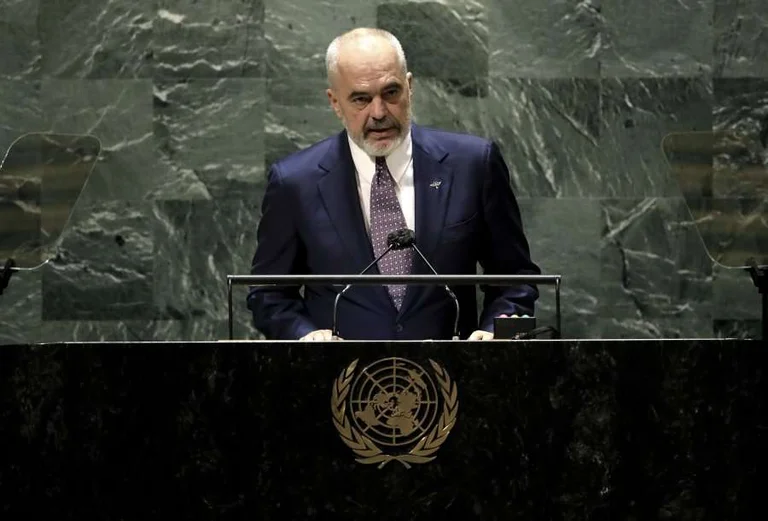
Edi Rama: Kosovo has met requirements for visa liberalisation, EU being ashamed
Periskopi(5 years ago)
(5 years ago)Albanian Prime Minister Edi Rama has declared that Kosovo has met the requirements for visa liberalisation “The EU must admit it is being ashamed of its most determined advocates, while Albania's progress towards membership is blocked by only a strange collateral veto like Bulgaria's. The same uncertainty is true [...]
“The EU must admit it is being ashamed of its most determined advocates, while Albania's progress towards membership is blocked by only a strange collateral veto like Bulgaria's. The same uncertainty applies to northern Macedonia, which has gone as far as the name has changed, and to visa liberalisation for Kosovo citizens, who are now less free to travel than before, even though they have met all EU requirements, says Prime Minister Edi Rama in an editorial for politico.eu, broadcast Kosova Prees.
” Eighteen years ago, at the 2003 Summit The Western European-Balkan Union in Thessaloniki told us that “the future of the Balkans is within the European Union”, Rama has declared.
The EU has since reiterated “its clear support” for the European perspective of Western Balkan countries, as summits are now held each year and the same statements are repeated. But it could still be 2003.
At that time, the EU chapter was “enlargement”. Now, Europe's clear support seems to have become possible, and perhaps the bloc's internal disputes imply that the promise of enlargement should be temporarily annulled. However, we do not just expect the EU. We are preparing for it and we are creating opportunities for our people.
I believe Albanians are among the most pro-EU communities in Europe. When Communism collapsed and we were free to choose our own path, we chose Brussels. Since then, we have done everything required in our application for membership. The EU may not be able to fulfill its promises, but Albania is still committed to European ideals and likely we will remain loyal to its founding principles, even after its members have left them behind.
Our future generations deserve to enjoy the benefits of membership, but we are hostage to the same historical separation forces that the EU was created to eliminate. The EU must admit it is being ashamed of its most determined advocates, while our progress towards membership is blocked by just a strange collateral veto like that of Bulgaria.
The same uncertainty applies to northern Macedonia, which has gone as far as the name has changed, and to visa liberalisation for Kosovo citizens, who are now less free to travel than before, even though they have met all EU requirements.
But if the Western Balkans cannot go to the EU, perhaps the EU can come to the Western Balkans. There are concrete steps that can be taken immediately. The EU can create co-operation mechanisms that effectively decide some of the mutual benefits of membership, without adding to the indignation of those who oppose our membership.
To that end, the EU can support the region economically through its Economic and Investment Plan for the Western Balkans, for which several projects have already been identified. But more needs to be done, especially to ensure that the region participates fully in the EU's digital and green transition. These transitions are required for full participation in European economies and we risk being left behind.
The EU can also help us preserve our brighter minds with joint higher education programmes and integration into the EU education system so that young people can find better opportunities in their country.
Western Balkan countries may also be involved in EU emergency plans, as together we are facing a potentially devastating energy crisis that could undo the progress of these years in the region. We must ensure that our citizens do not remain vulnerable.
Finally, the EU can take practical steps so that we can implement the four EU freedoms more quickly, free movement of goods, capital, services and people in our three countries, Albania, Northern Macedonia and Serbia. This is something all Western Balkan countries will have to do if we join the market alone, while the World Bank has said that doing so could add up to 10 percent of each of our countries' GDP.
We three call this effort the Open Balkan Initiative, and it is something we have already started with the spirit and principles of the Berlin Process. We hope to begin free movement of goods in January 2022 and open our borders by January 2023. And it is understandable that the Open Balkans is open to all Western Balkan countries whenever they decide to join us.
This idea moves forward in the agenda that has been repeated since Thessaloniki and forming tangible forms of the Berlin Process, announced in 2014. We continue to support and participate in both processes, but we do not want to wait until others say they are ready.
We want results, that's to make reforms and that our citizens benefit. Support for this initiative would show that the EU is serious for the Berlin Process itself, and we would welcome technical assistance to ensure that we are meeting EU technical and regulatory standards.
We hope that the EU and our other friends, in London and Washington, will join us and encourage others in the region to also move forward. So we build support here and we show that we are ready to be closer to Europe.
As the nations of the Western Balkans, we must look to our future, not a future that never materializes, but what we can control. A citizen born in 2003 is now old enough to vote, to be a full member of the political community, while we still expect to join our community. The last thing we want is for our 18-year commitment to move towards middle age”, Prime Minister Edi Rama concludes in an editorial for politico.eu.