7 minutes ago
Votes from Serbia through transit posts
Periskopi(5 years ago)
(5 years ago)Citizens of the Republic of Kosovo will rightly vote, and living outside Kosovo's territory from January 13th to January 21st, can apply via mail to register as voters outside Kosovo for early parliamentary elections, which will be held on February 14th. That is also true of [...]
Central Election Commission spokesman (KQZ) Valmir Elez, through a statement to Radio Free Europe, has clarified that so-called ballot packages must reach the CEC mailbox by 12 February.
So, starting from February 2nd through February 12th, there is a period of voting through mail, and that applies to all voters who register successfully as voters outside Kosovo”, Elez stressed.
He added that the CEC has made known the details on its website for the application to be registered as voters outside Kosovo, whether through mailbox, XEC fax, or through the CEC's voting service's electronic address.
As CEC has previously announced, the applicant through an electronic address may require that, apart from himself, his close family members, with the same surname, announce the recording.
As the CEC directive states, in the registration application form, the applicant should write his phone number and that the app will be verified by three calls to that number.
If the applicant is not answered on the phone, then his request will be denied”, the CEC's directive says.
But, for Serbian citizens living in Serbia and having a right to vote in Kosovo, it remains a challenge how they will submit their applications to register as voters abroad, as well as sending their votes.
In the early parliamentary elections of 2019, a certain number of votes that had come from Serbia to Kosovo had been declared invalid because they had not been reached via the mail route, while some of them had also been subject to inspection.
Kosovo Post and Post of Serbia do not have any agreement on the remittances.
Kosovo Post Director Jevdet Smakqi confirms this.
He has told Radio Free Europe that however, Kosovo Serb citizens -- living in Serbia and having the right to vote in Kosovo -- can send their votes, in the same way as in the early parliamentary elections of 2019, through transit to the North Macedonia Post. With the latter, the Kosovo Post has agreements, which is still in effect.
“Since the Law of the Republic of Kosovo for Elections also ensures that voting can be done through mail, citizens of Kosovo, who are fair citizens of Kosovo and living in the Republic of Serbia, can use the same way that citizens used in 2019 and vote fairly. We have transits to the North Macedonian Post. If they also send them through the Post to Montenegro, we have the agreement with them for international traffic and then they are regularly accepted”, Smakqi has said.
However, he has commemorated that if votes are not sent this way, then they -- the same as in 2019 -- will be considered unfair and invalid.
Former Kosovo Post Director, who operated according to Serbia's system, Randel Nojrik, has also stressed that ballotes from Serbia cannot reach the Kosovo Post directly because co-operation between the posts of the two countries does not exist.
“has been a practice for the Organisation for Security and Co-operation in Europe (OSBE) to receive ballot papers and sent them directly to the Central Election Commission, not to the Kosovo Post, and later to the CEC”, Nojjic stressed.
However, he has expressed the opinion that the process of transferring the votes of Serbia's citizens to Kosovo is not as controversial as it is “what happens within Serbia's Post, during the” vote.
This is questionable, it's problematic. This vote has always been controversial and questioned, and I think that the terms related to this issue have not improved transparent voting, nor has regular”, Nokjic estimated.
Practices and Past Problems
In previous years, O'S mission The SEU in Kosovo helped the CEC implement the elections, offering advice on the technical nature, either, had the role of mediator.
None of this mission has answered Radio Europe's free question whether it will mediate this time for early parliamentary elections in Kosovo.
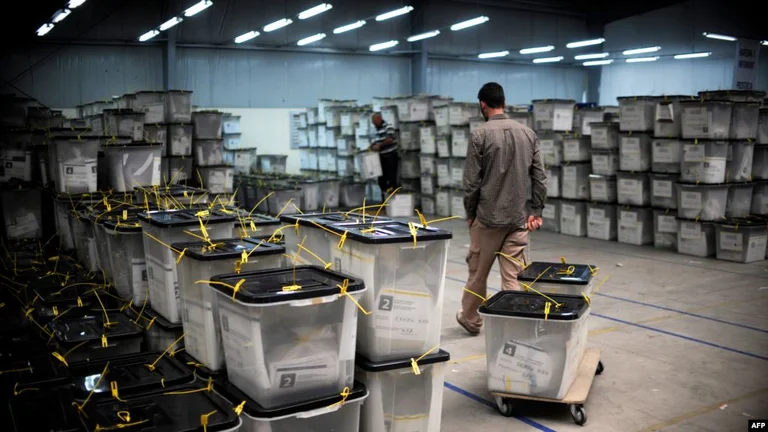
In the last parliamentary elections in Kosovo, held in October 2019, the package with envelopes, in which there were over 3 thousand and 500 ballots from Serbia, had brought Serbia's Kosovo liaison official Dejan Pavicevic to Pristina.
However, those votes have been cancelled, because the Election Panel for Anxiety and Parashtre in Kosovo confirmed that they had not come via postal route but have been handed over to the post office in Kosovo, which is contrary to the election rules of voting outside Kosovo.
Serbia's Kosovo liaison official Dejan Pavicevic was not available to receive a statement from him about bringing the papers to the CEC.
Before votes coming from Serbia were declared invalid in 2019, they were also under investigation, because CEC officials, during the process of verification and contact with envelopes coming from Serbia, ended up in the hospital because of allergic reaction to a substance, which was in the composition of envelopes.
The National Institute of Public Health had confirmed that there were no infectious agents in envelopes, while the prosecution had then begun the investigation and had declared that some envelope samples were sent for laboratory analysis.
The announcement of early parliamentary elections in Kosovo has come after confirmation by the Constitutional Court of Kosovo that the government at the helm with Avdullah Hoti is not legal because MP Eem Arifi's vote is invalid, taking into account that during the time of the vote, he was sentenced to 1 years and three months in prison due to the misuse of subsidies.