 2 hours ago
Should I vaccinate for COVID-19 if I'm over the virus?
Periskopi(5 years ago)
(5 years ago)Yeah. Despite initial infection, the U.S. Center for Disease Prevention and Control has said that people should plan vaccines when it comes next. This is a very direct question”, said infectious disease specialist Amesh Adal. “Yes, you must vaccinate”. When someone recovers, their immune system does not allow them to get sick [...]
Yeah. Despite initial infection, the U.S. Center for Disease Prevention and Control has said that people should plan vaccines when it comes next.
This is a very direct question”, said infectious disease specialist Amesh Adal.
You need to vaccinate”.
When someone recovers, their immune system does not allow them to get sick immediately.
Your immune system is willing to identify the virus and defend itself”, said medical doctor Saxa Popescu, an expert on infectious diseases at George Mason University, broadcast the AP news agency.
Scientists do not yet know exactly how long immunity or how strong it is, though some research works suggest that protection can last for several months.
It is impossible to know how long a person can have immunity”, said Dr. Prath Klzin, an expert on infectious diseases at the College for Medicine, Baylor.
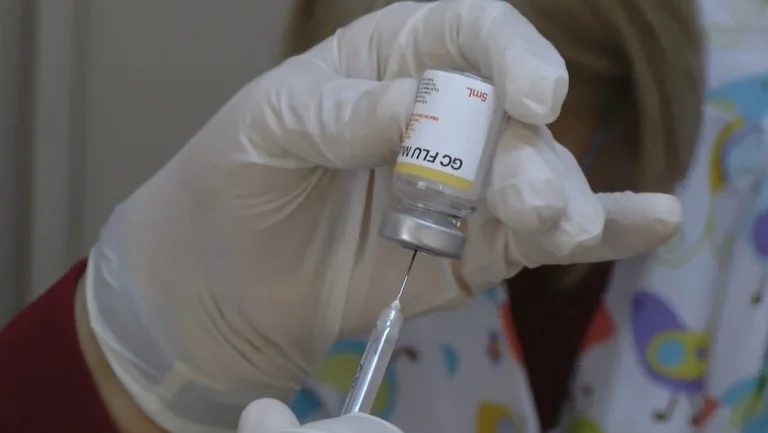
The vaccines, on the other hand, are designed to provide longer immune responses. Experts say they should increase a man's immunity, regardless of what state he is in after infection.
And since we're in this pandemic and we don't have a hand in it, the safest approach is vaccination”, Chulni said.
You don't lose anything, you just get”
If you've been infected in the last three months, the U.S. Center for Disease Prevention and Control said it's okay to postpone the vaccine if you want to let others do this before you, since the doses are limited.
The preliminary data of some scientists from the public agency, Public Health, England, has shown that people who have exceeded COVID-19 disease are immune for at least five months, although there is no evidence that people with antibodies can carry and distribute the virus, broadcast news agencies, Reuters.
Among the findings has also been found that second-time COVID-19 infections are rare only 44 cases found among 6,614 persons involved in the study.
However, they warn that the findings imply that the people affected by the Coronavirus in the first wave of pandemic in the first few months of 2020 can now be touched again.
They have warned that people with their so-called <x0 natural community” which they have provided after infection may still have the coronary on their nose and throat and may carry it willingly.
We now know that most of those who have had the virus and created antibodies are protected from the second infection, but that's not all and we don't have the knowledge how long the defense”, said Susan Hopkins, senior medical adviser to Public Health in England and one of the research leaders whose findings have been published on January 14th.
This means that even if you believe that you have had the disease and are protected, you can make sure that there is little chance that you will face severe infection. But there is still the danger that you can infect and transmit to others”.
Through a letter attached to the study, scientists have said the findings did not include responding to antibodies or other kinds of immunity to vaccines that are now being distributed against COVID-19, or about how effective vaccines can be.
It has been said that the answer to vaccines will be considered later this year.
Known as SIREN, the study includes tens of thousands of British health workers, who have been constantly tested for coronarys from June, as in the presence of antibodies.
In June 18th, November 24th, scientists have observed 44 potential infections for the second time, following the analysis of 6,614 patients who have resulted positive in tests for antibodies. /full text at REL/











