 3 hours ago
Scientists warn: Pandemics will be very frequent
Periskopi(5 years ago)
(5 years ago)Scientists constantly warn that the same factors that have led to the threat of animals and destruction of forests and climate change will lead to new pandemics, such as the COVID-19, while the same way to prevent them is to change to institutional levels and protect environments in order to [...]
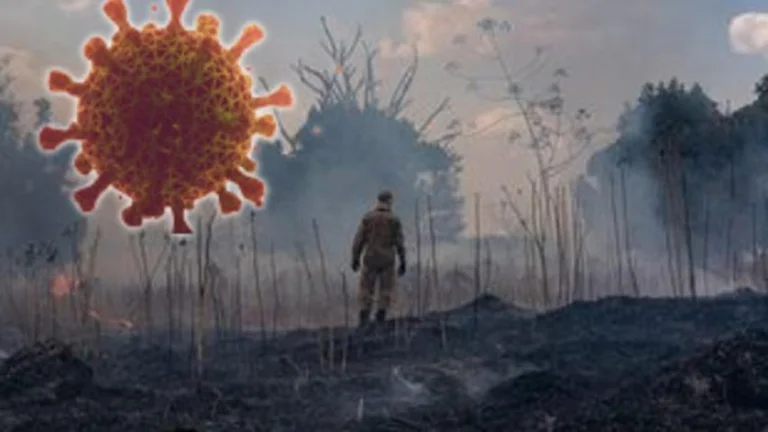
Scientists constantly warn that the same factors that have led to the threat of animals and destruction of forests and climate change will lead to new pandemics, such as the case with COVIED-19, and the same way to prevent them is to change to institutional levels and protect our environments in order to preserve our home.
The preservation of biodiversity can be preserved by one, reports National Geographic, the new report by an international group of experts in which verification of research results concerning the destruction of animal natural habitats that expose man to new diseases.
The scientists are not arguing about this at all. Deforestation is the leading leader of the pandemic”, said Lee Han, climatelogist from the Conservation International organisation, the specialist in studying the effects of deforestation.
Han was one of the assessments of the report compiled in late July, which was announced during a virtual platform for science and public policy on biodiversity and ecosystem services (IPBES), which unites scientists, governments and nonprofit organisations.
Without preventative strategies, pandemics will appear much more frequently, spread faster and kill a greater number of people, while the impact on the global economy will be heavier than ever before, the report says.
These prevention strategies should be aimed at preventing the spread of diseases that usually come from animals, so zoosis is also known in the report.
Zoos that include OVID-19 viruses, HIV, Ebola flu, and Zika come from germs that live in the animal world and can infect humans. Their most common vectors are bats, birds, and rodents.
Scientists estimate that there are some 1.7 million species of viruses between mammals and birds not yet discovered, where half of them can infect mankind.
This is no coincidence that pandemics are becoming more frequent, given the fact that human activities are putting increased pressure on the environment and are bringing people into closer contact with wildlife, says the report.
Since November last year, scientists warned that increasing deforestation is creating more favourable conditions for epidemics. Han cites forest cutting in the Amazon as an example, usually in order to feed livestock.
Bleegtoria can act like this as a mediator between infected wild animals and people working with them, it deepens Han.
In addition, the destruction of the wildlife's natural habitats can lead to their moving to new territories, forcing them to seek more homes in urban areas.
Han points out that it is very important to understand the degree to which we should act and that it reaches a level that has never been seen before.
Scientists who have compiled the report propose the formation of an international group, which will monitor achievements in the field of pandemic prevention, which will financially encourage the preservation of biodiversity and invest in research and education.
They hope that these institutional changes will reduce the impact of industries such as palm oil production, logging and livestock, but can also help identify hot spots and provide health care for people most endangered.
To implement this strategy, it would be necessary to separate between $40 billion and 58 billion a year, the authors of the study estimate that this would compensate for the economic losses expressed in trillion dollars.
A study published earlier this month shows that the US pandemic has cost this country less than $16 trillion.
Thirty countries have pledged to support the Nature Field, which aims to protect 30 percent of land and sea by 2030. The leader of this campaign, Brian O'Donnell, however, claims that some steps must be taken before those promises become reality.
These countries will meet in May of this year for the United Nations Convention on Biological Diversity, where they will have the opportunity to formulate strategies that would contribute to achieving that goal of the campaign.
O'Donnell is concerned about the possible shift of these plans due to COVID-19's pandemic and claims that a year's delay could pose a risk.
“I hope COVID-19's pandemic will be an alarm, which many people are still not listening to.”, O'Donell added.
Han hopes that the new science report will encourage changes, if not for nature protection and endangered wildlife species, then for human health protection.
These scientists' claims are followed by the results of a study published in December, showing that the mass of material made by man is now roughly the same as the mass of all living things on the planet.
The mass of the living world is still about 1.1 trillion tons and has not changed much in recent years, but this is why anthropogenic mass - the mass of artificially created materials is increasing in essence.
A study published in the magazine “Nature” shows that the anthropogenic measure is now close to biological, and that it can exceed it by year's end.
This finding supports the claim that the Earth has entered Anthropocen, a proposed geologic era in which people represent the main force forming the planet.
This transition is something that doesn't happen once in life, but once in an era. And if this insight is meaningful more than a symbolic or scientific meaning, the material effect of human activity and its purpose explain how we have been able to transform global cycles of nutrients by changing the climate that leads to many species to extinction.
However, the following year brought a light of hope to the world. The coronavirus show has shifted attention to the global trade in the wild world.
A large number of wild animals were saved in an operation conducted by Interpol and the World Customs Organisation, which has been conducted from September to October.
In February of last year, the Chinese government adopted a decision laying the groundwork for criminalising the use of wild animals, also raising the level of pangolin protection, the world's most traded mammal.
In addition, because of quarantine measures and a lack of human influence, nature has begun to regenerate, at least for a short time. This has also enabled scientists to do research and to come up with the most difficult data to obtain under normal circumstances.











