7 hours ago
Publicist warns tension and possibility of failure of February 14th elections
Periskopi(5 years ago)
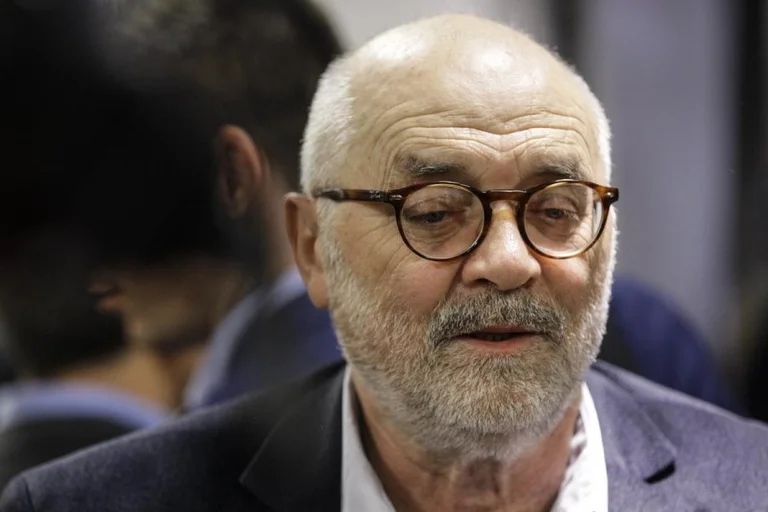
(5 years ago)Shkelzen Maliqi, one of the most popular and experienced publicists in Kosovo, has declared that elections in Kosovo could deliberately fail in order to repeat themselves. Such is due to Albin Kurti's non-certification of candidacy. He believes that there may be tensions from supporters in Kosovo [...]
He believes that in Kosovo there may be tensions from supporters of Albin Kurti if the Central Election Commission's final decision would not allow his candidacy due to the judicial decision on the punishment of September 2018.
Kosovo's independent state only exists 13 years, this short time, even teenage ones, to achieve maturity and full stability”, Maliqi has said of the KDP.
KDP: How do you expect the February 14th elections to go?
It is likely that Albin Kurti and a group of LVV candidates will not be certified for the election race, which can bring tensions during the campaign and after the elections.
Shkelzen Maliqi: Elections in Kosovo have usually been held without major problems. They have never been contested, but there have been some of the latest long-term elections in the counting and certificate process and then the creation of coalitions and stable governments. The truth is that no Kosovo government, by declaring independence, has completed the full mandate.
On February 14th, the next extraordinary elections will be held, where the Vetevendosje Movement united with the Vjosa Osman list is expected to win. Binomi Kurti Ousmani, who in 2019 had reached a promising flood moment called “Hope coalition” The LVV HINA LDK, but then failed and produced two short-term governments, now competes with a common list that is viewed as absolute favour not only for victory, but also for the realisation of substatic changes and a government unlike the old “politika”, which dominated the LDK and PDK, the two main forces that have achieved internationalism and the declaration of independence of Kosovo, but are accused of failing to ensure the sustainable development of the state. The new generation of politicians is hoping that with the increase in the number of voters, called the republic's generation that has not experienced the 1990s, and that it feels that Sovina owes neither the LDK nor the parties derived from the war and the KLA, it only requires accounts for the capture and extortion of the state from the old policy that failed to develop Kosovo in the right direction.
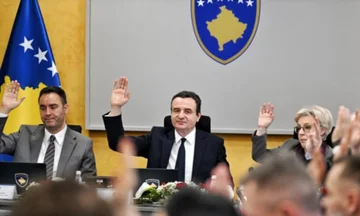
But there's one thing that actually blurs the triumphal vision of the triumphal triumph of “Hope coalition”. It is likely that Albin Kurti and a group of LVV candidates will not be certified for the election race, which can bring tensions during the campaign and after the elections. The point is that the Constitutional Court verdict, which brought down the Hoti government on Kurti's request, could be returned as boomerang. The Constitutional Court's conclusion that the Hoti Government has not been legally elected because the crucial vote of 61 of an MP has not been valid because he has been convicted of criminal acts, obliges the CEC not to unreach the candidacy for MP Albin Kurti, as the bearer of the LVV list, and some of the partners who have also been convicted in the last three years!
If the CEC does so and requires Kurti's removal from the election list, it could cause tensions and reactions of fanatic LVV supporters who in the past did not hesitate to organise protests and undemocratic and violent pressures. Otherwise, criminal acts for which Kurti and co-partisans have been convicted relate to the use of tear gas in the Kosovo Assembly.
KDP: Will Albin Kurti accept the removal from the electoral race?
Shkelzen Maliqi: It would have to be reconciled, because no one should be above the law. If the CEC had made a mistake in recruiting Kurti's deputy of the Ashkali parties, and that brought down the Hot government, how could one allow the running of the Kurt, because one will again take the case to the Constitutional Court, and she can't make a different decision. Kurti has not yet expired for the three-year deadline that would allow her to run, that deadline expires in September.
According to some interpretations, Kurt may be barred from running for deputy, but not running for prime minister, because in the Constitution there is no stopping the deciids like for MPs. It is an issue for which the Constitution remains silent and without clarity, though, according to logic, the stop would have to be worth any running in top state positions (president, prime minister, prime minister, etc.) if the concrete candidate is convicted by courts, even in terms longer than 3 years.
KDP: Do you think Kurti, however, if this legal barrier is overcome has the most likely to form the government?
Reaching a majority over 50 %s is not that easy, because it implies a convincing victory that Albin provides at least 61 mandates in the next country, which would be a total failure for other parties that have dominated Kosovo in the post-war period.
Shkelzen Maliqi: Yes, however, all polls and prognosis favor Albin Kurti. He even feels that his removal from the election list will become an additional factor in his ever-convincing victory. It is believed that, although there are no strict rules about the criteria for running the Headship, the removal from the list for deputy does not force LVV not to run for prime minister. A fierce legal battle will likely take place over this. Some predict that the 14-point election will be deliberately failed so that they can repeat in the autumn, when Albin is out of term for running.
KDP: Meanwhile Kurti with Osmani has agreed to co-operation. Will they win over 51 per cent of the mandates?
Shkelzen Maliqi: That's Kurt and Osman's goal. They want a clean majority that provides the necessary full power for the realisation of radical changes in the state and Kosovo society.
However, achieving a majority over 50 %s is not that easy because it implies a convincing victory that Albin provides at least 61 mandates in the next country, which would be a total failure for other parties that have dominated Kosovo in the post-war period. It should be remembered that if such Kurti triumph occurs, the LDK, the PDK, the AAK and the Initiative together will no longer have 40 mandates! Theoretically, this could happen if February 14 is really shown as a referendum, as Kurt is calling it. But this is hard to accomplish.
I think the most realistic is that binomi Kurti Osmani and the popular spirit of the 2019 coalition hope will likely get most of the Albanian electorate votes, more than 50 mandates out of 100 for which Albanian parties compete.
Only the great failure of the LDK, The PDK, AAK and Initiative, if they failed to get as much as 1/3 of Albanians' votes together, would bring “referendum” of the overthrow that Kurti and Osmani want, when they would have 2/3 of Albanians' votes and, translated in number of mandates, to have at least 67 MPs, along with 33 other Albanian parties.
Such a result does not seem possible when we consider the expected mobilization of the wartime parties under the circumstances of starting the process at the special court where the leaders of the KLA are currently located, and when even the LDK, however hit with the departure of Vjosa Osman, should not be so hurt that I lose half the electorate!
KDP: Why does Kosovo fail to have more stable government?
Shkelzen Maliqi: Because we have many parties that improve the vote and that an additional factor is that of the real electoral race that only takes place for 100 countries. Our system favours minority parties, especially the Serbian List, as they do not have only 20 seats reserved in the Assembly, but governments should also leave at least 2 ministerial posts reserved.
Prior to declaring independence, when Kosovo was forced to participate in the Vienna process of the LDK, which was then the most voted party, co-operated with opposition parties consisting of PDK and side-side parties because Hashim Thaci, as leader of the opposition, had a supportive attitude in the negotiations process as it came to a major issue of interest that exceeds narrow party and ideological interests. This sound logic of isolation of major interest is lacking in recent years.
The main factor in the instability of governments is the extremely severe rivalry of the main Albanian parties, as they, since 2014, began setting red lines for coalitions between them, which narrows to the extreme the creation of stable governments even under circumstances when unity has been required in the face of important processes for overall interest. Prior to declaring independence, when Kosovo was forced to participate in the Vienna process of the LDK, which was then the most voted party, co-operated with opposition parties consisting of PDK and side-side parties because Hashim Thaci, as leader of the opposition, had a supportive attitude in the negotiations process as it came to a major issue of interest that exceeds narrow party and ideological interests. This sound logic of isolation of major interest is lacking in recent years. Local resentment is even moving into reports with international allies. We have witnessed the dominance of narrow party interests that Kosovo had brought serious problems even in its report to the United States, as Kosovo's main ally, as well as Germany, France and so on. which was featured as the occupation and provincial arrogance wrapped in the populist discurs that were sold as national pride and commitment to the protection of Kosovo's sovereignty.
KDP: What challenges await the next government?
Shkelzen Maliqi: The challenges are many. But the key is the challenge of stabilising and reinvigorating relations with allied world powers regarding the process of dialogue and strategic partnership in the process of advancing Kosovo's citizenship to equal members of international organisations. As long as our state is fragile and under effective NATO military supervision, we should not in any respect disrupt reports with the US and the most powerful Western countries, the Great Britain, France and Germany, even if we become aware of the fulfillment of some “s of the house” and the obligations the state of Kosovo has previously received in the process of dialogue with Serbia. Understandably, one of the obligations is the establishment of the Association of Serb majority municipalities, where we are able to package it in line with remarks the Constitutional Court has told Kosovo, that this association does not have executive competence of a third level of autonomous power. Noir should we not leave the congregatories of the Ahtisaari project, as a fundamental compromise Kosovo has made, and if this compromise is slightly affected, it should be compensated proportionally in order for Kosovo to become a functional state and not a hostage to Belgrade's interventions.
Kosovo's real sovereignty would be seriously hurt if by the population's puffers in any form we provoke the continuation of the NATO mission in Kosovo. Even if we don't get the chance for Kosovo to become a member of the UN because of Russia's veto, Kosovo will remain the ally of NATO membership as a higher degree of cementing independence within the Euro-Atlantic security structure, where maybe even some EU countries, who have not recognised Kosovo's independence, will not prevent NATO membership.
The tasks of the new government, but some other governments that will follow, are strengthening the state, accelerating economic development, advancing democracy, and restoring the project to mutual functioning and control of divided powers, completing dialogue with Serbia and active participation in projects aimed at advancing regional security and stability... These are not the jobs that can do a government, however ambitious it is, but it requires time and general emancipulation. We have seen in Albania's example that there has now been a complicated process of creating an independent and clean judicial system (aiding support from the Western Aletas has driven some 80 %s of corrupt judges and prosecutors!) and yet this great battle has not ended, because at every step, it faces the resistance of conservative forces or those who defend monopolies and privileges previously installed and serve as pillars of the existing hybrid system.
The independent state of Kosovo exists only 13 years, this short time, even adolescence, to achieve maturity and full stability.