 3 hours ago
Osmani rejects Lajcak's statements on Kosovo recognition
Periskopi(5 years ago)
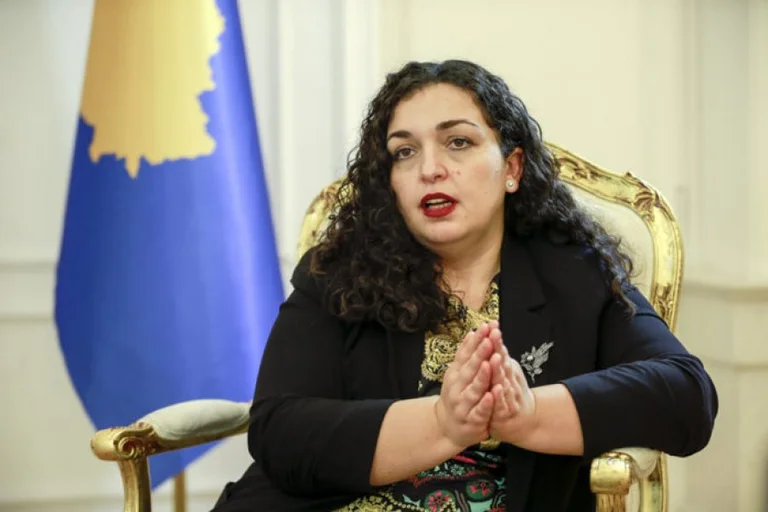
(5 years ago)Kosovo President Vjosa Osmani's task officer, Vjosa Osmani, reacted on Wednesday to claims by the European Union's Special Representative for Kosovo-Serbia dialogue, Miroslav Lajcak, who has said that if Serbia changes its position over Kosovo, then the same would have been possible for the five European countries that do not recognise [the] independence.
Kosovo President Vjosa Osmani's taskperson, Vjosa Osmani, reacted on Wednesday to claims by the European Union's Special Representative for Kosovo-Serbia dialogue, Miroslav Lajcak, who has said that if Serbia changes the position over Kosovo, then the same would have been possible for the five European countries that do not recognise Kosovo's independence.
According to Osmani, it is unfortunate whether the foreign policy of these countries is subject to that of Serbia and Russia.
In addition to regret, it is also dangerous for the entire European Union that its five member states determine their rules and approaches based on Serbia's” wishes and requirements, Osmani has said, calling for these states to recognise reality, respecting the opinion of the International Court of Justice and recognising Kosovo, not expecting Serbia to do so first.
Spain, Slovakia, Romania, Cyprus and Greece are five EU member states have not recognised Kosovo's independence.
Kosovo President Vjosa Osmani's task officer has wrapped up her visit to Brussels on Wednesday, where she met with senior EU officials and with the heads of the Belgium Parliament's two chambers. Osman last night has had a meeting with EU special envoy Miroslav Lajcak and earlier with European Parliament Speaker David Sasolli, as well as EU Commissioner for Neighborship and Enlargement Oliver Verhely.
On Tuesday, January 12th, Lajcak stressed in a video discussion with German Ambassador to Washington Emily Haber that the position of these five countries could change if an agreement between Kosovo and Serbia is reached.
“Everything that is acceptable to Serbia will be acceptable to other countries that have not recognised Kosovo”, Lajcak underlined, referring to the contacts it has with those countries, but also referring to his country, Slovakia, which also has not recognised Kosovo's independence. He has served as minister of foreign affairs in Slovakia.
“As former foreign minister of Slovakia, when I was asked when my country will recognise Kosovo, I declared: Give me good news so I can go to parliament to tell you it's time to consider our position. So clearly the good news is the agreement with Serbia”, Lajcak has said.
While in Brussels, the president, Vjosa Osmani, has said that at the meeting, Lajcak has insisted that Kosovo can continue dialogue only after there is a legitimate government, which will emerge from elections to be held on February 14th.
Dialogue between Kosovo and Serbia, under the European Union's mediation, started in 2011. It was suspended for 20 months, late in 2018 due to the 100 per cent tax Kosovo imposed on products from Serbia and Bosnia and Herzegovina, by the then-led government of Ramush Haradinaj. Later, Albin Kurti's next government lifted the fee, but imposed reciprocity measures. Serbia declined to sit at the negotiating table, while Kosovo had such measures in effect.
Upon coming to power, the government led by the prime minister, Avdullah Hoti, abolished reciprocity, enabling the dialogue to resume in July 2020.
It has been several months since Kosovo Prime Minister Avdullah Hoti and Serbia's president, Aleksandar Vuciq, have not held new rounds of talks. The EU has said that political-level meetings are not being held due to the coronary pandemic.
The EU has said this process is aimed at fully normalising relations between Pristina and official Belgrade. /rel











