 4 hours ago
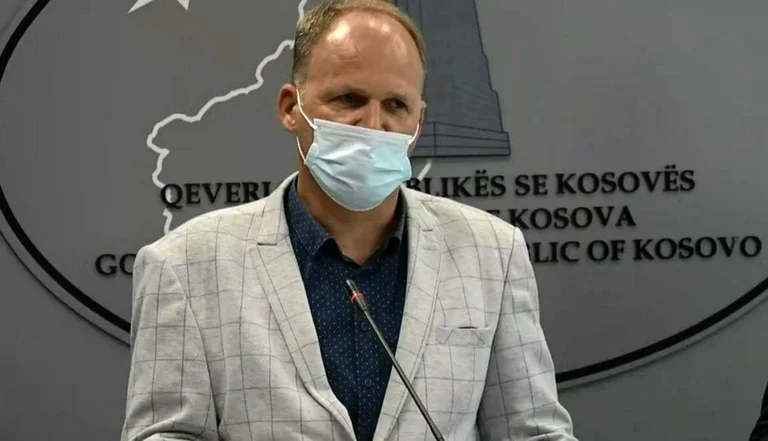
Krasniqi: We managed successfully, never without oxygen.
Periskopi(5 years ago)
(5 years ago)The organisation of beds in clinics, the reorganization of health staff, as well as the provision of drugs and oxygen were some of the main challenges facing Kosovo's fragile health system. As a result of the pandemic, the number of patients increased in Kosovo clinics and hospitals, but despite that, the manager's task fraud [...]
The organisation of beds in clinics, the reorganization of health staff, as well as the provision of drugs and oxygen were some of the main challenges facing Kosovo's fragile health system. As a result of the pandemic, the number of patients in Kosovo clinics and hospitals increased, but despite that, Kosovo University Clinical Hospital Service Director Valbon Krasniqi says no patients have remained without medical services.
Krasniqi even from next week has warned of a return of services to professional ambulances and electronic services at QKUK clinics, which were suspended due to pandemic.
To cope with the influx of citizens who were affected with COVID-19, Kosovo's University Hospital Clinic Service was forced to increase beds.
U.d. of the director of this health institution, Valbon Krasniqi, in an interview for KosovaPress, shows that four other hospital clinics were required to be treated in advance.
Because of the large number of patients and the much larger flow, we are now forced to add much more beds to KKUK and now we have five clinics that are treating patients infected with COVID. The Infectious Disease Clinic, Pulmology Clinic, Internistic Clinics, Sports Medicine facility, and we have Central Intensive Medicine. In addition to these clinics, we have a child - age ward at the Clinic of Pediatrics and another department for pregnant women in Gynecology. Meanwhile, all hospitals have already turned into an infectious and Pulmology department where they treat patients affected by COVID”, he said.
Krasniqi has listed some of the main challenges facing the management of the COVID-19 pandemic. U.d. KKUK's director says seeing the need for oxygen-related beds, have managed to increase capacities in this direction and currently only at KKUKUK, have 200 intensive care beds.
I think three were the challenges during this pandemic. In a provision of medicine and medical products and oxygen, especially for patients affected by COVID, the overall reorganization of human resources and the reorganization of spaces with extra beds. So these were the three main areas that we've been given to prioritize and we've been constantly taken to cope with the massive flow of patients, and I say with no modesty that we've succeeded fully in any patients who needed to receive hospital services and to lie in hospital is not left without lying in the hospital... In July and August, we had only 12 open beds of intensive care. We made rapid reinforcements of the oxygen system and November and December we now had 25-26 beds in intensive care. We had all the respirators available, I'm only talking about QKUK, while general hospitals have limited numbers of these intensive care beds. During September and October, we managed to add up to 200 additional beds to only QKUK”, Krasniqi said.
Along with numerous shortages and challenges, as a challenge to the health system, oxygen shortages were reported for coronary patients. And for this incumbent, Valbon Krasniqi says Kosovo clinics and hospitals have not been left without oxygen for a day. He even says that some hospitals and clinics are connected to liquid oxygen systems.
We currently stand very well, we have managed to stabilize the oxygen supply because of the jobs we've done and we're continuing.... In all hospitals, we'll have supplies of liquid oxygen and the oxygen supply issue will be resolved forever. This is a decision of mine with my group that we worked on when we saw the need to pass on the oxygen supply with gas tanks to the one with the liquid system. For three reasons liquid oxygen is more accessible on the regional market, it can be achieved faster and easier, it's much cheaper than the oxygen in gas canisters and requires a labor force far less... NO single day left without oxygen contracts so at all times we've had contracts with licensed operators those contracts have recently been renewed due to such contracts and we've been supplied with medical oxygen”, he said.
And because of the epidemiological situation in the country, many services that were not urgent and particularly services in the special ambulances were interrupted. That's why Krasniqi says the first week of January will return these services.
“We are aware that it has somehow been violated to take those services, but we have to do so. You know that even at the beginning of the pandemic services have been suspended in professional ambulances as well as interventions or surgical operational operations, then after the best situation, those services were returned to be suspended again during the November-December months when we had a large number of cases. We have analysed the epidemiological situation at the country level this week with the pandemic management committee at USKKUK and are carefully following the number of patients into our hospitals and we have planned that since the first week after the holiday season, we should return special services, and also with a gradual plan and restore effective operations”, he said.
For the lack of drugs at clinics where coronary patients were treated, Krasniqi said there were occasional shortages. He said that there has never been a Remisvivitri in clinics, and Favipiraviri has been present, from antivirus drugs that the Clicians described to patients.
“ - CO VID those that are on the clinical guide that I share in three groups: supporting drugs such as injective, vitamin, analgenetic, antiperetic treatment that have been constantly present and available to clinics. The antibiotics where most of them have had early absences of any particular antibiotic, however, has been the replacement of that antibiotic recently been supplied with large doses of segrexon and we lack to say the truth only Impermen but which is very rare and only in specific cases. And the third group is these antiviral drugs, such as Favipiraviri and Remdesivivivir. We've had the Favipiraver available all the time after we've received a donation while we've never had the Remdesiviviritri available since the Health Ministry has failed to complete the purchase procedures”, he stressed.
His trip to the COVID-19 pandemic war, Valbon Krasniqi, had started as a infection at the Infective Clinic, and then he took office as head of the SHKSUK director, after he was already dismissed from this post, Basri Sejdiu.
And for that, he said he felt very good when you're in the service of patients. Krasniqi even remembers the moment he had treated the first patient suspected of COVID in February. But he adds that the office of director allows him to advance hospital services for the benefit of patients.
We started with preparation, training needed for the staff, to protect ourselves to wear uniforms, to remove uniforms, masks, glasses, say that arsenal of protection equipment to COVID, in February we assigned a triage room and I remember on February 12th when I had the first suspicious chance and that I got the first sample of a citizen who came back from Italy... and in the first week of July I didn't leave the Infectious Clinic for a moment and we worked with the staff all night to treat the patients... ...it's much easier and it feels much better when you treat patients directly with COVID, and now I'm treating a lot of patients... Even being general director gives you the opportunity to do much more for a greater number of patients. Thus, to ensure that services are being provided to all patients affected by COVID but other services”, Krasniqi said.
Kosovo's first cases with COVIED-19, recorded on March 13th, from that time until now positive, have resulted in over 50,000 citizens, while the Coronavirus battle has lost over 1300 people while over 400,000 citizens have recovered.











