5 minutes ago
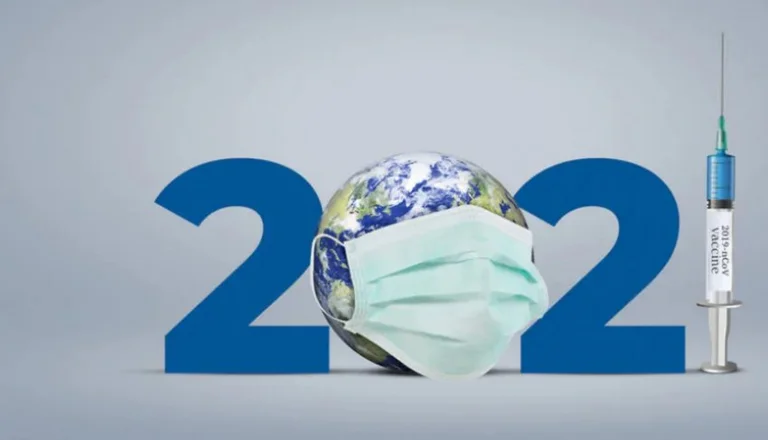
The Most Expected Scientific Events for 2021
Periskopi(5 years ago)
(5 years ago)Over the past few months, the pages of scientific websites have been dominated by news with the subject of Covid-19. Meanwhile, research into other matters has continued in shadow, and now you are preparing to revive the scientific landscape of the newly introduced year. What discoveries can we expect during the year 2021? The first plan of [...]
Over the past few months, the pages of scientific websites have been dominated by news with the subject of Covid-19. Meanwhile, research into other matters has continued in shadow, and now you are preparing to revive the scientific landscape of the newly introduced year. What discoveries can we expect during the year 2021?
A First Global Warming Plan
The pandemic year did not produce any sustainable improvement in greenhouse gas emissions, and slowed negotiations to implement the Paris Agreement. But something has changed: The United States has elected a new president, who has promised to restore American leadership to the fight against climate change and re-enter climate agreements.
The moment of truth will come in November with the Climate Conference in Glasgou, which includes a new round of “good intentions” to lower harmful emissions. The European Union and China have already announced their intentions to achieve carbon neutrality, in the 1920s and 2060s respectively.
Clearly on the Origin of pandemic
In January, a group of O scientists The BSH will arrive in Vuhan for the second phase of research on the event that led to the passage of the SARS-CoV-2 choreography to humans. Investigations will begin on the animal market. Investigration may last for years, but some important news reports are expected by the end of 2021.
Tested vaccines
If 2020 ended with the arrival of anti-Condavid vaccines, 2021 will prove their success. In addition to the first effects of mass vaccines, good news is expected for vaccines that are still developing. In the U.S., Novavax and Johnson & Johnson vaccines have reached the Shaza III testing. First, which aims to stimulate the immune system by introducing a non-infective fragment of the virus. Johnson's & Johnson requires only one dose, a fact that could speed up distribution.
Science Without Hurdles
This year, implementation of Plan S, an initiative for promoting science, promoted by 20 research funding organisations. The idea is to require immediate extension of free access to all scientific articles on supported scientific research
from public financing, which will immediately become available for free. The project can revolutionize the policies of many scientific magazines.
Traffic on Mars Planet
The Chinese mission Tianwen-1 is expected to arrive at the Red Express in February 2021, with a survey that will explore geology, climate, internal structure and magnetic fields of Mars with a total of 13 instruments. In the same period, the reduction of the Persian probe is expected NASA, and the orbit of the Hope Martian probe of the United Arab Emirates.
Research on stem cells
New guidelines are expected from the International Society for the Research of Staminial Cells (ISSCR), an independent US headquarters organisation. They aim to regulate the use of stem cells for research, without the use of actual embryos.
This would make it possible to cross the legal border (and ethics) in many countries for scientific study of in vitro embryos, which is at the moment the maximum 2 weeks after the fertilization. The length of this border will allow us to shed light, above all, on the most frequent causes of early spontaneous abortions.
Another discussion on Alzheimer's research
This year, it will be learned about the fate of Adulanumb in the United States, an antibody-based drug aimed at beta-amiloid protein, the main feature of advanced stages of the disease. Face 3, results brought conflicting conclusions, and the independent committee consulted by the FDA did not give an enthusiastic opinion on this drug, concluding that available data does not support its use.
Release of descendants of '{0}'bble
In October, we will see the long-awaited launch of the Space Telescope James Webbú, the largest and most powerful space telescope ever built by man. NASA hopes that the successor ofHubble, which has cost $8.4 billion, will have the same innovative effect as the first one released in 1990.
Black Holes and Neutron Stars
This year could pave the way for new ways to detect gravity waves. Using pulsers (computered neutrons, rotating rapidly) like “-cosmic cells”, and measuring the effects that distort space-time in their regular impulses, can be caught in waves produced by pairs of emerging supermassian black holes.
Brexit
Britain's departure from the European Union has also caused uncertainty in the academic world. The consequences of this divorce on financing scientific research and the free movement of students and researchers from around the world will be felt for a long time, starting this year 2021.