4 hours ago
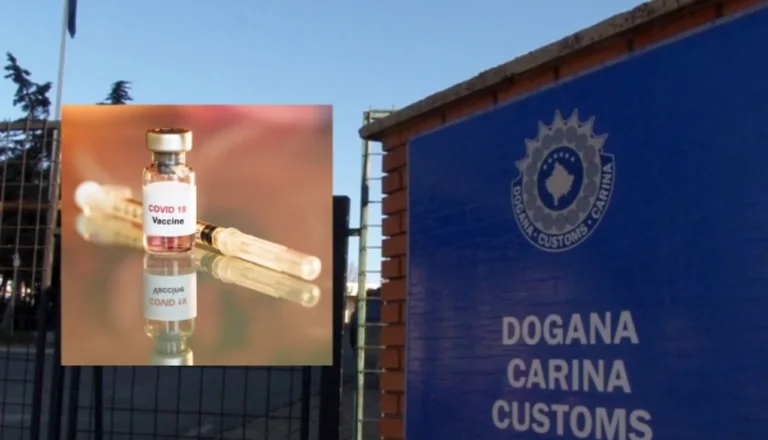
Challenge smuggling: Still no information as to how vaccines “Pfizer” was introduced north of Mitrovica
Periskopi(5 years ago)
(5 years ago)As a result of the David-19 pandemic, Kosovo Customs revenues are 130m euros less than in the previous year. The year 2020 had started with a good performance until the start of the Covid-19 pandemic in March, where the immediate inflow impact was observed. Also, smuggling continues [...]
As a result of the David-19 pandemic, Kosovo Customs revenues are 130m euros less than in the previous year.
The year 2020 had started with a good performance until the start of the Covid-19 pandemic in March, where the immediate inflow impact was observed.
Similarly, smuggling continues to challenge Dogan, as is the latest case with Serbia smuggling “Pfizer”.
Kosovo Customs spokesman Adriatic Stavileci says of Kosovo Press, that Dogana and the prosecution are investigating the case for the introduction of the vaccine “Pfizer”, as he says, may have been imported illegally to Serbian citizens in northern Mitrovica.
Stavileci adds that they cannot provide information on this vaccine that has been introduced into Kosovo's territory without any documents or facts.
“As to the case that you refer to antiConvidence019 in northern Mitrovica, investigations are under way on this issue and from where they came from. However, we must say that we have land boundaries with Serbia very long, which is often also used by smugglers for smuggling not only drugs but also other products. By and large, if this year's smuggling is compared to last year, it has suffered a decline because of limiting the movement of citizens during the night for protective measures by Covid-19. Thus, smuggling has been restricted. Although this is also related to the decline in consumption of products they have smuggled”, he points out.
While for Customs' annual revenues in 2020, Stavileci claims the revenues are 1 billion and 30m euros, or a 10 per cent drop.
The immediate access to Kosovo Customs is complete by the end of the year with minus 10 per cent less than the previous year. In the previous year... We've had 1 billion and 200 million now we have about 1 billion 30 million to 40 million by the end of this year. So, we have a drop of 120 to 130 million, which we haven't managed to collect, but these are as a result of the pandemic and the economic crisis that it caused by David-19”, Stevilic claims.
Kosovo has for the first time managed to export goods to the European market worth 400m euros, while the value of imports has scored 250m euros.
A good news has been that for the first time this year we have crossed the limit of about 400m euros, the value of exports of Kosovo products. Many producers in some industries have progressed to the list of companies that export such as the timber industry, which this year is ranked fifth, until years ago they have relevant in terms of export. With imports we have a significant decline and as the total value of the goods that have been imported less is over 250m euros”, he said.
Germany and European states remain countries from where goods are imported mostly in Kosovo. Meanwhile, imports from Serbia have seen steadily decline in the past two years.
Serbia now has one remaining among the low importers. States such as Germany, Italy and those of the European Union in general, then, are China, Turkey, and CEFTA countries such as Albania and Macedonia are the countries we import most. As export export rates increase with European Union countries and towards Albania”, he says.
The challenge for customs remains to secure the funds needed for the budget of the Republic of Kosovo.