 6 hours ago
Kupchan: Economic integration is not a guarantee of political reconciliation
Periskopi(6 years ago)
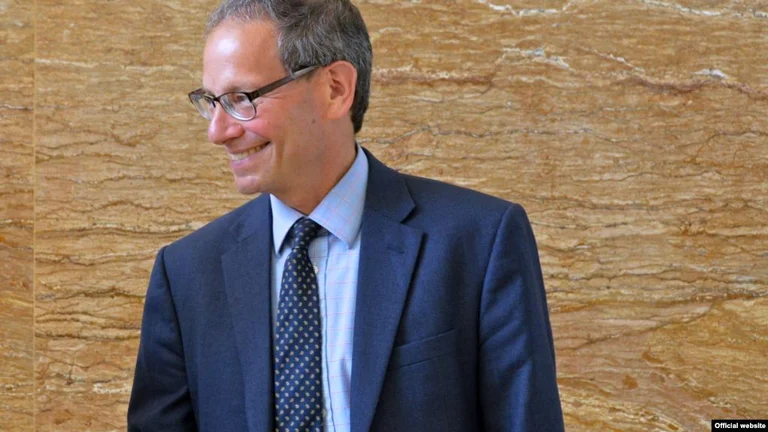
(6 years ago)If you look at history, economic integration is not the competition of political reconciliation, Charles Kupchan, expert of the Council for Foreign Relations in the United States, says Radio Free Europe, which Kosovo and Serbia signed on September 4th. “Indeed, in most cases [...]
If you look at history, economic integration is not the competition of political reconciliation, Charles Kupchan, expert of the Council for Foreign Relations in the United States, says Radio Free Europe, which Kosovo and Serbia signed on September 4th.
The “actually, in most cases now in mind, has had an economic integration without any major political influence. That is why I think it is important to continue talks between Pristina and Belgrade more in political direction. Otherwise, you can see trade growth between Kosovo and Serbia, new border crossings, highways, but this does not lead to political normalisation”, says Kupchan, who is also professor at Georgetown University in Washington.
Radio Free Europe: Kosovo and Serbia reached agreement on economic normalisation, American President Donald Trump has announced on Friday, calling the event a major progress and historic day. How do you assess the real essence and purpose of the agreement reached Friday?
Charles Kupchan: I think that with full confidence it can be said to be an important step forward in the first place, as the leaders of Kosovo and Serbia have signed agreements, which should promote greater economic integration. This is a big deal when we consider how complicated the reports between the two countries are, since Kosovo's declaration of independence. But I would not overestimate the importance of this agreement. I would not agree with President Trump that this is a historic achievement, because there is still much to be done.
We have seen in the past that the agreements made about railways or highways do not always apply. Wait and see what happens. Of course, there are also reasons for optimism and joy. When I look at the details of the deal, one of the things that bothers me is the fact that it is almost entirely economic nature, with very little political content. I think the main political content in the agreement is that Kosovo for a year will not seek membership in international organisations, and that the Serb side will suspend the recognition withdrawal campaign.
Almost everything else is about economic ties or humanitarian issues. If you look back, agreements that are largely economical and lack political content do not achieve the stated goal.
With a similar approach has been acted by the Trump administration in the case of Israel and Palestinians: let us focus on economy, trade, investment. However, there has been no change in their relationship.
Radio Free Europe: Don't you think that economic normalisation could create, at least in part, calming political tensions?
Charles Kupchan: I think it might help, but it's not a competition. In other words, you should eventually include political issues, not just economic ones. When you only have the economy and not politics, you will not get the results you have hoped for. Look at Bosnia and Herzegovina, where there have been a lot of investments, great joint efforts between Serbs, Croats and Bosniaks, but essentially not much was achieved. Look at Japan and China where there's a big trade trade trade, but with very little geopolitical influence on improving their relationships... look at Taiwan and China.
Radio Free Europe: Do you think the economic agreement will not eventually be able to bring political reconciliation, but only to serve as the replacement of a lack of political agreement between Kosovo and Serbia?
Charles Kupchan: Once more, that's a step forward. Well, it's better than no result. But, if you look at history, economic integration is not a competition for political reconciliation. In fact, in a large number of cases that come to mind, there has been economic integration without much political influence. Therefore, I think it is important to continue talks between Pristina and Belgrade in a more political direction. Otherwise, you can see an increase in trade between Kosovo and Belgrade, new border crossings, without leading to political normalisation, unless leaders are urged to move in that direction.
Radio Free Europe: But if you have a highway, a free economic zone, or a Missie Schengen, if people were to travel and invest more freely, do business and meet people of different nationalities, it could reduce tensions, at least in part, and help achieve a political agreement.
Charles Kupchan: Yes, it can help. I mean, this is the beginning, not the end. This is the first step, not the last one. Unless accompanied by an extraordinary effort to move forward in political direction, it may not produce the result for which people hope. But there has been considerable progress.
Radio Free Europe: Why is this not a trilateral but bilateral agreement between Serbia and the United States and Kosovo and the United States? Is it a concession for Serbia because Kosovo is not a member of the United Nations, though it has been recognised by more than a hundred countries?
Charles Kupchan: In my opinion, this aspect of the agreement is disturbing, because I suppose Serbia did not want to recognise Kosovo Government by negotiating and signing an official document with it. As a result, Serbia signed an agreement with the United States, as well as Kosovo.
The two sides reached an agreement through Washington to move towards economic normalisation. But the fact that they didn't reach an official agreement with each other is exactly what I'm talking about. It lacks politics and only economic integration will not bring them to that stage. It's a good start, it's a foundation, but this has to go on. The US and the EU must continue to pressure both sides to move towards political normalisation.
Radio Free Europe: The fact that it is not a trilateral but bilateral agreement is a sign that Serbia has more reason to be satisfied than Kosovo?
Charles Kupchan: I think both sides have reason to be satisfied, for the simple fact that there is a spark of light in bilateral relations, a reason for the new hope that they are moving in the right direction. Is that all anyone can hope for? It's not. Is it also part of the US effort to highlight President Trump's achievements? Yeah. We are in the middle of an election campaign and President Trump needed a diplomatic victory because some of his most extraordinary efforts to reach an agreement with North Korea and Iran went wrong.
But, recently, he has made significant progress with an agreement between Israel and the United Arab Emirates. On Friday, as part of the talks, Serbia agreed to move its embassy to Israel to Jerusalem, and Kosovo will move towards recognition and normalisation of relations with Israel. These are great things, especially in the context of American politics.
Radio Free Europe: What will be the consequences of implementing this part of the agreement? This, of course, will have a broader echo, especially in the Middle East, because Muslim countries that do not recognise Kosovo will be unhappy with the fact that Serbia is moving its embassy to Jerusalem. I'm taking Iran as an example.
Also, Tehran will not look kindly if Belgrade condemns Hezbollah. At the same time, if Kosovo establishes diplomatic relations with Israel, those Muslim countries that have recognised its independence will not be satisfied.
Charles Kupchan: Yes, it is a particularly bold move by Kosovo, given that there is a majority of the Muslim population. You are right to say there will be countries in the Middle East that will not be satisfied with that movement, but that is a side effect of negotiations with the United States.
Radio Free Europe: The agreement also cites the halt to buying 5G technology from unreliable partners, which is a secret reference to China. Will this anger official Beijing, given that Serbia is heavily supported in China, not only financially?
Charles Kupchan: Serbia plays in several letters, so one day it turns to the West, it means from the US and the EU, and tomorrow it turns east, relying on Russia and China. I think the agreement leads Serbia to the West. China will not like the forecast on this document for 5G technology. Therefore, I think, gradually, Serbia is moving towards Atlantic orbit. Like I said, Friday's deal is an indication of that direction.
Radio Free Europe: On the first day of negotiations in Washington, the 10th point of the agreement drew the greatest attention, which, as the Serbian delegation claimed, envisioned mutual recognition, but which they rejected. The US president's envoy for dialogue, Richard Green, initially denied it, but later said “there is no sudden negotiations”.
Now, the question arises why the United States included that point if they knew Serbia would refuse it and why did they give up so quickly? For example, in Dayton, a major and long-term pressure was put on Slobodan Milosevic to accept certain provisions, such as the corridor with which Republika Srpska in Bosnia is divided into two parts?
Charles Kupchan: I have no inside information about how the negotiations have turned out, but I wouldn't be surprised if the Trump administration tried to get to the bottom and reach political normalisation. That would be a historic step forward. Why don't you try. If you're a good negotiator, then you do.
Later, she lowered her expectations and was satisfied with economic normalisation, as she realized that this was mostly possible through a signing of the parties with the US and not with each other. This, of course, is less than expected. Anyway, better than nothing.
We need to take into account the circumstances and pressures that Vucinq and Hoti face in their countries.
In the end, there will be mutual recognition
Radio Free Europe: Before the meeting in Washington, Prime Minister Hoti said mutual recognition between Serbia and Kosovo should be the end result of negotiations. After signing the agreement Friday, he reiterated that it would lead to mutual recognition. Under what circumstances is this possible?
Charles Kupchan: I think this is gonna happen. The question is when and not if it will happen. Anyway, I don't think that's gonna happen soon enough. I don't think this agreement will lead to normalisation of relations in the coming months. I think that at the end of the day, the prospect of joining the EU will be quite tempting to encourage Serbia and Kosovo to normalise political relations.
The EU has made it clear that Serbia's membership depends on political normalisation. I think this is the most important card. I don't know when that's gonna happen. However, what happened Friday signals that both sides are moving towards full normalisation. We, we can't know when and in what context will happen, but at least they're on the right track.
That's good. Only time can show when the economy will lead to political normalisation. As I said before, no one should think that economic normalisation will in itself lead to political normalisation. That's not gonna happen. The action of political leaders, courage in Belgrade and Pristina is needed. So this is the beginning, not the end.
Radio Free Europe: When talking about political normalisation, there is a necessary prerequisite for what is mutual recognition, or is the model of “2 Germany” that is often mentioned. In this case, Serbia should not block Kosovo's entry into the United Nations and other international organisations, but without the obligation to recognise it. Or do you think the EU will insist on mutual recognition?
Charles Kupchan: I think the EU should and will insist on full recognition from Serbia. It is not enough to allow Kosovo to join international organisations, while refusing to recognise it as a state.
Biden, Most Interested in Balkans
Radio Free Europe: In the meantime, what is the certainty that this agreement will be implemented. An agreement on the deployment of air traffic and railway between Belgrade and Pristina was signed in Berlin early this year, but few have been made so far. Is the fact that one of the guarantors is the American government enough? Also, what if Joe Biden wins the presidential election, which will probably have another approach?
Charles Kupchan: There is no guarantee that it will be applied. As you said, previous agreements have not been implemented. Therefore, it is quite possible to think that even this agreement will not be fully realised. One of the problems is that Trump will concentrate fully on domestic politics by the end of the year. If Biden wins, I don't think the United States will reduce their commitment to the issue.
In fact, Joe Biden pays more attention to the Balkans than Donald Trump and is more engaged in the region. I can assume he will be very interested in insisting on normalising relations between Serbia and Kosovo. Therefore, I don't believe that the United States' interest in this issue will be reduced, whether Trump wins or loses the election.
EU, US Must Coordinate Tasks
Radio Free Europe: On Monday, Hoti and Vuciq will talk in Brussels under the EU-brokered dialogue. “We are aware of the signing of the document in Washington”, said one of EU spokesman Peter Stano. He added that the work will continue in a comprehensive agreement aimed at fully normalising relations between Kosovo and Serbia, focusing on all outstanding issues.
At the same time, EU special envoy Miroslav Lajcak said the EU has “red red”). What do you think is the role of the EU? There seems to be no coordination of activities with the United States.
Charles Kupchan: I think that when it comes to Kosovo, the EU and the United States should work together. Both sides want the same result. I think it's harmful to watch a kind of ping-pong game, one day engaging in the US and the other EU. However, it would be better if all were on the same side and worked together.
The Trump administration is not a major EU fan, and this is no secret. So it doesn't surprise me that Green and Trump want to play their <x0-page” in this direction. However, it would be better for the US and the EU if they were more co-ordinated in the nearest possible manner. I think this will happen if Biden wins. I think he's much more aware of the need to work together with partners on the other side of the Atlantic.
Radio Free Europe: However, if Trump wins again, do you think the US and the EU will continue to act in an uncoordinated manner when it comes to dialogue between Serbia and Kosovo, or do they have a silent agreement that Washington insists on economic and Brussels on political terms?
Charles Kupchan: I don't know what's going on in the background. Trump generally wants the United States to act alone. It's a commercial brand of his presidency. If you win again, he will only reinforce such an approach, because he will think he received support for this approach in the election.
There may be some agreements behind the stage, but whether it is good or bad, the United States on many diplomatic fronts prefers to act independently.
Europe is key to the Balkans
Radio Free Europe: Perhaps Kosovo, like Serbia, is more inclined to accept the leading role of the United States in dialogue than that of the EU, while Trump is president. However, as Vuciq himself said, the Balkans are geographically in Europe, and if the countries of the region want to become EU members, they must co-operate with it.
Charles Kupchan: Yes, if you are a Serb or a Kosovar and ask which country or part of the world is most important to you in the coming decades, the US or Western Europe?
That question is easy to answer Western Europe. It's about the geographical position and the level of integration, sooner or later, of the Balkans in the wider European home. This does not mean that the United States is not an important player, but, as I said, the real reward for Serbia at the end of this process is EU membership, rather than the particular connection with the United States or guaranteeing access to their loans. Of course, this is important and can deepen relations between Washington and Belgrade, but after all, Europe is essential.
Djukanovic's Loss- Positive Sign of Change
Radio Free Europe: It will pass a little to developments in another part of the Western Balkans, Montenegro. The outcome of parliamentary elections there was undoubtedly a blow to (Montenegro president) Milo Djukanovic. Was the issue of the Law on Freedom of Religion key to this outcome, or is the discontent of citizens with its increasingly authoritarian leadership and widespread corruption?
Charles Kupchan: This reminds me of the events in Ukraine, where the Ukrainian Orthodox Church tried to gain independence from the Russian Orthodox Church. Serbian and Russian Orthodox churches try to retain power and influence. In that context, Djukanovic sought to distance himself from Serbia and preserve Montenegro's autonomy. However, its issue is more complex than Ukrainian. Concretically, in Ukraine, Russia annexed Crime, intervened in Donbas, which affected the strengthening of Ukrainian identity against Russia.
In the case of Serbia and Montenegro, we have a stronger sense of language, cultural and religious, and this makes this issue much more complex. This could have played a role in Djukanovic's loss.
However, if we look larger, we are witnessing positive changes in the region, even Belarus. Lukashenka is struggling to stay in power. In other parts of the Balkans, there have been positive changes, such as the agreement between Northern Macedonia and Greece to change the name. Therefore, Djukanovic's fall from the political scene after so long in power is a positive sign of changes that are happening generally in Europe, especially in the Balkans.
Radio Free Europe: Djukanovqi has long played the role of an obstacle to Milosevic's expansion, then spreading Russian influence, which may be why the West has often quietly tolerated corruption and its authoritarian rule. Did the West eventually draw this support before these elections?
Charles Kupchan: I don't know. I don't have much information about the position of the West before elections.
Radio Free Europe: In recent years, however, there have been very critical reports from Western-renowned organisations such as Freedom House, which for the first time this year, after a long time classified Montenegro as hybrid regime.
Charles Kupchan: I believe there was a kind of willingness to tolerate Djukanovic's approach because of his pro-Western orientation. He managed to membership the country in NATO, despite Russia's efforts to prevent it.
Now that Montenegro is firmly deployed in NATO, it is possible that Western support has dropped, because in the end, the United States and the EU are more concerned about free and fair elections and peaceful changes in government, if that is likely to happen in Montenegro.











