 5 hours ago
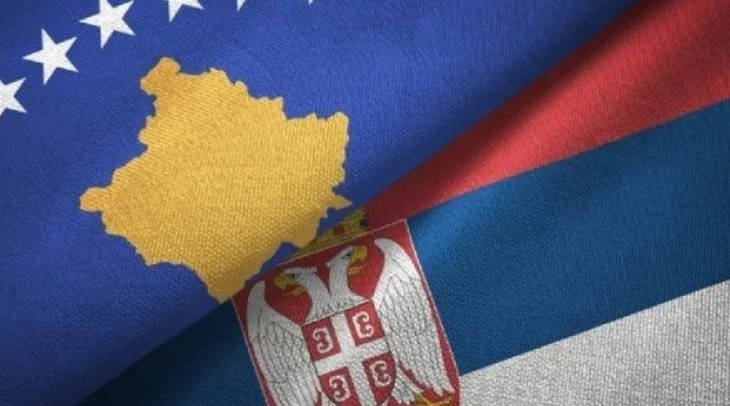
“The Kosovo-Serbia Agreement may include reciprocal recognition”
Periskopi(6 years ago)
(6 years ago)Mark Baskin, American professor legalising International Relations and Public Policy at the American University in Kosovo (AUK), believes Kosovo and Serbia will reach agreement in a future that may include mutual recognition. In an interview for Radio Free Europe, Professor Baskin says that regardless of who wins the presidential election in [...]
Mark Baskin, American professor legalising International Relations and Public Policy at the American University in Kosovo (AUK), believes Kosovo and Serbia will reach agreement in a future that may include mutual recognition.
In an interview for Radio Free Europe, Professor Baskin says that regardless of who wins the US presidential elections, there will be no change in general principles of support for Kosovo, but the difference, according to him, candidates can only have access.
He says Kosovo should take Croatia as an example for the necessary political unity in foreign policy.
Radio Free Europe: Professor Baskin, initially, how do you assess the political situation in Kosovo?
Mark Baskin: It is a general assessment that the current government has no strong parliamentary majority, and other parties are trying to take advantage of the situation. What we're really seeing from the rest of the opposition is their expectation of this government falling, which is normal.
Several days ago, Kosovo and Serbia signed agreements in Washington that were considered historic, but Prime Minister Hoti was sharply charged in the Assembly for this agreement, as well as for the dialogue process in Brussels. What is your assessment of Washington's agreement, do you think it was a fair agreement for Kosovo?
Mark Baskin: I think Kosovo won from this agreement recognition from Israel, which is a huge achievement. This point, clearly shows the prospect for the future in the whole process, as it demonstrated that Washington was on the side of Kosovo in this process. And that's why they offered this deal. In that sense I think it was a big victory. On the other hand, as in Washington, Brussels, or Berlin, all are clear that any Washington agreement requires the support of the EU, and I think it was a good step forward.
Opposition parties are criticising the prime minister for opening issues that have been named closed. How do you value that?
Mark Baskin: I think basically this is a kind of political race which is also normal, and it's not just the case in Kosovo but many other countries. We should remember that Washington's agreement is more of a set of principles signed between Prime Minister Hoti and President Trump, and President Vuciq of President Trump on the other side. It wasn't a typical agreement like that of the 1995 Dayton where all sides agreed to do certain things. I understand the opposition in Kosovo why you're doing this, it's just political competition and part of the game.
Do you think the dialogue, however, will return to Washington when the time comes for signing a final agreement, which President Thaci is constantly seeking?
Mark Baskin: I'm not sure, but for one thing I'm sure: any agreement must have the blessing of Washington and Brussels. In this case Kosovo is aimed at Euro-Atlantic integration, including EU membership, and here it needs recognition from the five countries that have not recognised it and on the other side Kosovo has had extraordinary experiences with the US, as it has supported it since the years of 50, since the Bush administration. This means that the US has shown sympathy and provided support for human rights in Kosovo. So I don't think you can avoid avoiding the support of one or the other, so wherever the signing of this agreement occurs, whether in Washington or Brussels, the country is insignificant compared to the need for both of these centers to be co-ordinated with each other. We know it has been the request of President Thaci, who supports the US commitment, but it probably has more to do with the historical experience in the past that Kosovo has faced.
Kosovo is currently engaged in Brussels dialogue. Do you believe that a peace agreement between Kosovo and Serbia can be reached, including mutual recognition?
Mark Baskin: Opposing positions about the final solution are typical in negotiations, where neither side wants to surrender to the end. That's why I understand both the Serb and Kosovo's position. But what's important is that both sides are meeting consistently in Brussels with the mediation of Miroslav Lajcak and Borell, and I think they will eventually achieve something. I'm not sure if this will happen this year, but I see it happening in a not too distant future, again with US support. That would happen when both sides gave guarantees that the US is in this process and that they see this as a good opportunity to move forward.
When you say you expect agreements, do you think mutual recognition will occur, or simply normalisation of the reports, the term used in the EU dialogue process?
Mark Baskin: I don't have crystal balls to predict the future, but I know the official position. I think that ultimately they'll agree on mutual recognition, but the way this is going to be achieved, for me it's still not very clear, but it's going to end in a positive way and I'm very hopeful that this will happen, because there's also a sign that it's going to happen. I believe Washington and Brussels are the same line and will provide guarantees that both sides will be respected and that there will be clause documents guaranteeing its implementation. It's not just a deal, but it's actually a process, which is sure to have clauses for implementation.
Is the Association of Serb majority municipalities key to this agreement?
Mark Baskin: The agreement has been hired twice so far in 2013 and 2015. So I think both sides should agree on how this will be accomplished.
You've been in Kosovo a very long time and you've seen many legislations and Governments in practice, there's a minimal majority in the Assembly. Do you see this as a problem to continue the process of dialogue and implement the eventual agreement?
Mark Baskin: I think this should be seen in two ways: The truth is that this government has a very small majority, which in a sense makes it very weak, but really this is the kind of democracy that Kosovo has because of its multiparty system. On the other hand, I think it would be great if all political parties in Kosovo adopted some general principles that they could agree with. As an example, Croatia can be taken, where, regardless of whether it was HDZ (Croatian Democratic Union) or the SDP (Socratic Party), despite major differences on many issues, there have been common foreign policy orientation. They all agreed together that they must walk in the struggle for independence, with the clear intention of joining NATO and the EU. So there have been no differences in which political party they were at, but have adopted a set of principles. It is good for Kosovo that political parties regardless of who is in power understand and agree that the road ahead requires unity.
This year in the U.S. is presidential year, can access changes be expected depending on who wins the elections?
Mark Baskin: I think the U.S. has been pursuing consistent politics in this region in the last 40 years and always. There are differences, but they are small and non-substantiial. For example, we have Senator Bob Dole, a Republican and former President Bill Clinton Democrat who were counter-Candids in the election, but both have shared the same outlook on the situation here. So I think under an eventual administration of Biden, you can find another approach, but this will only be access, not fundamental principles. So, I think no matter who's in charge of the White House, they'll be strongly supportive of the process, that's my conviction.
Mark Baskin is a university professor legalising International Relations and Public Policy at the American University in Kosovo (AUK) since 2014. He served in Kosovo in 1999 under UNMIK for a year and a half. For more than a decade, he has served in peacekeeping missions in the Balkans, while publishing scientific works for Kosovo and the region.












