8 minutes ago
Kosovo, economists for mini-Balkan Schengen
Periskopi(6 years ago)
(6 years ago)Part of the agreement reached on September 4th at the White House on normalising economic relations between Kosovo and Serbia was also involvement in the project for free movement that has become known as “mini-Balkan Schengen”. The project until last week has been rejected by authorities and political parties in Kosovo. The director of Oda [...]
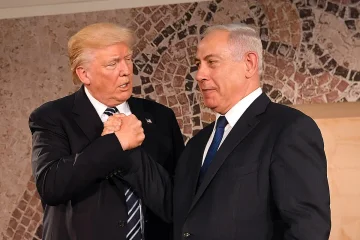
Part of the agreement reached on September 4th at the White House on normalising economic relations between Kosovo and Serbia was also involvement in the project for free movement that has become known as “mini-Balkan Schengen”.
The project until last week has been rejected by authorities and political parties in Kosovo.
The director of the American Economic Ode in Kosovo, Arian Zeka, tells the Voice of America that American involvement in promoting the particular economic zone has prompted Kosovo authorities to engage in the so-called mini Schengen area.
According to him, the area aims to advance freedom of movement of people, services and capital.
“We have seen this as an opportunity to eliminate all technical barriers and other barriers that are based on political differences among states, especially in relation to Bosnia and Herzegovina and Serbia, those states that do not recognise the Republic of Kosovo at all. So a co-operation of a new inevitable form will also put co-operation between states in a new dimension”, said Mr. Zeka.
Economic Affairs Director Safet Gerjaliu, who has also led the Kosovo Economic Oda, says the special agreement in Washington is ensuring the United States for financial support which, according to him, will raise the sides' benefits for the area.
“You see it will invest in infrastructure, it will be invested in Albania, Serbia, Kosovo, it will surely be invested in northern Macedonia, Montenegro and Bosnia, and it all gives it a new dimension it will make a new understanding of this term so we should not be afraid but prepare for the challenges that we will face and in this direction rule of order and law, the education should be the main pillars of achieving the specific goals”, Mr. Gerjaliu said.
Critics of the Min Schengen area agreement have raised concerns about the economic inequality Kosovo faces while the countries of the region targeting this area. They say Kosovo will lose much as productivity pays off a small percentage of Kosovo's economy.
Economists say the danger of competition exists, but, according to them, with Kosovo's involvement in the mini Schengen area, opportunities will be opened to the country's producers.
“Yet we have a unique opportunity to support both companies and producers already to strengthen their capacities, and it is an important point within Washington's agreement that envisions that two US financial institutions offer among themselves and relief in access to finance for small and medium-sized enterprises, even if we assume within this category of small and medium-sized enterprises are a part of the production companies which is a new possibility coming out of the agreement that they can be exploited before Kosovo becomes a part of such a partnership, which I think will take the time to say it is not going to be a deal within days or weeks, Mr. Zeka.
“After all, we should not be afraid of competition because we have to increase our capacities, imagine if in 1958, when the Rome Treaty was signed, European countries had not wanted to be part of the European Union because Germany has been a powerful economy and today it is a super world power, for example, Italy, Belgium, Austria is going to reject this project because it will swallow up the German economy, but you see that it definitely strengthens those countries' <x1, Mr. Gerjaliu said.
The Balkan Schengen, a joint initiative of leaders of Albania, Serbia and Northern Macedonia, aims to ward off border controls and other obstacles to free movement within the region by 2021. Montenegro and Bosnia and Herzegovina have remained out of this process so far.