 8 hours ago
Kosovars pay 10m euros more expensive medicines per year than citizens of other countries
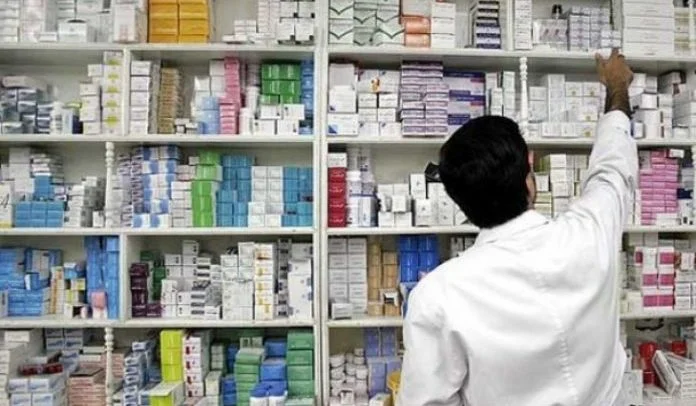
Periskopi(6 years ago)
(6 years ago)Kosovo citizens pay 10m euros annually for drugs more expensive than citizens of the countries of the region, said by Oda of the Pharmacists. That's because there's no drug price unification in the country. Laramania of drug prices in Kosovo's drugstores, according to pharmacists, has influenced citizens not to seek qualities [...]
Laramania of drug prices in Kosovo's drugstores, according to pharmacists, has influenced citizens not to seek qualities in the service of drug purchases, but cheaper prices.
Consequently, drugs are smuggled and then sold at cheaper prices.
But pharmacist John Leka told Radio Free Europe that drugs that come illegally, citizens buy because of the lowest price. But those drugs, he says, enter Kosovo under inadequate conditions and endanger the lives of citizens.
The first question of each patient is how much medicine he requires. We've always asked for price rules and unifications, but in absence, we have to deal with price calculations. We depend on the warehouses for what price we take our medicines and what we sell for. If they move the price, which happens every time, we too have to move (principles), and we have complaints later”, he said.
In Kosovo there are 1,200 licensed pharmacists and 650 drugstores. Currently, 10 percent of licensed pharmacists exercise their activity in public institutions, while the rest in private institutions.
The chairman of the Kosovo Association of Pharmacists, Arian Jakupi, said he has expected the process to complete the drug price unification process since May 2019, an administrative directive is in force.
But the work has remained in half for price unification, as the commission of complaints at the Ministry of Health, six days before the completion of the process resigned and a new commission has not yet been appointed, which would continue the work.
The prices at the drugstore have not been unified for 20 years. The problems this disorder brings bring about price abuse, as prices are higher than in the countries of the region. This results in the smuggling of drugs because of prices. Citizens pay 10m euros more medicines per year in proportion to the countries of the region, while the state has lost 6m euros a year through abusive prices”, Jakupi said.
Meanwhile, Faik Hoti spokesperson at the Ministry of Health said that to proceed before the administrative directive, regulating the price of medicines, a person has already been appointed to lead the processing group.
“The Ministry of Health has appointed a responsible official to lead the task force that will complete the administrative directive to regulate the price of medicines and medical equipment, in order to make this instruction generally applicable, and in this process will be worked together with the Associations and Associations operating under the pharmaceutical community in Kosovo”, Hoti said.
Over 30m euros per year are earmarked for the budget needed for medicines and spending material in Kosovo. But, since the last war in Kosovo, the essential list of drugs has never managed to be fulfilled overall.
Despite this, the debate in Kosovo has been the ongoing fact that the Ministry of Health buys drugs more expensive than their real price on the market.
In 2018, the Ministry of Health had terminated a series of contracts for medical supplies to public health institutions, since it had described those contracts as abusive, as the drugs were purchased at higher prices than that of the market.
Jakupi, meanwhile, added that during the time of the coronary pandemic, pharmacists have been the target of assault and inspection, because there have been price movements at the drugstore. But, he says it was the state-launched warehouses, the ones that played at prices, and therefore, the drugs have moved prices depending on how much they bought them.
This phenomenon was especially expressed during the start of the COVID-19 pandemic, where often unjustly the pharmaceutical community has been the target of numerous attacks on the movement of drug prices during this period, even though the movement did not come from pharmacists. On the contrary, pharmacists of over 99 percent are supporters of the state's price of drugs and the elimination of any abuse that is taking place during these periods by people who don't have anything to do with drugs, Jakupi said.
The World Health Organization has been the one that has provided assistance in policy development in terms of regulation that unifys the price of drugs in order to reduce patients' spending on drugs.
For two decades, according to officials, there is no unified price of drugs in Kosovo because, according to them, in power, there has been an administrative regulation, which has not preceded price unification.











