 6 hours ago
DW: Life and work in a divided Kosovo city
Periskopi(6 years ago)
(6 years ago)The Iber River, which passes through Mitrovica, divided people into two ethnic groups -- Albanians live in the southern part of the river, in the northern Serbian one. Over 20 years after the end of the war in Kosovo, the city in northern Kosovo still remains de facto divided. Many Mitrovica citizens have no courage to cross the bridge [...]
Many Mitrovica citizens do not have the courage to cross the banned car bridge over the Iber River. That bridge is monitored by heavily armed Italian soldiers and KFOR autoblondas. NATO defence troops still need to take care of peace and stability in Kosovo.
Even 12 years after the proclamation of the former Yugoslav province, Serbs in the north still do not recognise the government of Europe's newest state, which has the headquarters in Pristina. Their political leaders work closely with the Serbian government at the helm of Serbia, Belgrade.
Those who cross the bridge over Iber from south to the north are carefully conveyed by men in civilian clothing waiting in cars as if they were chanced there. They look at the passers by, and some are spoken with harsh words.
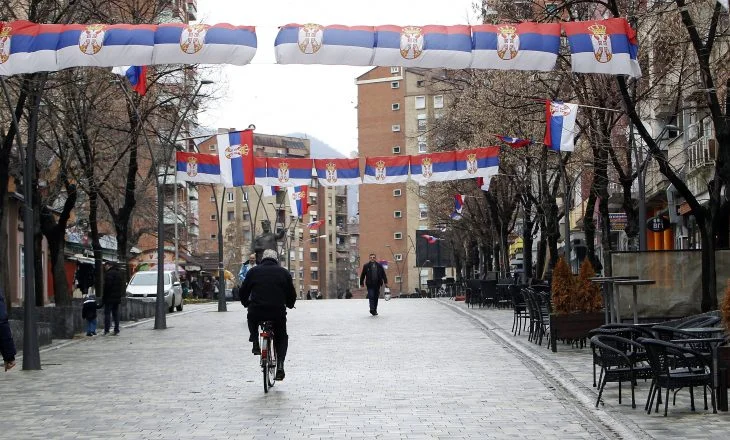
When you reach the north side of the bridge, you no longer feel that you are in Kosovo: A long row of red, blue flags with Serbia's white eagle waves at the entrance of northern Mitrovica; the flag of the Republic of Kosovo is missing here.
Language Helps
Prokshi presents come here every day.
“Of course, it's not the best feeling to go north and work as Albanian”, says 33-year-old via a translator for “DW”. At the same time, the gift knows: “Serbs in the north have the same feeling when they go to the southern part of Mitrovica”.
In the year since the gift started working at the district court in the north of the divided city, there has never been a conflict. Her relations with Serbian colleagues she describes translators as good.
For the fact that you know Serbian language other than Albanian language, it facilitates communication with all citizens of all ethnicities in Kosovo.
In countries like the court, there are no problems if I speak Albanian. But when you're in the north of a restaurant or coffee and you want to order in Albanian, you can't know how people will react to”, the gift says.
From North to South
On the south side of the bridge over the Iber River waves a long red flag with the black eagle in the middle: Albanian eagle. The flag of the Republic of Kosovo is also missing.
This way it regularly passes Milos Vucinic, the invisible border between Serbs and the Albanian-dominated part in Mitrovica. 23-year-old Serbia works as an English teacher for a charity organisation, which has headquarters in the southern part of Mitrovica. Earlier, when he was first here, fear and uncertainty at every minute accompanied him, he tells about “DW”.
But at the same time, I was not curious. I wanted to find out what life looks like on the other side of Mitrovica”, he says.
English Saves Conflicts
Since Milos does not speak Albanian, he communicates in English when he is on the southern side of Mitrovica. Foreign language offers security and avoids conflict.
I have several Albanian friends at work. I go to coffee with them every now and then. They were at first surprised, when I told them, I was never on the southern side of Mitrovica before. They initially showed me the southern side of Mitrovica and then Pristina”, he says.
The consequences of dividing the city by the worst of all citizens of Mitrovica hit young Serbs in the north, Milos says.
“seeks a life without restrictions and wants to advance professionally. There are very few possibilities north. We hope the future will be better”, he says. /DW











