 7 hours ago
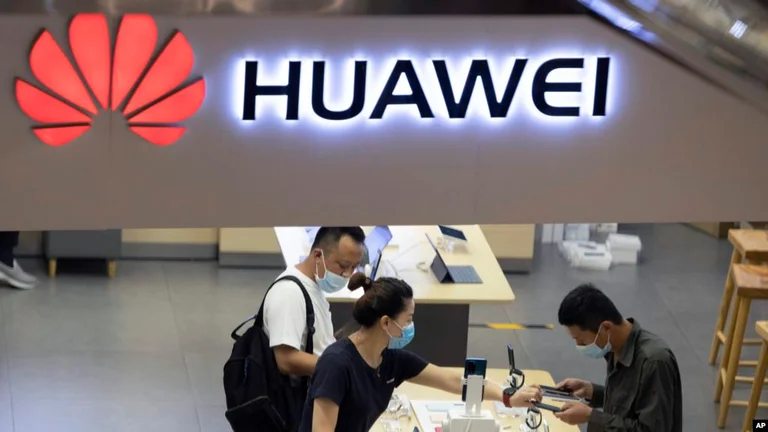
Chinese giant Huawei at risk in the face of US sanctions
Periskopi(6 years ago)
(6 years ago)Starting on September 15th, China's telecommunications giant Huawei once a symbol of China's technological capacity, will no longer have access to life supply with half-exploitation. Without these electronic parts, Huawei cannot produce intelligent phones, or 5G equipment currently required by businesses, analysts say. Sanctions against one of the companies [...]
Starting on September 15th, China's telecommunications giant Huawei once a symbol of China's technological capacity, will no longer have access to life supply with half-exploitation. Without these electronic parts, Huawei cannot produce intelligent phones, or 5G equipment currently required by businesses, analysts say.
Sanctions against one of the most powerful Chinese companies were announced in August, when the US imposed new regulations, under which foreign companies producing chips with American technology are not allowed to sell their products to Huaweit without securing a special license for this activity.
Over the past few weeks, supply companies from South Korea and Taiwan have signaled that they will respect sanctions and stop selling semi-references to Huawei on Tuesday, when measures against the Chinese company enter into force.
Unfortunately, in the second round of American sanctions, our companies producing chips have received orders by May 15th. The production of chips will be halted on September 15th,” said last month Richard Yu, chief executive of the company's consumer product line Huawei. “Since there is no Chinese chip manufacturing industry, Huawei now faces the problem of lack of chips,” he said.
Microchips
Despite China's efforts to become global superpowers in high technology, the world's factory has still failed to produce high-quality microchipes, the essential element in the system connecting any electronic device.
An important indicator of a microchip's level of solidarity is the number of transsitors it keeps on the surface. The less the nanometers are measured, the more advanced the microchip.
The most advanced model of microchipes producing China is 14 nanometers, which are several generations after Samsung microchips or Taiwanese T Company SMC. Samsung reached China's current standard in 2014. TSMC, the world's largest chip maker, produces 5 nanometer-sized microchipes.
Many of the most advanced producers do not operate in the United States, but the microchipe industry is highly dependent on computer programs and sophisticated equipment invented by American companies.
Washington first included Huawei company on the black business list in May 2019, raising concerns that it posed a threat to national security. However, the measures did not affect most foreign companies producing microchipes. In May, the US expanded restrictive measures not to allow Huawei to be supplied by other non-American companies. This directly harms Chinese semi-skillers who produce for the Chinese market.
Early last month, China's largest microchipe production company, SMIC, signalled that it would respect US-set restrictions and would not sell chip Huawei. Like many other semi-reference producers, SMIC is dependent on American companies for vital equipment.
The US “Doming in providing the semi-reference technological sector means that Chinese technology firms are exposed to American export controls, regardless of the situation with individual companies such as SMIC or Huawei,” told American Voice John Lee, analyst at the Mercator Institute for Studies on China.
China's Failed Attempts
Beijing has long tried to overcome dependence on other countries in the semi-compliance sector. In the 1950s, the state established a group of scientists to create a <x0-Program for Scientific and Technological Development, 1956-1967,” where semi-disciplinary technology was identified as “key priorities”.
In recent decades, China has spent considerable state resources to fulfill ambitions in the semi-disciplinary sector.
A report published in July 2019 by the American Commission on International Trade said that the funds spent are amounting to almost $150 billion.
James Andrew Lewis, senior vice president and director of the Technology Policy Programme at the Centre for Strategic and International Studies, told the CNBC channel last week that China can spend a lot more than the United States, 1,000 times more when it comes to investments in the semiproliferation industry.
In 2016, China's President Xi Jinping said that the <x0... fact that the main technology is controlled by others is our greatest hidden risk”.
Mr. Xi highlighted the matter again last Friday during a symposium on science and technology during the 14-year period of the 14-year-old Plan (2021-2025).
Some basic technologies are controlled by others,” he said.
Last week, in response to the new restrictions by the United States on Huawei Company, China announced a new total series of government policies to expand its semi-disciplinary production industry by providing broad support to the next generation of semi-compliancers in the 14-year plan.
Hoping that major technologies from foreign firms will be transferred to Chinese companies, Beijing has also encouraged American chip makers to form joint ventures with local firms. According to MERCICS, Germany-based research organisation, China's attempt to produce foreign technology sometimes targets even entire industries.
Nearly all major production companies in the United States have received investment offers from Chinese state companies,”, says an organisation's research report. M ERICS.
On the other hand, Douglas Fuller, a professor at Hong Kong City University who studies the technology industry, said China should not be seen as a failure.
“There are only four firms in front of SMIC Company in the production of semi-compliance equipment, two from Taiwan ( TSMC and UMC, South Korean Samsung and GloFo from the United States, and United Arab Emirates,” said Mr. Fuller to the Voice of America through an email.
As far as mass production is concerned, there are only two countries with major technology, company T. SMC in Taiwan and Samsung in South Korea, he said.
“Made and Intel company is behind them ( TSMC and Samsung). So besides Taiwan and Korea, the rest of the world is behind in sophisticated production technology in this industry, including the United States, Japan, Israel and all of Europe,” said Fuller.
Will Huawe survive?
It remains unclear where Huawei will be able to buy chips. Taiwanese producer MediaTek said last month he had submitted a request to the United States government for permission to continue providing Huawei after the introduction of new US regulations on co-operation with the Chinese company. Meanwhile, Huawei reportedly has collected enough silicon quantities to support her business for a period of two years.
“in the short term, it is difficult to see any effective available option for Chinese firms that are targeted by American semi-exert export controls”, said Mr. Lee, who deals with the study of Chinese digital technology.
Regarding the future, analysts say that the United States is unlikely to be able to prevent China from producing ordinary semis. With enough time gone by, the country's wide consumer market for electronic equipment and decades of investment can lead to the creation of chip production capacities.
“in a medium- and long-term period, China will probably be able to replace American technology and develop a full chain of the domestic semi-reference supply (Although it is difficult to predict whether they can achieve the solidarity of foreign technological firms)”, says Mr. Lee's email.
James Lewis, director of the Technology Policy Programme at the Centre for Strategic and International Studies (CSIS), wrote in May that Huawei was damaged by the United States effort, “but the Chinese government would not allow its destruction, Huawei is a very important company”.











