13 minutes ago
Will Vucinq speak of buying IPKO in Washington?
Periskopi(6 years ago)
(6 years ago)Kosovo and Serbia will once again sit at the dialogue table, but this time not in Brussels. Next Friday, September 4th, the delegation from Pristina and Belgrade will meet at the White House in Washington in an effort to reach an agreement. Richard Green, special emissar of [...]
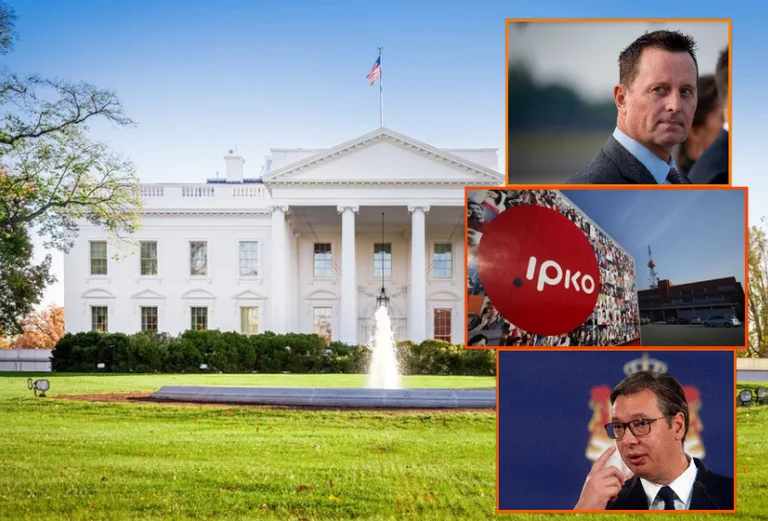
Kosovo and Serbia will once again sit at the dialogue table, but this time not in Brussels. Next Friday, September 4th, the delegation from Pristina and Belgrade will meet at the White House in Washington in an effort to reach an agreement. Richard Green, a special US emissary in the dialogue process, has made it clear that it will aim that through economic agreements between Kosovo and Serbia, it will penetrate the resolution of recognised political-historic problems between the two countries.
Still no one in Kosovo, but neither in Serbia, knows the issues that will be placed at the negotiating table in Washington. What's already clear is that Richard Green, the American president's special emissary for dialogue, will have Kosovo and Serbia sign major economic agreements through which the close co-operation of two states in this area would be provided, and therefore there would be the elimination of political problems, the news says.
Such an agenda of the meeting has already been made clear to Kosovo and Serbia. A comprehensive economic deal aimed at 4 September would mean that Pristina and Belgrade put their demands on the table, depending on the interests related to the respective economic development, and the growing impact on this area.
The very controversial topic of the last few days, and probably the issue that will be mentioned at the 4 September meeting, is also the purchase of mobile operator “IPKO” from Serbia. The operator in question has already put up for sale all its shares, and among potential buyers it may be the Serbian state. The latter, through “Telekom Srbija” has offered a total of 155m euros for the purchase of IPKO, which represents among the largest sums offered for reaching an agreement on the sale of this operator.
The amount offered by <x0kom Telekom Srbija” is an indication that Serbia is very serious about buying the largest 3g/4g network extension in Kosovo. However, the very reports between Kosovo and Serbia are centrally problematic that IPKO shares pass Serbia's Telekom through purchase. So far, a powerful stream of reactions from political acts has come against such an agreement.
After the course of the 4 September meeting, it would not be surprising at all that Vuciq in the US would seek to pave the way for buying IPKO from Serbia's Telekom. Such a compromise, for Serbia in addition to economic benefits, would be a victory even on the plains of expanding influence on Kosovo's territory, recalling the power of the operator IPKO.
Serbian President Aleksandar Vuciq can use the meeting in Washington, and “the major economic agreement” between the two states to eliminate problems that could be presented in Pristina for the purchase of IPKO. Of course, in a free market, supply, demand and decision on selling or buying an asset is determined by the economic operator, but in the case of IPKO, where Kosovo and Serbia are involved, circumstances vary.
However, Kosovo's leading political elite has not presented any official stance, how it would act whether such a thing would be required by Vuciq in Washington, much less under “thetry of the United States, or the possible presence of President Trump himself there.
The Democratic Party of Kosovo is the most vocal party that has come up against an agreement that would provide Serbia with IPKO shares. This political subject, it estimates that if that happens, then national security would be seriously ensured. Besides the PDK, against the potential purchase of IPKO from Serbia has emerged the other opposition party, Vetevendosje.
The September 4th meeting precedes the failure of that June 27th, following developments by The Hague Specialised Prosecutor and the publication of the perceived political indictment against President Thaci and PDK leader Kadri Wessel.