5 hours ago
The theories about the explosion in Beirut: Tensions With Israel and the Decision on Hariri
Periskopi(6 years ago)
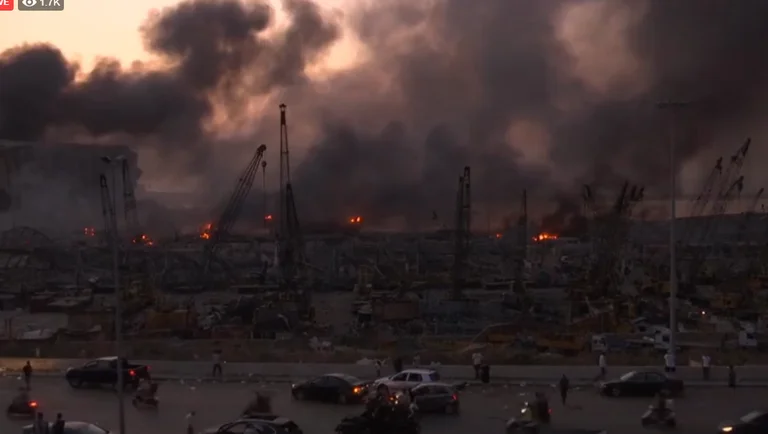
(6 years ago)A terrible explosion in Lebanon's capital, Beirut, has shocked people around the globe. People are trapped under ruins, and material damage is huge. Theories come at a time when tensions at the border with Israel have increased until things are not well within the state. A second blast failed, reports [...]
- What?A terrible explosion today in Lebanon's capital, Beirut, has shocked people around the globe.
People are trapped under ruins, and material damage is huge.
Theories come at a time when tensions at the border with Israel have increased until things are not well within the state. A second blast failed, reports the BBC, reports Express.
The other theory is the approach of The Hague Tribunal's decision on Rafik Haririn, the former delegations to Lebanon.
On the morning of February 14, 2005, Rafik Hariri then MP, who lined up with the opposition in parliament, was traveling on a highway when the blast occurred in a crowded area of hotels and banks, causing serious damage.
Hariri had been one of the most prominent Sunni politicians in Lebanon, and at the time of his death, he had joined calls for Syria to withdraw troops who were in Lebanon since 1976 after the start of the civil war.
The murder brought tens of thousands of demonstrators to the streets in protest against the pro-Syrian government, with the finger of guilt for the assassination directed at Lebanon's influential neighbour.
Within two weeks the government resigned, and a few weeks after that, Syria withdrew its forces.
Following the collection of evidence, the UN and Lebanon established the Special Court for Lebanon (STL) in The Hague in 2007 to investigate the explosion, and eventually accused four suspects of Iran-backed Hezbollah group for terrorism, murder and attempted murder.
A fifth man linked to the attack, Hezbollah military commander Mustafa Amine Badreddine, was killed in Syria in 2016.
Hezbollah supporters do not take the trial into account, suggesting the process is not politically neutral.