 8 hours ago
Today, free tests of COVID19 for travelers entering Germany
Periskopi(6 years ago)
(6 years ago)By Saturday, those returning from vacation can be tested in general and free in Germany. For vacationers from danger zones, there are stricter rules. Test capacity in Germany has expanded. In battle against the spread of the Corona virus, returners from vacation will have to be tested extensively in Germany. From [...]
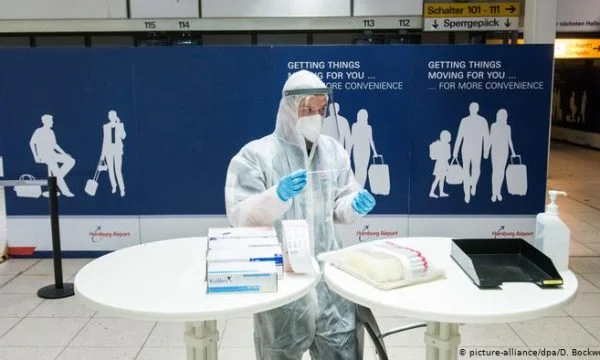
In battle against the spread of the Corona virus, returners from vacation will have to be tested extensively in Germany. On Saturday, all travelers entering Germany within 72 hours of their arrival can be tested free of charge. A German Health Minister Jens Spahn's ordinance envisions this. “Who comes from a journey will have to be tested, voluntarily and for free.” Increasing the number of infections in Germany is a clear signal. “Virus does not take a holiday”, Spahn said.
72 hours
Free tests will have to take place within 72 hours after entering Germany, they are allowed at airports, train stations and other travel stations, health centres or medical clinics. For your testing locations, you may be informed at 116 117. Even repeated tests are taken from the federation. At first, tests are paid to health insurance, but the government has announced that there will be a billion-dollar subsidy for health insurance.
The harshest rules are in force for those returning from danger zones. In the EU, only Luxembourg is considered a danger zone in Germany, and the Spanish regions of Aragon, Catalonia and Naruria. Outside the EU, the Western Balkans are considered a danger zone and many countries abroad. Anyone from these areas will have to go to quarantine for 14 days and announce to the Health Center. It is possible to present a test no more than 48 hours old. From next week's test, it's mandatory for returnees from endangered areas. Until the test results (if you don't have a negative test no older than 48 hours) the person should stay in quarantine.
Due to the rise of the new infection, Economy Minister Peter Altmaier has demanded stricter penalties for them violating Corona's rules. “Who deliberately risks others, should account for what this could have grave consequences”, Altmeier said. The “that we experience as a risk increase is primarily linked to wrong conduct, carelessly and sometimes unconsciously to a small number of people. ” “This should stop it more effectively than before”, said Altmeier, who does not rule out fines and other penalisations, if it is carried out with great intent or neglect.











