4 minutes ago
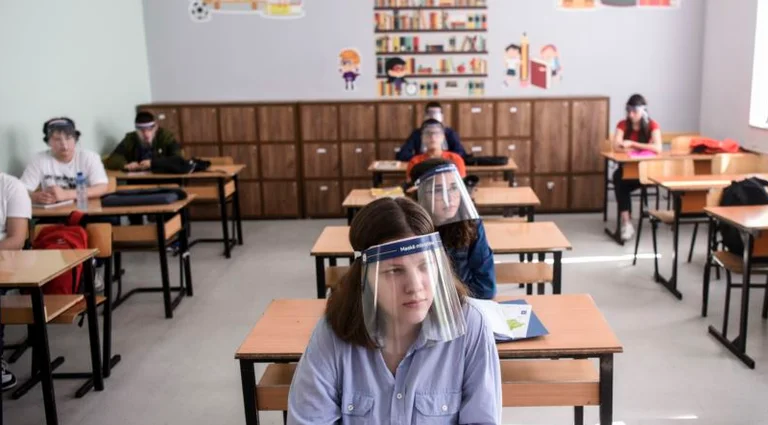
Students' return to school, Raka says the number of students in class should be reduced
Periskopi(6 years ago)
(6 years ago)Coronavirus' Pandemia has isolated many parts of the world over a period, limited many activities, and changed many human habits. By means of this material, which will be updated on a weekly basis, we will analyze a series of actions that are inevitable in our daily lives. These include going to work, school, [...]
Coronavirus' Pandemia has isolated many parts of the world over a period, limited many activities, and changed many human habits. By means of this material, which will be updated on a weekly basis, we will analyze a series of actions that are inevitable in our daily lives. These include going to work, school, wearing a mask, going to office, or even health institutions. If you have proposals for subjects of this nature, write us on our social platforms.
According to the World Health Organization (OBSH), COVID-19 disease, which causes Coronavirus, mainly spreads from the dots released when we speak, cough, or sneeze, or contact with contaminated surfaces. Yes, exposure can occur within three feet [1 m] of others, from frequent physical contact with people who can be infected with coronarys, writes the REL.
On September 1st in Kosovo, the new 2020/2021 school year begins, and the Government of Kosovo is considering opportunities to make the opening of schools safely due to COVID -19 pandemic.
To reopen schools, the World Health Organization recommends that any country that decides to open schools should implement measures to prevent COVID-19. Schools by O BSH, they need to apply to verify the state of health of students, educators and support staff and to implement so-called policy, “If you don't feel good, stay at home”.
Other recommended measures include keeping the physical distance of children in classrooms, frequent washing, or disinfecting hands with alcohol - bearing disinfectant, maintaining hygiene, keeping physical distance, increasing ventilation through the natural air of school space, and putting on masks.
Even Lul Raka, microbiologist at the Kosovo National Public Health Institute, says students should implement the measures recommended by O BSH and the Manual for the Prevention and Combat of COVID-19, drafted by the Government of Kosovo, which includes these measures.
In the new school year, Raka says the number of students in the classroom should be reduced.
“Researchers should be educated in hand hygiene, respiratory hygiene, and COVIDD-19 symptoms. The distance should be 1.5 meters in any direction. And space should be a student in a bank. The number of students is determined by class size. It prefers wearing masks even though it depends on age. In the low school cycle, it is harder to apply this precautionary measure”.
Raca says that the disinfectation of schools should take place every day at the end of the day. Also, between hours, classrooms should be ventilated.
“They should also avoid gathering in the courtyard during the pauses. There may be group sports activities in the yard but with increased care. In closed spaces there should be no such activities”, he said.
Raka also points out that there is a need to avoid waiting for children after their grandparents finish, and if the child's transportation becomes a nation or a bus, masks should be installed.
Microbiologist Raka also shows the possibility of broadcasting infections among children. According to him, broadcasting infection in schools is rare and is not the main cause of SARS-CoV-2 infection in children.
So far, very few explosions of COVID-19 infection grounds have been identified in European schools, including Sweden and Iceland, which have never closed primary schools. In Europe, reopening schools did not increase the spread of the virus in the community. The only blasting grounds after reopening were registered in high school in Israel, partly because of the heat wave, with students not wearing masks all the time”.
Raka recommends that if anyone in the children's family is sick, tested, and not sent children to school. If the disease is confirmed, then the family must be isolated for 14 days.
Meanwhile, in the Manual for the Prevention and Combat of COVID-19, the Government of Kosovo “states that countries where there is population collection, such as. Voter seats, families, schools, daily attitudes, businesses include non-health facilities visited by the general public. Cleanup without the use of disinfectants is ineffective and as a single person does not eliminate viruses.
Unlike a published report by the World Health Organization (OBSH) and the United Nations Children's Agency (UNICEF), 43 percent of schools worldwide are said to have no access to water and handwashing soap.
The report says that more than one third of 818 million children worldwide, who lacked basic handwashing equipment in their schools, are in sub-Saharan Africa.
The report says authorities must balance health concerns with economic and social ones when making decisions on opening schools.