17 minutes ago
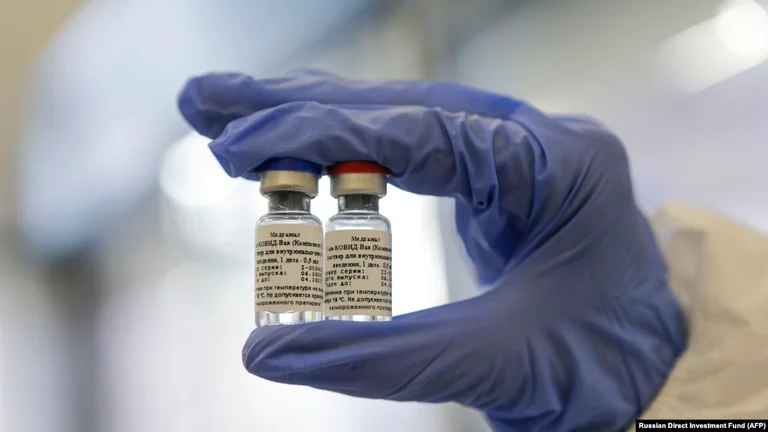
Scientists, skeptical whether to trust the vaccine developed by Russia
Periskopi(6 years ago)
(6 years ago)A Russia report on Tuesday that it will launch a vaccine against Coronavirus, less than two months from testing people, has raised concern among the world's health experts, who have stressed that without adequate testing, the vaccine is hard to believe. In order to be the first of the states [...]
In order to be the first of countries to produce an OVID-19 vaccine that causes Coronavirus, Russia must develop mass testing to provide information on whether the vaccine is effective, which many immunologists and infectious experts consider a reckless step.
“Russia is conducting an experiment with the vast population”, said Ayfer Ali, a drug research specialist at Britain's School of Business, Warwick.
She said such quick approval of the vaccine could mean that the possible side effects of a vaccine cannot be known.
Effects, though rare, can be serious, she said.
Russian President Vladimir Putin said the vaccine developed by the Gmaleya Institute in Moscow is safe and tested in one of his daughters as well.
The “E knows it's efficient, it creates strong immunity, and I repeat, it's passed all necessary prove”, Putin said.
The doctor, Francois Ballowx, an expert at London University College's Genetics Institute, said this announcement is reckless and ridiculous.
“mass fracturing with a well-inflicted vaccine is unrealistic”, he said.
A scientist in Russia doing research at a lab in St Petersburg, for a vaccine against
Any problem with the vaccine campaign in Russia can cause negative effects on health as well as on the scepticism of people to be vaccinated”.
His comments were echoed by Professor Danny Altman of the Imperial College in London, who pointed out that collateral damage from the launch of any vaccine that is still unknown how secure and efficient “would exacerbate our insurmountable problems”.
Although Russia has declared victory in developing the vaccine, more than half of the world's pharmaceutical companies are in the process of starting human vaccine testing, each with tens of thousands of volunteers.
Some of the companies that have developed vaccines such as Modernna, Pfizer and AstraZeneca say they hope their vaccines will function and that their outcome is expected to be seen by the end of this year.
Test results must be delivered to the United States, Europe and beyond before the licence is won.
The Russian vaccine's approval by the Ministry of Health took place prior to the test, which should include thousands of participants, known as the third phase of testing.
The doctor, Peter Kreesner, an expert at the University Hospital in Tuebingen, Germany, said Russia has made an thoughtless move.
“Normically it takes a large number of people to be tested before the approval of vaccine”, he said. “I think it is unwise to adopt a vaccine without testing”, he added.
Experts say lack of security data, immune response and preventing infection leaves scientists and health authorities in the world in the dark. /Rel