 4 hours ago
Why do patients who feel that they have been cured later become infected?
Periskopi(6 years ago)
(6 years ago)Tests to see whether or not you've been affected by SARS-CoV-2 are the main condition for preventing pandemic. But how many times must tests be done, and who should be checked? More and more types of tests are being introduced into the market to control the corona virus. At the end of July, all [...]
Tests to see whether or not you've been affected by SARS-CoV-2 are the main condition for preventing pandemic. But how many times must tests be done, and who should be checked?
More and more types of tests are being introduced into the market to control the corona virus.
At the end of July, there were 270 different products used for analysis worldwide.
They are divided mainly into three groups: PCR analysis, serial analysis (ELISA) and antigen tests.
PCR analyses
Testing if someone has been infected and can attach the virus to others and others is done mainly by the polymerraz reaction method (PCR), an enzyme that creates certain polymers, especially DNA. There are also so many examples of DNA amplification tests, which function like PCR analysis.
In both cases, the patient receives evidence of saliva in his mouth with the help of a piece of cotton. Seat coughs are also suitable for testing.
A certain portion of the genotype, a certain type of gene, received from the evidence is multiplied several times, and finally a biochemical process called Agarose-Gellectorese determines whether the virus's genome is tested. If the genotype is in it, then the patient is infected. If the genotype is not there, it does not mean that the patient is not affected. It may be that the virus is not in the test of saliva, yet it is located somewhere in the body.
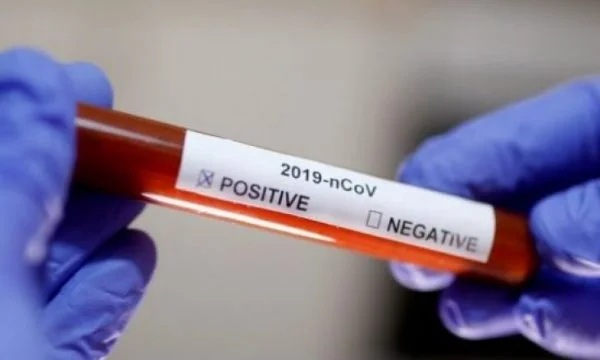
This may explain why patients with COVID-19, who feel that they are healed, are later infected when they receive PCR tests. In such cases the virus may have been present all the time, although it has not been tested.
Deutschland Coronavirus ívid-19 Test in Berlin (Reuters/F. Bensch)
The doctor of infectious diseases at the Charité Hospital in Berlin, Christian Drosten, says it would be like knowing how to catch a golden fish lake using a fish net. When he pulls the net out of the water and sees that there is no fish in it, it does not mean that the fish are not in the lake.
Quick PCR tests
Traditional PCR tests should be conducted in a laboratory. They are often performed at high speed because at the same time thousands of tests are conducted. This means that the patient is usually answered in a few hours or a few days later. The so-called rapid PCR analysis is done earlier. Evidence in this case is not sent to a central laboratory, but tests are done locally with ambulances. These devices can improve so much that the result is ready after three quarters hours. The problem with this analysis is that equipment cannot do more than 80 tests a day.
Antigen Tests
These rapid tests went on the market a few weeks ago, and they're too easy to use, almost like pregnancy checks. Tests of the antigen are also found in salivary. The virus's research is done with the immune method flurecent (FIA). These tests produce the result within a quarter of an hour, showing if a patient is infected acutely and contagious. However, antigen tests are not as accurate as PCR tests. Their benefit is that they are easy to make available and allow themselves to be used locally.
Disease tests operating according to the same principle achieve something more than 50 percent, and accuracy of 99 percent. This means that one in two infected persons is identified as one. One in 100 people tested had misbehaved with positive results.
More and more doctors, however, prefer the use of antigen tests because they hope that they can discover more and more infected because tests are especially effective when patients have a large load of the virus. This is also the moment when a Superpreader can infect others.
In most countries, for example in Germany, rapid tests are not free. Because according to the infection protection law, all the sick with SARS-CoV-2 are obliged to report, tests must only be made by doctors.
Evidence of an Infection in the Past
Serological tests (ELISA) indicate antibodies in the blood because it has exposed the immune system to combat the virus. This means that the body has already had an immune reaction against infection with a certain virus. This is why the person who is checked must give a blood test. Tests are conducted in the lab.
Meanwhile, manufacturers have released a quick analysis under this principle, yet tests must be made by a doctor. Some drops of blood, like the course of diabetes, are sufficient to fit into a metric device along with the amortizing solution.
Deutschland Corona-Testelle am Flughafen Schönefeld (Picture-alicition/dpa/B. Pedersen)
If there's blood in the immunoglobins typical of SARS-CoV-2, lgM and lgG, then the evidence is painted. A positive result means that the person has passed a coronent infection and has developed a certain immunity. But it may not be. Because almost all antibodies tests „respond cross”, Drosten says.
Some producers promise that this does not happen in their products. It may be that someone who came up with a positive result had another virus, like a cold one, but not a SARS-CoV-2 infection.
When and who are worthy of tests?
Tests of PCR and antigens are important to find out if patients and people who have been in contact with them are infected and in what form of quarantine should be placed: Is it enough to give someone who has been in contact with a two - week circulation ban, having contact with other members of the house, or should he be given total isolation?
Analysis E LISA is an important guide for epidemiology to see how many people had an infection and did not know it and if they once attained a certain group immunity.
This may help politicians to ease the limits made to the corona. Tests can also help those who have been ill with COVID-19, or those who have developed a new vaccine to control immunity.
Various German university clinics have started doing studies in which they check with analysis E LISA selected participants are present if they have unknowable infections to learn more about how the virus operates.
Christian Drosten-Podcast für Grimme Online Award nominiert (Picture-alicition/dpa/C. Gateau, one of the most popular virologists, Prof. Christian Drosten
Various countries' strategies for analysis
Various parts of the world behave differently with tests of the corona. The reasons for this are varied: Changes in the efficiency of the health system, the presence of tests, and the changes in laboratory capacity have played a role as well as the question, how seriously the risk was taken from the start.
So for example, South Korea, which had learned from the experiences of the SARS epidemic in 2002, was one of the countries that started very early to have systematic control of people, even of those without symptoms, and continued to do so even when the number of cases was comparatively low.
Germany is one of the countries that does many tests, but mainly for those who have had contact with the infected and show symptoms. Other countries, like the United States, are massively building analysis capacities. There, however, the pandemic has moved far ahead, and the number of cases is very high. On the other hand, there are countries like Africa, such as no control at all.











