12 minutes ago
Montenegro votes under political tension, 68.4% exit by five o'clock.
Periskopi(6 years ago)
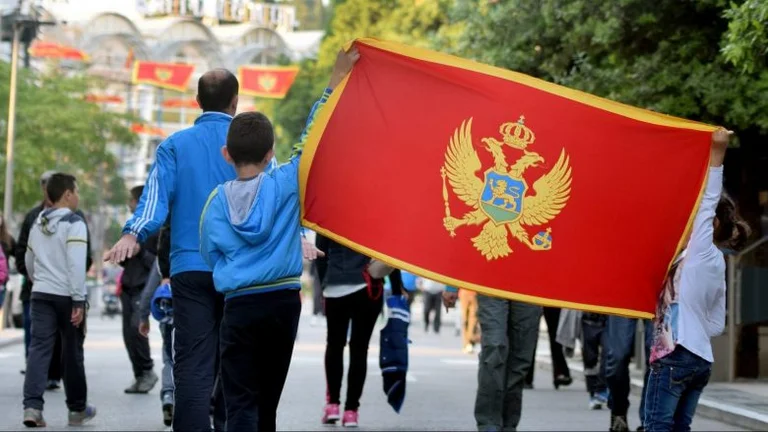
(6 years ago)With the opening of polling stations at 7am, election races have started in Montenegro for 81 seats in the state Parliament. The Monitoring Centre (CEMI) reported that a total of 68.4% of voters voted by five o'clock. Parliamentary elections are being held under high political tensions and at risk [...]
The Monitoring Centre (CEMI) reported that a total of 68.4% of voters voted by five o'clock.
Parliamentary elections are being held under high political tensions and at the risk posed by the coronary pandemic.
For 81 parliamentary seats, six coalitions and five parties compete.
These are the 11th elections since the introduction of the multiparty system in Montenegro, while the fifth since this country declared independence, in 2006.
Local elections in three coastal municipalities are also being held: Budva, Kotor and Tivat, and in two smaller municipalities in the north: Andrijevica and Gucci.
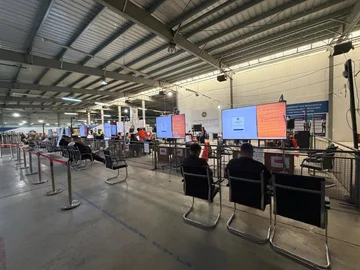
Voter rights have 540526 citizens who can vote at 1,217 seats.
The elections are monitored by 2,089 observers, of whom 265 are foreigners.
In Montenegro is the European Network of Election Observation Organisations (ENEMO), with a total of 23 teams monitoring the election process.
The chief of the ENEMO mission in Montenegro, Gianluca Passarelli, has said parliamentary elections in Montenegro are held at a crucial time for this country and that political and social unrest, economic crisis and pandemic pose a major challenge for the entire system.
Institute of Public Health in Montenegro Director Boban Mugosa has said the election process will not pose epidemiology risks if all measures are respected.
According to him, the epidemiological situation in Montenegro has deteriorated due to mass rallies, but by elections themselves there will be no danger.
“People can go freely to vote and wear masks, distances and hygiene. Thus, the voting space can be fully secure”, Mugosa said.
The racers
Montenegro's largest subject, the Democratic Party of Socialists (DPS), led by State President Milo Djukanovic, is independent, while the wearer of the election list is the current prime minister, Dusko Markovic.
DPS has been in power for 30 years, in coalition with smaller civic parties and national minority parties.
Of the parties of the current power, there are also the Social Democrats, the Bosniaks' Party, then two coalitions of Albanian parties -- “Albanian list” and “Basce one za”, as well as two Croatian minority parties.
The opposition, meanwhile, is competing with three coalitions and one party.
The Democratic Front, Montenegro's largest opposition party -- at the same time pro-Serbian and pro-Russian -- competes within the coalition “for the future of Montenegro”, which is led by Professor Zdravko Krivokafic a non-party figure.
Top of the election list is Marko Milacciq, who has led a campaign against the past years NATO, publicly burning the military alliance flags.
The “Peace coalition is our nation”, led by Allexa Becicin, makes up Montenegro Democratic and Demos.
The list “black in white” is run by the civic movement Dritan Abazovich Bridge, which is Albanian with the support of a considerable number of intellectuals of different professions, nations and ideology.
The opposition Social Democratic Party, which competes independently, has been in power with the DPS until five years ago.
It has left power because, as it has said, widespread corruption in state structures.
Campaign
Because of the coronary pandemic, the pre-election campaign has been developed mainly in online media and social networks.
In line with orders from the National Co-ordination Body, up to 100 people abroad and 50 inside party gatherings have been able to gather.
The campaign's dominant theme has been the Law on Freedom of Religion, for which the state and the Serbian Orthodox Church in Montenegro have fierce disagreements.
The law, which was adopted in Montenegro's Parliament on December 27th, 2019, and with incidents of Democratic Front deputies for the Serbian Orthodox Church, presents efforts to seize its property.
The law stipulates that all Church property, established before 1918 in Montenegro, for which the Serbian Orthodox Church has no proof of origin, is transferred to the state.
In addition to organising protests for months across Montenegro, the Serbian Orthodox Church has called on citizens to go to the polls and vote against the current government, which has adopted the law.
In church liturgies, held during the election campaign despite the ban on gatherings because of the pandemic, they have dominated Serbian national symbols and political messages against Djukanovic and the current government.
For part of the opposition, mainly the Democratic Front, the support of the Serbian Orthodox Church has been a pillar of campaign.
The government has focused its campaign on the Serbian Orthodox Church and the opposition, which supports it, saying they make efforts to overturn Montenegro's citizenship from the Serb-great position.
The rest of the opposition has mainly dealt with the topics of crime, corruption and rule of law.
Representatives of minority peoples, meanwhile, have focused on national identity protection themes and on the right to greater representation of minorities in government institutions and public administration.
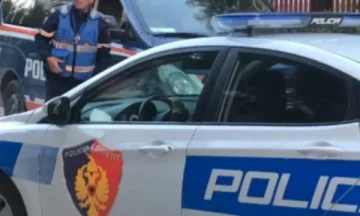
Without specifying the threats, police chiefs have said institutions will not allow the state to destabilise during the elections and that they will protect the peace and security of citizens.
Early Choices
The last parliamentary elections in Montenegro were held on 16 October 2016, with a high turnout of over 73 percent of registered voters. Milo Djukanovic's Democratic Party of Socialists has won most of the seats.
These elections have characterised the precipice “Garden”, as several Serbian citizens were arrested on election day, under suspicion that they have prepared the violent overthrow of the Montenegrin government and, according to the State Special Prosecutor, even liquidation of then Montenegrin Prime Minister Milo Djukanovic.
During the two-year trial, two Russian nationals, who have been tried in absentia, two leaders of the Democratic Front and a group of Serbian citizens, have been sentenced to the first degree.
None of them have pleaded guilty.
The case is in the Court of Appeals where the final decision should be made.
The leaders of the Democratic Front, Andrija Majta persecuted and Milan Knezevic, who have the first degree penalty of five years in prison, are on Montenegro's “election list for the future of Montenegro”.