5 hours ago
EULEX expert: Kosovo, Serbia need to have will to share information for those found
Periskopi(6 years ago)
(6 years ago)Thousands of families in Kosovo expect to learn about the fate of their loved ones. Un finders are the subject in the resumed Kosovo-Serbia dialogue. EULEX expert Tarja Formisto talks about the DW. Deutsche Welle: For more than two decades, the question of persons not found by the Kosovo war is one of the most [...]
Thousands of families in Kosovo expect to learn about the fate of their loved ones. Un finders are the subject in the resumed Kosovo-Serbia dialogue.
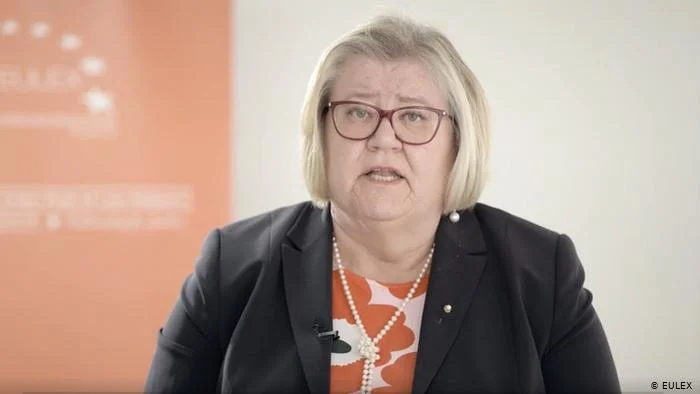
EULEX expert Tarja Formisto talks about the DW.
Deutsche Welle: For more than two decades, the issue of missing persons from the Kosovo war is one of the most painful and controversial between Pristina and Belgrade. What is EULEX's approach in helping to find a solution?
Tarya Formisto: The issue of missing persons is one of the most serious legacys of conflicts in the former Yugoslavia. Kosovo is unfortunately no exception, and today we still have more than 1640 people found from all communities. Since the beginning of the EU Mission for Order and Law mandate, EULEX, in 2008, to date the highly experienced team of forensic experts has conducted 653 field operations to locate people found. This resulted in the identification of 456 individuals, including 316 missing persons, and was made possible thanks to good co-operation with Kosovo and Serbia institutions, as well as international institutions, both the Red Cross Committee and the International Commission for Missing Persons. I am proud of my team's work and we will continue to do our best to find the fate of these missing persons and provide the answers that families and loved ones want.
Kosovo authorities have long accused Belgrade of not openly informing the issue of missing persons, as troops are at mass cemetery in Serbia. Serbia does not accept that. What can be done to move forward here?
To make more progress in determining the fate of the missing, the will is needed on both sides to share information, move forward and resolve cases, despite difficulties. E ULEX is here to help, but transitional justice (The concept is used for countries just out of conflict. Mark. red.) is a process, which should respect both sides, which should engage all levels, willingly to co-operate and share information for the families of the missing persons to receive the answers they desperately need. Kosovo and Serbian authorities will have to make more efforts on this complex issue and have more will to share information. We are more than happy to continue supporting these efforts on the ground.
Your experts also work with Belgrade, what is your opinion on the Kosovo side's accusations regarding keeping information from Belgrade authorities?
Our co-operation with both the authorities in Kosovo and Serbia is good. Once again, the institutions of both sides must make more efforts to resolve this complex issue and have more will to share information. Everyone would benefit from more transparency for the undiscovered. If you don't offer the information you may have about the fate of the missing, you won't even get any information. A concrete example of our co-operation with Serbian authorities is team work on a large stone site Kizevac. In fact, this is a place where the use of air images is being used in hopes of helping locate the morto remains of missing persons. As long as the pandemic allows us to continue working again, it will continue with the work at Kizevac, where remains are thought to be found in the air.
How realistic are the chances of finding them more than 20 years after the war?
Over 20 years are indeed a long time for a parent, a partner, or a relative not to know the truth. Unfortunately, that happens often. This is the case even in Bosnia and Herzegovina, where families of more than 6,500 missing persons still wait for answers, as in Kosovo. Searching for the missing after an armed conflict is a painful, complicated and time-seeking process. To locate and identify more cases we need reliable information. Hopefully, as soon as the pandemic situation improves, we will continue our work on the examinations. Despite the difficult circumstances, we managed this spring to assist our partners in Kosovo in successfully examining the morto remains of a missing person in western Kosovo.
Have you identified the person and informed the family?
This process of specific verification is in early stages now, so no DNA evidence has been sent. ( DNA-match usually takes 3-6 months.
Where do you see the reasons why the bodies of more than 1640 are not found?
There are several reasons why the number of missing persons stands at over 1640. First of all, there is a lack of new and reliable information in the positioning of graves. Time passes and more information is lost, even though people often no longer remember events accurately. In addition, there are times when people do not want to provide information about their fears or security. Our mission team, together with our colleagues in Kosovo, can examine the countries, only in case of reliable information about their exact country. Another important issue is that not all families of missing persons have provided blood evidence for DNA analysis. To succeed in identifying people, we need blood evidence. But these challenges don't discourage us, nor do we as a team. EULEX and neither our local colleagues.
EULEX has also worked with Serbian authorities to identify mass cemetery. Where could these mass graves be?
In total are 1640 people who are counted as persons still found in Kosovo. Some may be in mass graveyards, but some may be in small, secret tombs or even in normal cemeterys in various spaces. Close to 50% of persons identified as undiscovered have been examined by the normal cemetery. As I said, we have identified 316 people, besides this 300 mortar remains are the morgue of Pristina, and we are assisting Kosovo authorities in the matter.
They're also talking about the burnt bodies of Albanians in Trepce or Bor. Do you have any information on this?
If there is any reliable information about this, police and prosecutors should investigate further. Our legal work is done under the dependence of Kosovo's Specialised Prosecutor.
How exactly does your team operate to identify the bodies of the found?
It all starts with reliable information about a given area. Then we verify the area by referring to the list of missing persons in this area and other information that could lead us to the location of the grave. When possible, we also use air or satellite images that can show us changes in the landscape. After the location's identification, we continue to work on the ground that could lead to the execution and discovery of mortar waste. After the find, autopsys are conducted and bone evidence received for the DNA profile test. In cases, when relatives have given a blood test, and there is a positive corresponding DNA assessment, then the identification process ends. The families are then informed of identification and were handed over to mortore remains.
How long does this process take?
As I said, the process is complex and takes a lot of time. Identification of a person may take months to years. Our main problem is how to deal with hidden graves. By the time the conflict started in Kosovo, it was known that mass graves were visible by air. Thus, perpetrators hid their bodies in smaller, secret graves, even in normal cemeterys, to make it harder to search people. The other big problem is that not all relatives gave blood tests. But this is crucial to the process. In addition, some unemployed persons are elderly, without family members who could give blood. But there are also families who refuse to give blood. In other cases the people we identify are unlikely to have been declared undiscovered. Sometimes people are foreign warriors and there is no blood evidence to identify.
For reconciliation between Albanians and Serbs, the unresolved issue of the missing is a very serious obstacle. How long do you think this will remain like an open wound?
The issue of missing persons is a matter of human rights. It's about family rights to know what happened to their loved ones. This issue should not be politicised or part of political agendas. Continued work on the fate of the found ones will support reconciliation in the region. Without addressing it, reconciliation will be difficult, and there will be no lasting peace in the Western Balkans.
Dr. Tarja Formisto, deputy director of the Kosovo Legal Medicine Institute, is EULEX expert since the founding of the mission in 2008. It has a more than 30-year experience in the process of identifying missing persons. Lady Formisto has been working in Bosnia and Herzegovina and has been part of the team of experts in the profiling and identification of Finnish World War II soldiers in the former Soviet Union.