 8 hours ago
Which test is better for COVID-19?
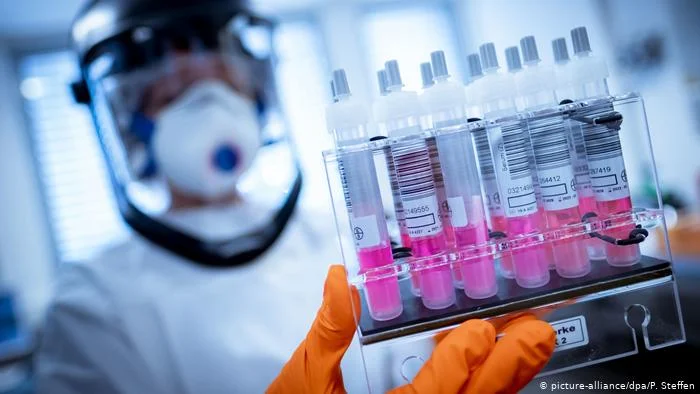
Periskopi(6 years ago)
(6 years ago)At the request of many patients and citizens, a text received from the magazine Harvard Health Publishing, dated August 10, 2020. Now when we are several months in the COVID-19 pandemic, the steps we have to take to effectively control the explosion have become clear: Hand washing and distance, extensive testing [...]
At the request of many patients and citizens, a text received from the magazine Harvard Health Publishing, dated August 10, 2020.
Now when we are several months in the COVID-19 pandemic, the steps we have to take to effectively control the explosion have become clear: Handwashing and distance, extensive testing and the speed of production results and tracking cases of contact. None of this is easy to maintain and continue for a long time. But combined, they are our best chance as they await better treatments and an effective vaccine, broadcast news.net.
So, what tests are in place to use?
Many types of available tests are sowing considerable confusion. Unfortunately, because this new coronary is really weird and it's a new disease, information about these tests is incomplete and test options continue to change. But here's what we know now about the tests designed to diagnose the actual infection and the ones that show if you've had a virus before.
Diagnostic Tests for Current Infection
If you want to know if you're actually infected with the COVID-19 virus, there are two types of tests: molecular tests and antigen tests.
Medieval Tests (also called tests PCR, viral RNA tests, nucleic acid tests
How are they made? Through nostrils, throat strands, and saliva tests or other body fluids.
What's your test? Medieval tests require genetic material that comes only from the virus.
How long does it take to get results? This depends on the ability of the laboratory. The results may be ready on the same day, but usually last at least one or two days.
The macular test used by a deep nostrils is usually the best alternative for the Quaddy-19 detection, since it has higher efficiency than other diagnostic methods or samples from tampon to throat or spit.
Antigen Tests
How? Through nose or throat tampon.
Where can you get these tests? A hospital or a doctor's office.
What's your test? This test identifies protein fragments (antigens) by the virus.
How long does it take to get results? The technology involved is similar to a pregnancy test, with results available in minutes.
What about accuracy? The reported lack of efficiency is over 50%, that's why antigen tests are not favoured by FDA. However, because antigen testing is faster, less expensive and requires less complex technology to perform than molecular testing, some experts recommend repeated testing of the antigen as a reasonable strategy.
Tests for past infection
Antibody tests (also called serological testing)
How? Takes a blood sample.
Where can you get these tests? In the doctor's office, the blood testing lab or the hospital.
What's your test? These blood tests identify antibodies that the body's immune system has produced in response to infection.
How long does it take to get results? The results are usually available within days.
What about accuracy? An early antibodies test can lead to false results. This is because it takes a week or two after infection so that your immune system can produce antibodies.
Research suggests that antibodies levels may fade for only a few months.
The true accuracy of tests for COVID-19 is uncertain
Unfortunately, it's not exactly clear how accurate each one of these tests is. There are several reasons for this:
- We don't have precise measures of accuracy for these tests just a few figures usually cited for false or positive negatives, such as those reported above. False negative tests provide false confidence and can lead to delayed treatment and relief of the masses.
- The factor in how carefully a sample has been collected and preserved can affect the accuracy of the outcome.
- None of these tests were officially approved by the FDA. They are available because the FDA has given its producers emergency usage authorization.
- A growing number of labs and companies provide these tests, so accuracy can change.
- We don't have a gold “standard” to which we can compare them.
From Robert H. Shmerling, MD
School editor, éHarward Health website.











