2 minutes ago
Ten countries in the world “kept out” the coronavirus, but what did they gain?
Periskopi(6 years ago)
(6 years ago)COVID-19 has infected almost every country in the world except 10. So, what do they do now? The Palau Hotel is so named because there were no others when it opened in 1982. Since then, this small nation, surrounded by the Pacific Ocean of the blue sky, has enjoyed a tourism boom. In the year [...]
COVID-19 has infected almost every country in the world except 10. So, what do they do now?
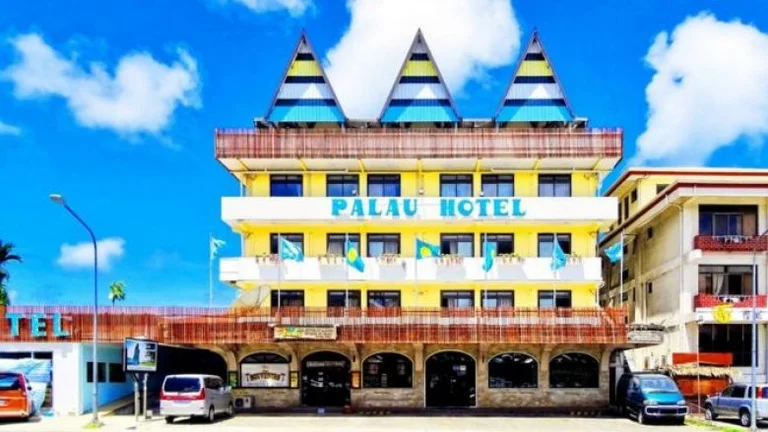
The Palau Hotel is so named because there were no others when it opened in 1982.
Since then, this small nation, surrounded by the Pacific Ocean of the blue sky, has enjoyed a tourism boom.
In 2019, 90,000 tourists came to Palau, five times the total population. In 2017, IMF figures showed, tourism represented 40% of the country's BPV.
But this was prior to COVID-19's show, and it's on the telegram.
Palau's borders have, in fact, been closed since the end of March, even though it is one of the 10 countries in the world with no confirmed cases (rejected North Korea and Turkmenistan).
Even without infecting one person, however, the virus has destroyed the country.
The Palau Hotel has been closed since March, and it's not alone.
The restaurants are empty, the souvenir stores are closed, and the hotel's only guests are quarantined.
And as the BBC writes, apart from Palau, unremarked sites are Micronesia, Marshall Islands, Nauru, Kiribati, Solomon Islands, Tuvalu, Samoa, Vanuatu, Tonga
The ocean here is much more beautiful than any other country in the world”, says Brian Lee, manager and co-owner of the Palau Hotel.
According to him, it was the blue ocean of the sky that kept Brian “occupied”.
Before COVID-19, its 54 rooms had a booking rate of 70% -80%. But when the borders closed, there was nothing.
It's a small place, so local people won't be staying at the Palau”, Brian says, records Telegrafi.
He has a staff of about 20 people and has kept everyone at work, though at reduced hours.
“Trying to find work for maintenance, renovation, etc.”, he says.
But empty hotels cannot be maintained and renovated permanently.
I can stay for another half year”, Brian says. But then I might have to close it”.
Brian does not blame the government, which has offered financial assistance to residents, and, after all, has kept the virus out.
“I think they did a good job”, he says. Yet, if Palau's first hotel will survive, something must change soon.
The president recently announced that air travel <x0); will be resumed by September 1st.
Meanwhile, a “air corridor” with Taiwan, which would allow tourists to visit, has also been talked about.
About 2,500 miles (42,000 km) to the east, across the vast Pacific Ocean, the Marshall Islands also remain without COVID-19.
But, both Palau and there, no infection means no influence, it conveys Telegram.
On a domestic scale, the country is expected to lose more than 700 jobs, the largest decline since 1997. Of them, 258 will be in the hotel and restaurant sector.
However, self-isolation affects more than tourism and the Marshall Islands are much less dependent on holidaymakers than Palau. A bigger problem is the fishing industry.
To keep the country without COVID-19, ships from infected countries have been banned from entering the country's ports.
Other boats, including fuel deposits and container ships, must spend 14 days at sea before entering. Fishing licenses are not sold, and cargo flights are cut.
The Effect Is Clear
Marshall Islands are known for aquarium fish, but exports fell by 50%, according to an American report. Other fishing industries expect a 30% drop during the year.
In short, you can keep the virus out, but you can't beat it. COVID-19 you “godet” in one way or another.
And while border closures have left countries without precedent with COVID-19, not everyone wants them reopened.
Dr. Len Tarivonda is the public health director in Vanuatu, with about 300,000 inhabitants.
Although working in the capital, Port Vila, he is from Ambae, an island of 10,000 people about 170 miles north.
If you talk to them [at Ambae], most say keep the border closed as long as possible”, he says. “They say: We don't want disease otherwise we're destroyed, essentially”.
However, the country will suffer.
The Asian Development Bank expects the BPV to drop by nearly 10%, Vanuatu's biggest decline since independence in 1980.
Is there something that countries without COVID-19 can do?
There are short-term measures, such as payments to workers and businesses. And there's a long-term measure: wait a vaccine.
Until then, “controlled” remain the best hope.
However, as Rommel Rabanal points out from the Asian Development Bank, this sounds simpler than it is.