 8 hours ago
Who should take the first coronary vaccine?
Periskopi(6 years ago)
(6 years ago)Who should take the first vaccine for COVID-19? US health authorities hope that at the end of next month they will have some instructions on how to ration the initial doses, but this will not be an easy decision. Not everyone will like the answer”, Dr. Francis Collins, director of the Institutes [...]
KShould I take the first shot for COVID-19? US health authorities hope that at the end of next month they will have some instructions on how to ration the initial doses, but this will not be an easy decision.
Not everyone will like the answer”, Dr. Francis Collins, director of the National Institutes of Health, in front of one of the advisory groups whose government has asked for help to make a decision.
There will be many people who think they should be at the top of the” list, Dr. Collins.
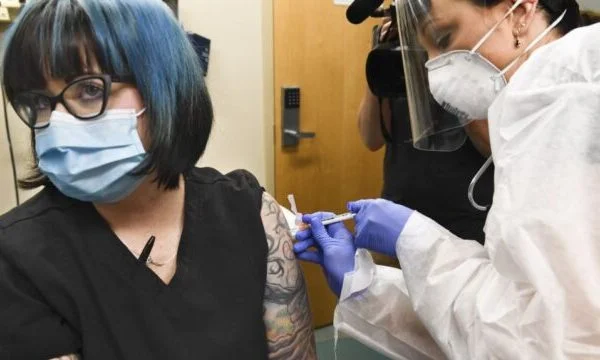
Traditionally, in the first line to get the vaccine, there are health workers and people most exposed to infection.
But Dr. Collins made new ideas: According to him, geographical distribution and priority should be given to people in areas that the virus has hit the most.
Not to be forgotten are those volunteers who have participated in the final phase of testing but who have been injected with vaccines to compare with others who have received the real vaccine.
“We owe them ... is a particular priority”, Dr. Collins.
Large-scale studies this summer aim to prove which of the experimental vaccines are safe and effective. Modernna Inc. and Pfizer Inc. The tests, which will eventually include 30,000 volunteers each last week; in the coming months, there will be equally large requests for volunteers to test the vaccines of AstraZeneca companies Johnson & Johnson and Novavax. Meanwhile, some vaccines developed in China are in smaller studies of later stages in other countries.
Despite US officials' promises that the country will have millions of doses, the truth is not very pleasant: Even if a vaccine is declared safe and effective, it will not be enough for all who want it immediately, much more so that vaccines should be made in two doses.
How will it be decided which category should take the first vaccine? U.S. Centers for Disease Control and Prevention suggests: First to vaccinate 12 million from the most exposed health workers, those of national security and other key employees. Then, 110 million people at high risk from the Coronavirus: those over 65 who take refuge in long-term care institutions, or those of any age that are in poor health. The general population comes to the ranking later.
Priorities must also be the populations of Africans and Latin Americans who have been hit more than others by Coronobrus.
Another priority would be the poor of cities living in housing conditions with many people who have fewer access to health care, or who cannot work from home as most privileged Americans, says Dr. Sharon Frey of Saint Luois University.
And Dr. Henry Bernstein of the Northwell Health firm says that in such cases it would be appropriate to vaccinate entire families instead of isolating a single high-risk family person.











