8 hours ago
Williams speaks of the indictment against Thaci and Wessel
Periskopi(6 years ago)
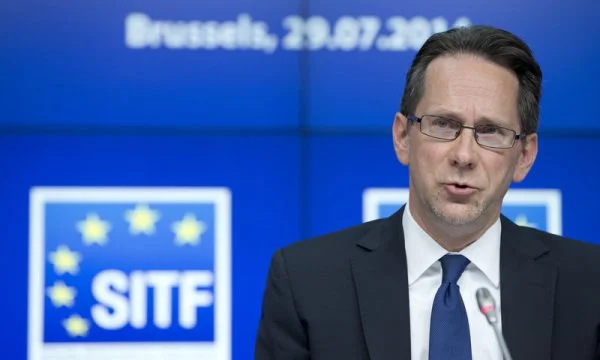
(6 years ago)Former Special Investigative Force chief prosecutor Clint Williams, who had conducted investigations into Dick Marty's report of alleged crimes committed by the KLA, has spoken of the indictment filed by Special Prosecutor Hashim Thaci and PDK President Kadri Veselini. The American prosecutor said he believes [...]
Williams has said the charges against Thaci and Wessel are charges against individuals rather than against the KLA as an organisation. Former Chief Prosecutor Williams has said that the entire meaning of the International Court is not to hold a whole group of people responsible for the crimes committed by individuals.
He in an interview for Eye TV has also talked about Senator Dick Marty's claims of organ trafficking during the Kosovo war. Williams said that in 2014 when he published the findings he did not believe there was enough evidence to prosecute claims by Dick Marty's report.
Have these charges been filed against Hashim Thaci and Kadri Wessel or against the KLA war?
Clinton Williams: I haven't had the opportunity to see the indictment, I can't talk about the specifics of the charges, but any indictment that would come from the Special Court of Kosovo, as has happened in any other tribunal, would rise up against the non-orgonist individual.
Thaci and Wessel have been the main leader of KLA, or throw light on these charges on the war they carried out U n What during the conflict?
Clinton Williams: No, that's the whole meaning of the International Court, as in the case of the Tribunal of Yugoslavia and The Hague, the efforts that took place at the Bosnian State Court, are to hold individuals accountable so that you don't blame a whole group of people for the crimes that individuals committed, so it's not an issue where all Serbs are held responsible, or all Albanians are responsible, or all Croats or Bosniaks. It's about individuals who have fought in the military in paramilitary groups, or in the police or in the political leadership of these countries or different subjects, who are directly responsible for various crimes, I believe that's a very important thing to do, that's the meaning of this process.
You were also director of the Justice Department in post-war Kosovo, what knowledge do you have of the acts filed against Thaci and Wessel, long ago in Brussels you've been talking about the nature of the charges of what they were, what were you talking about?
Clinton Williams: It was in 2014 when I published our preliminary findings of the investigation, the reality is that six years have passed since then and I have no knowledge of what the actual indictment has been submitted for confirmation. I believe what's important to say is that these charges have not yet been confirmed, so it's not official yet until at the moment this process has ended in court. What I talked about back then was what was the evidence we had available in 2014. I've been in touch with my descendants over the years, but I haven't talked about the specifics they have in their hand right now, what are the witnesses and what are the charges they're making, what I can say about the 2014 evidence is that they may have changed dramatically these six years.
Could more charges have been collected or they could have been destroyed, so what are your expectations?
Clinton Williams: Perhaps both, of course, in the six years of age there may be witnesses who no longer enjoy good health, perhaps have been separated from life, there are people who decide not to be part of the process. I'm sure some witnesses we had in 2014 are no longer part of the process at the same time, I believe they've got new witnesses who have additional information that we didn't have at the time. When you investigate when you talk to a witness they can tell their story and sometimes they can identify other people who can have similar information, then you start and talk to those people. So the evidence is built over time, so as I said a lot of evidence that exists now I'm sure it's different what it was in 2014.
In your knowledge as Kosovo's post-war justice director, the charges against Thaci and Wessel have been raised for their actions during or after the war?
Clinton Williams: I still can't talk about the actual indictment, the priority in our investigations was the post-conflict ones, so again based on the 2014 evidence, most of them are after June 12, 1999, and why I think there were incidents even before this period, but I can't say what's in the current indictment.
Do you think the international court is treating Kosovo the same way as Serbia, when we remember that Kosovo was victim while Serbia was the aggressor?
Clinton Williams: I am aware of this, I have said even in the find statement, I was in Kosovo in 1999, I have seen what happened there, I have led investigations by the International Court of the former Yugoslavia for crimes committed against Kosovo Albanians. I was staying in Tirana during most of the bombings, running the International Court of the Former Yugoslavia office in Tirana, talking to refugees from Kosovo, receiving statements of witnesses, collections of evidence. I've been there all that summer, taking part in examining mass graves so I know very well what happened, there is no doubt about the facts that happened during that period, even though we can say that Kosovo has been the victim of Serbian aggression, it does not justify crimes committed by individuals who are in violation of international law on war. Even if your country is attacked and you're protecting the country, it doesn't give you a license to kill a civilian or execute prisoners of war, these are forbidden things whether your country is an aggressor or a defender of aggression.
What is the truth about Swiss Senator Dick Marty's recent statement about human organ trafficking during the Kosovo war, you have mentioned such a fact at your conference in Brussels.
Clinton Williams: But I said they were our findings in 2014, our findings in 2014 were made up extensively with Dick Marty's findings during his questions about the Parliamentary Assembly of the Council of the European Union. But as I said during that time in 2014, I did not believe that I had sufficient evidence to prosecute. There was evidence that those things happened, but the level of evidence was insufficient to prosecute, I can't say on what grounds the actual evidence lies because I don't have that information, but my position is the same as the statement I made at the time.